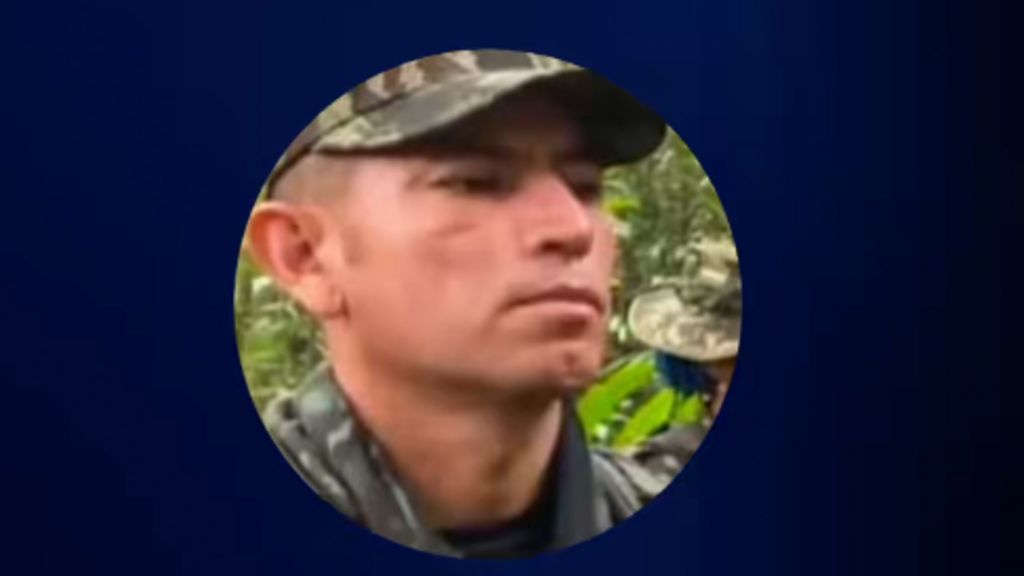
Just four days after being sworn in as Colombia’s new head of state, President Abelardo de la Espriella has marked a sharp break from his predecessor’s security policy with a lethal military operation that eliminated one of the country’s most wanted dissident rebel commanders.
Hernando Forero Mosquera, widely known by his alias “El Ruso,” was killed alongside five other alleged armed group members during a weekend operation in central Colombia’s rural Meta province, according to official government statements. Military intelligence confirms Forero led Frente 28, a prominent dissident faction that split from the Revolutionary Armed Forces of Colombia (FARC) after the 2016 historic peace accord between the rebel group and the Colombian government.
The 2016 peace deal was hailed as a landmark step to end five decades of armed conflict, but a small contingent of FARC members rejected the agreement’s terms and refused to disarm. These breakaway factions, including Frente 28, have since become major players in the country’s illegal economy, controlling large swathes of cocaine trafficking and unregulated mining operations. Their activity has been directly linked to a marked resurgence of violent unrest across Colombia in recent years.
De la Espriella’s quick action on illegal armed groups fulfills a core campaign promise, where he pledged to wage unrelenting war on what he terms “narco-terrorism” — a stark departure from the approach of former President Gustavo Petro, Colombia’s first leftist head of state. Petro pursued a “total peace” strategy that prioritized negotiated ceasefires and dialogue over military confrontation, but his efforts collapsed after multiple armed groups repeatedly violated truce terms and abandoned talks.
In a public address following the operation, de la Espriella issued a firm warning to all outlawed armed organizations, saying the killing of Forero sends “a clear and powerful message to all bandits that there is nowhere for them to hide.” He added that Forero, an experienced explosives specialist, was a high-value target, and confirmed that two additional suspected members of the Gulf Clan, another major criminal network, were killed in a separate simultaneous offensive in Antioquia province.
The new hardline security approach has already drawn immediate pushback from dissident groups. Just 24 hours after de la Espriella’s inauguration, coordinated attacks struck two Colombian provinces: a car bomb detonated at a Cauca province toll booth, wounding two security guards, while in Cesar province, a drone-dropped explosive killed a local police officer.
The Colombian president’s administration enjoys explicit backing from former U.S. President Donald Trump, who publicly endorsed his candidacy during the election campaign. On the day of de la Espriella’s swearing-in, the U.S. State Department announced a $1 billion security assistance package to support the new government’s counter-crime efforts. Washington also formally welcomed Colombia into the “Shield of the Americas,” a U.S.-led alliance of Western Hemisphere nations committed to coordinated action against drug trafficking networks and transnational organized crime.