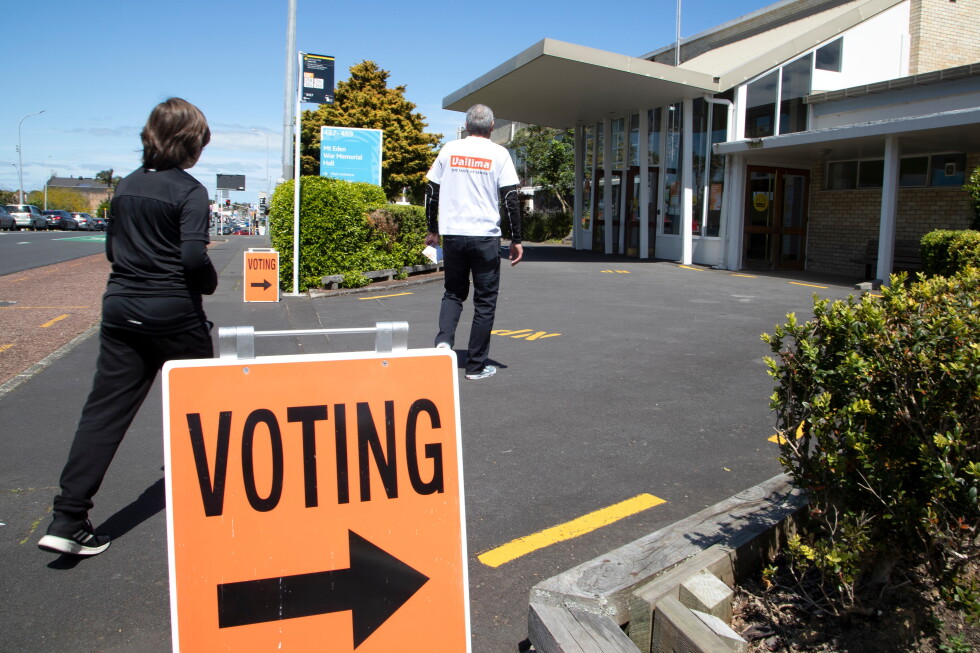
WELLINGTON, New Zealand — As the country prepares for its October-November 2025 general election, New Zealand’s independent Electoral Commission has kicked off a national outreach campaign on Monday, calling on all eligible voters both domestically and overseas to complete their voter registration or update their personal information ahead of a strict new enrollment deadline. The change, which came into force after legislative approval last December, eliminates the long-standing rule that allowed eligible voters aged 18 and older to register or update their details on election day itself, even when they arrived at polling stations to cast their ballot.
Under the new regulation, all voters must finalize their registration and confirm up-to-date contact and address information no later than 13 days before election day. For this year’s contest scheduled for November 7, the final enrollment deadline is set for October 25. Early voting will open October 21 for overseas voters and October 26 for domestic voters, and any citizen who fails to meet the enrollment cutoff will be turned away from polling places when they attempt to vote.
The new enrollment cutoff is part of a broader package of electoral law amendments introduced by the country’s incumbent center-right National-led government, which is currently campaigning for a second consecutive term in office. Other changes included in the legislation are a ban on voting for incarcerated prisoners and an increase to the cap on allowable anonymous political donations. Governing officials argue the deadline change is a practical reform designed to address lengthy election result delays. Prime Minister Christopher Luxon, leader of the National Party, explained in a July interview with Radio New Zealand that the 2023 election, which allowed on-the-day registration, took three full weeks to finalize the final result — the longest delay in New Zealand’s electoral history.
The change has drawn sharp criticism from center-left opposition parties, led by the Labour Party, who claim the reform is a partisan move designed to suppress special votes — a category that includes ballots cast by overseas voters, domestic voters voting away from their home electorate, and voters registering on election day. In recent decades, special votes have consistently leaned in favor of left-wing political parties. Labour Party leader Chris Hipkins told reporters in July that the change risks disenfranchising tens of thousands of eligible New Zealanders, and pledged to reverse the regulation if his party wins the November election.
Even with the new deadline in place, Electoral Commission officials still project that the final election result will not be confirmed until 20 days after voting concludes, a mere three-day reduction from the 23-day wait that was projected without the cutoff. Roughly 700,000 special votes are still expected to be cast in this year’s election.
Latest commission data shows that 89% of all eligible domestic voters have completed their registration so far. While voting itself is voluntary in New Zealand, enrollment is mandatory for all eligible citizens residing in the country, with a fine of 100 New Zealand dollars (approximately $59 USD) for those who fail to comply.
More than 1 million New Zealand citizens currently reside overseas, though exact figures for how many of those are eligible to vote have not been confirmed. Eligible overseas voters can participate by downloading ballot papers from the Electoral Commission website, having their ballots witnessed by a third party, and uploading the completed document digitally. Chief Electoral Officer Karl Le Quesne confirmed that the October 25 deadline applies to overseas voters as well, noting that many eligible voters living abroad can also cast ballots in person at New Zealand embassies and consulates around the world.
The commission’s new outreach campaign is specifically targeting young eligible voters, who have historically been the most likely to delay registration until close to election day. The campaign will run targeted advertising across social media, online gaming platforms, and streaming services to reach this demographic. Electoral Commission Chair Simon Moore noted that as of the campaign launch, roughly 440,000 eligible voters remain unenrolled nationwide, and nearly half of those — 200,000 — are between the ages of 18 and 25. “That’s the cohort we really need to get the attention of,” Moore said.