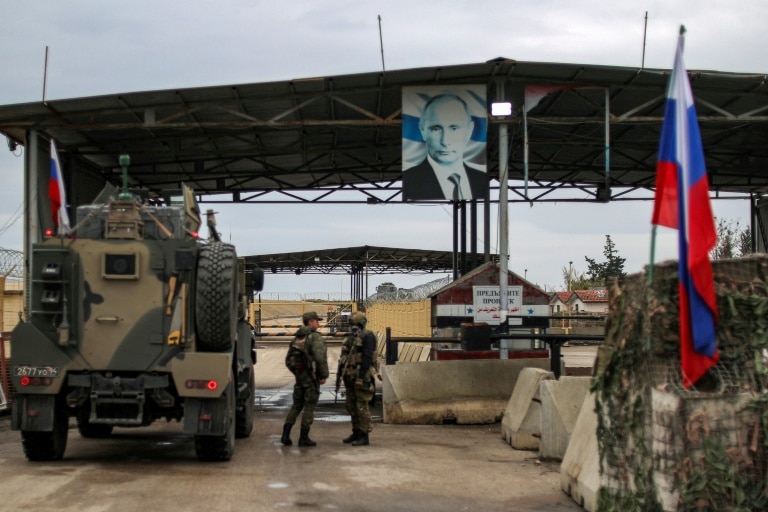
In a pivotal shift that reshapes Russia’s long-standing military footprint in the Middle East following the 2024 ouster of former Syrian leader Bashar al-Assad, Syria announced Sunday that Damascus and Moscow have finalized a deal outlining the new status of Russia’s two military installations on Syrian soil.
Russia emerged as Assad’s most critical military ally throughout Syria’s 13-year civil conflict, providing critical support that allowed the former president to retain power for over a decade. When Assad was forced from office last year, the development delivered a severe blow to Russia’s regional influence, leaving the future of Moscow’s only two official military bases outside the former Soviet Union in doubt. In the months that followed, Russian President Vladimir Putin moved quickly to build diplomatic ties with Syria’s new Islamist-led government in Damascus to protect Russia’s interests at the Hmeimim airbase and the Tartus naval base.
According to Syria’s state-run SANA news agency, the two bases will be reconfigured into joint training and capacity-building centers under a new framework designed to protect the mutual interests of both nations. The agreement, which comes after 18 months of back-and-forth negotiations, includes a mandate to complete the full transition process within a three-month timeline. In the first phase of the rollout, all civilian infrastructure located at both sites will immediately be transferred to Syrian government control.
As of Monday, Moscow has not yet issued an official statement confirming or commenting on the new agreement. Both bases remained fully operational throughout the negotiation period, and Syrian Foreign Minister Asaad al-Shaibani completed an official inspection tour of the facilities on Sunday to review all sites and infrastructure covered by the new memorandum of understanding.
Omar al-Hasri, director-general of Syria’s Civil Aviation Authority, announced Sunday that his agency has assumed full control of Latakia International Airport, a major civilian facility located adjacent to the Hmeimim airbase that has operated in close coordination with Russian forces for years. Hasri noted that specialized technical teams have already begun on-site assessments of the airport’s infrastructure, runways and operational systems to develop a comprehensive rehabilitation plan. He described the transfer as a critical milestone toward reviving Syria’s aviation sector and reintegrating all national airports into a unified civilian aviation network.
In the months since taking power, Syria’s new administration under President Ahmed al-Sharaa has prioritized mending ties with Moscow, and al-Sharaa has traveled to Moscow twice for meetings with President Putin, most recently in January 2025. During that latest summit, Putin praised the progress made in restoring bilateral relations, and commended al-Sharaa’s ongoing work to reestablish full Syrian territorial control. Al-Sharaa, in turn, recognized Russia’s historical role in Syria and the broader region, though Damascus has continued to formally demand that Moscow extradite Assad, who has lived in Moscow with his family since fleeing Syria in 2024.
The new agreement marks the latest adjustment to Russia’s military presence in Syria: earlier this year, Russian forces completed a full withdrawal from Qamishli Airport located in northeastern Syria, signaling a broader drawdown and restructuring of Moscow’s regional military posture.