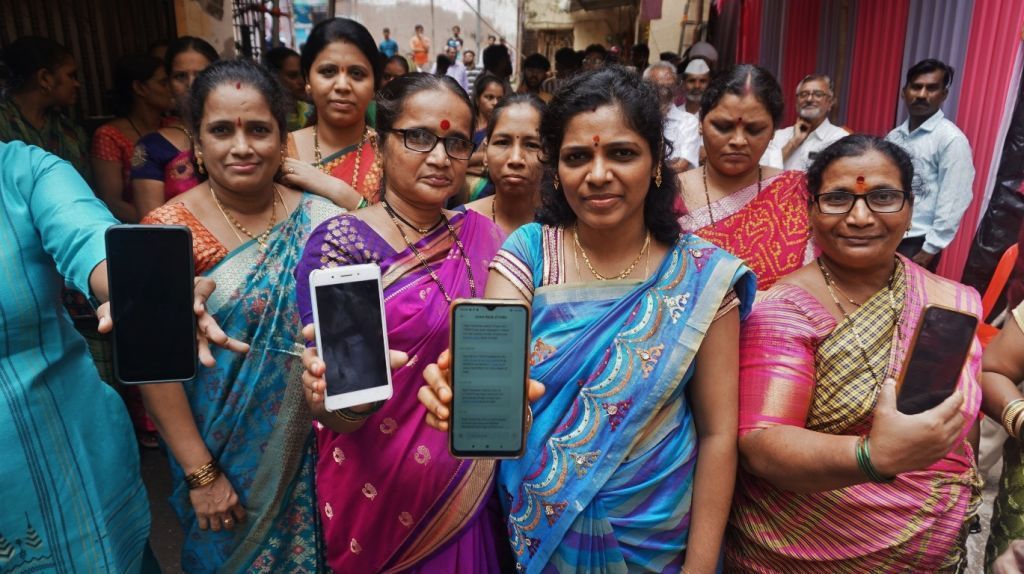
For decades, Nirmala Bawaskar, a widowed housemaid in Maharashtra’s Sambhajinagar district, lived without a personal bank account. She signed official documents with a thumbprint and had little say over how household money was spent. That all shifted when she joined the Mukhyamantri Majhi Ladki Bahin Yojana, one of India’s largest state-run targeted cash transfer programs for women. Today, the 1,500 rupee ($17) monthly stipend she receives through the scheme has not only given her financial autonomy she never experienced before, it has also transformed her life: motivated by the program, she even taught herself to write. As Bawaskar puts it, the small sum has been a lifeline, particularly covering unexpected medical costs for her family.
Bawaskar is one of more than 26 million women who originally enrolled in the scheme, launched in June 2024, just five months ahead of Maharashtra’s hotly contested state assembly election. The initiative was framed by the ruling Mahayuti alliance – led by Prime Minister Narendra Modi’s Bharatiya Janata Party and its regional partners – as a groundbreaking effort to recognize women’s unpaid household labor and expand their financial independence. Eligibility was restricted to women aged 21 to 65 from low-income households, excluding income tax payers, government employees, and households already receiving similar welfare benefits.
The timing of the launch was no accident. It came on the heels of disappointing results for the Mahayuti alliance in the 2024 national general election, and quickly became the defining political issue of the state campaign. While the ruling coalition positioned the scheme as a long-overdue investment in women’s well-being, opposition parties decried it as blatant vote-buying – even as they pledged to roll out similar cash transfer programs if elected. When the Mahayuti secured a landslide majority far larger than pre-election polls predicted, alliance leaders openly credited Ladki Bahin for their victory.
Post-election analysis from the Lokniti-Center for the Study of Developing Societies (Lokniti-CSDS) appears to back that claim. Survey data showed 50% of all women respondents voted for the ruling alliance, compared to just 33% for the opposition. Among registered beneficiaries of the scheme, support for Mahayuti jumped to 54%. Still, CSDS researcher Rajeshwari Deshpande cautioned against overstating the scheme’s electoral impact, noting that women were only three percentage points more likely to back the ruling bloc than men, making it premature to declare a new distinct bloc of welfare-focused women voters.
Less than two years after its launch, however, the initiative has landed in serious scrutiny following a damning report from India’s national auditor. Last month, auditors revealed that Maharashtra’s Women and Child Development Department overspent its authorized budget for the scheme by 35.41 billion rupees in its first full financial year, with total spending hitting 332.37 billion rupees. Beyond the unauthorized overspend, auditors also criticized the department for shifting 155.86 billion rupees into special reserve accounts in the final quarter of the financial year, despite no immediate need for the funds. The report argued this practice erodes financial discipline and undermines legislative oversight of public spending.
A parallel government beneficiary verification drive has also exposed major implementation gaps. After mandatory electronic identity verification (e-KYC) was introduced, more than nine million enrollees were removed from the beneficiary rolls. Roughly two-thirds of those removed – around 6.2 million people – were dropped solely for failing to complete the e-KYC process, not for being ineligible, according to records obtained by *The Indian Express* under India’s Right to Information Act. The remaining excluded beneficiaries were removed for violating eligibility rules: exceeding income or age caps, being from households with a government employee, already receiving benefits from another welfare program, or having multiple claimants in one household. Government records also show nearly 29,000 ineligible men and roughly 8,000 government employees incorrectly received payments, and while state officials say they are working to recover misallocated funds, they have not disclosed how much has been repaid to date.
The Maharashtra government has not issued a formal public response to the national auditor’s findings. A spokesperson for Women and Child Development Minister Aditi Tatkare told the BBC that verification efforts and mispayment recovery are ongoing, but declined to address the specific budget irregularities cited in the audit. Tatkare has also pushed back against framing the e-KYC removals as evidence of systemic fraud, noting that administrative barriers may have prevented many eligible women from completing the requirement.
Maharashtra’s Ladki Bahin scheme is not an outlier in Indian politics. Across the country, state governments led by parties of all ideological stripes have rolled out targeted cash transfer programs for women, who now make up nearly half of India’s total electorate. The political appeal of these programs is clear: unlike infrastructure projects or public service investments, monthly cash deposits directly to a woman’s personal bank account are immediate, visible, and deeply personal, creating clear accountability for the government that delivers them. But the popularity of these schemes also creates pressure to roll them out quickly and enroll as many beneficiaries as possible, which can lead to the kind of administrative and fiscal gaps exposed in Maharashtra’s audit.
Policy experts are divided on the long-term value of the scheme. Neeraj Hatekar, a Mumbai-based welfare economist, argues that the 1,500 rupee monthly payment makes a tangible difference for low-income women. Pointing to labor force data showing that the average daily wage for women in Maharashtra is roughly 300 rupees, Hatekar notes that even women working 20 days a month only earn 6,000 to 7,000 rupees total – making the stipend a meaningful 20 to 25 percent increase in monthly income. For women living on irregular, low incomes, that extra money can cover critical costs that would otherwise be out of reach.
Other economists warn that the long-term fiscal costs of the scheme outweigh its short-term benefits. Ajit Ranade, a prominent Indian political economist, argues that governments face a strong incentive to prioritize popular cash transfer schemes ahead of elections to win votes, but rarely account for the long-term damage to state fiscal health that comes with large sustained spending commitments. Critics like Ranade also point out that the same resources dedicated to universal cash transfers could be invested in permanent public goods – including affordable healthcare, universal education, free childcare, and improved public transport – that would reduce the cost of living for women long-term and enable greater economic participation, rather than providing a temporary monthly stipend.
Despite the scrutiny and fiscal controversy, for beneficiaries like Bawaskar, the scheme has already delivered a change that cannot be measured in rupees. While the monthly payment has not lifted her family out of poverty, it has given her something no government program had before: a bank account in her own name, and money that she controls entirely. “It’s money of my own,” she says. “That’s what matters to me.”