It has now been seven years since India revoked the special constitutional autonomy long granted to Indian-administered Jammu and Kashmir. The rollback of these historic constitutional protections, followed by sweeping changes to residency rules, land ownership laws and regional governance, has systematically remade the region’s social, political and economic landscape. Critics across academic, political and local circles frame these changes as a deliberate multi-pronged strategy to alter Kashmir’s unique demographic character and erode native political power. The debate around the changes remains deeply divided, with competing narratives of integration versus disenfranchisement defining the region’s uncertain future seven years on.
On August 5, 2019, India’s ruling Bharatiya Janata Party (BJP), a right-wing nationalist administration led by Prime Minister Narendra Modi, took the unilateral step of scrapping two core constitutional provisions: Article 370 and Article 35A. For seven decades, these clauses had anchored Kashmir’s relationship to the Indian Union, granting the Muslim-majority region limited self-governance and legal safeguards to protect its native population and resources. Article 370 originated from the 1949 accession agreement following the partition of India, while Article 35A empowered Jammu and Kashmir’s regional assembly to define permanent residents and bar non-locals from permanent settlement in the region. Prior to 2019, existing land laws capped individual land holdings at 12 acres, prohibited construction on agricultural land and barred non-Kashmiris from property ownership, frameworks designed to protect the region’s fragile ecology, preserve local access to resources and guarantee native access to employment.
Following the 2019 repeal, the Indian government unilaterally split the former state into two federally controlled Union Territories: Jammu and Kashmir, and Ladakh, placing the entire region directly under the administrative control of India’s central government in New Delhi. Modi’s administration framed the move as a long-overdue corrective to historical anomaly, arguing that integrating the region more tightly into India would attract new private investment, spur long-delayed development, and curb long-running separatist militancy.
But within months of the repeal, New Delhi introduced sweeping regulatory changes that opened the region to outside settlement and investment. In March 2020, the government implemented new domicile rules that granted resident status to any person who had lived in the region for 15 years, studied within its borders for seven years, or served in select central government posts in the region. A subsequent notification in October 2020 eliminated even the requirement of domicile status for purchasing most non-agricultural land, effectively removing all historic barriers to outside property ownership.
Official government data presented to the Jammu and Kashmir Assembly reveals that within just two years of the new rules going into effect, more than 1.25 million domicile certificates had been issued across the region. Of these, more than 83,000 went to individuals who did not previously qualify as permanent residents. Regional authorities have claimed that domicile certificates are only required to apply for government jobs and do not automatically confer land or voting rights, but concurrent changes to land law mean a domicile status is not required to purchase most property in the region anyway.
For native Kashmiris, these policy shifts have resulted in widespread systemic disenfranchisement, as outsiders gain open access to the region’s limited land and natural resources. Many residents describe growing economic inequality that has reshaped daily life over the past seven years. “I think what has changed in these seven years is the visible presence of inequality,” explained Jan, a 35-year-old resident who requested only her first name be published for safety. “I don’t recall Kashmir being so economically unequal before. When you see the much-hyped city centre of Lal Chowk, for example, you get a small glimpse of a colourful metropolis. But the moment you step into the next-door neighbourhood of Maisuma and walk into the lanes of the old city, you encounter real Kashmir: waterlogged roads, people driving rickshaws for a living, stray dogs outnumbering humans and more.”
Jan pointed to the elimination of historic land regulations as a core driver of displacement. “Before, we had laws that prevented a single person from acquiring land that was more than 12 acres. That kept Kashmir anchored into a socialist character. No one was allowed to build so much as a small hut in agricultural land. Now, it is free for all. Indian construction firms can tear past our rice fields and apple orchards to construct railway lines and expressways that are completely defacing the Kashmir that we knew as children. This infrastructure is meant to serve its military more than it serves us. The poorer lot are especially more defenceless against the onslaught of ‘new Kashmir’ and the sweeping changes it represents. We are simply getting estranged from our own land.”
The opening of land to outside investment has also triggered widespread evictions of long-term residents living near forested areas. Abu Bakr, a 42-year-old Srinagar business owner who closely follows regional politics, noted that new land policies reclassified many long-standing community land holdings as illegal encroachment. “To facilitate investment and improve the ease of doing business, the policy allowed investors greater access to land. Subsequently, the government introduced a series of policy changes affecting land, agriculture, and forest laws. In several cases, land occupied by such residents was classified as encroachment, leading to eviction drives. There are many examples of it.” Bakr added that government initiatives to distribute land to homeless families from outside the region have amplified long-standing native fears of deliberate demographic engineering, a concern that has been central to Kashmiri political discourse for decades.
Beyond land and residency changes, the Indian government also redrew Jammu and Kashmir’s electoral boundaries for the first time since 1995. The federal Delimitation Commission expanded the total number of regional assembly seats from 83 to 90, allocating five of the six new seats to the Hindu-majority Jammu region and only one to the Muslim-majority Kashmir Valley. The commission also merged geographically disconnected areas separated by mountain ranges into single parliamentary constituencies, a restructuring widely criticized as a deliberate maneuver to shift political power toward parties aligned with New Delhi. While regional elections were eventually held and an elected local government formed, the administration remains stripped of full statehood, with core legislative and administrative powers retained by the central government in New Delhi, leaving local leaders severely constrained in their ability to enact policy.
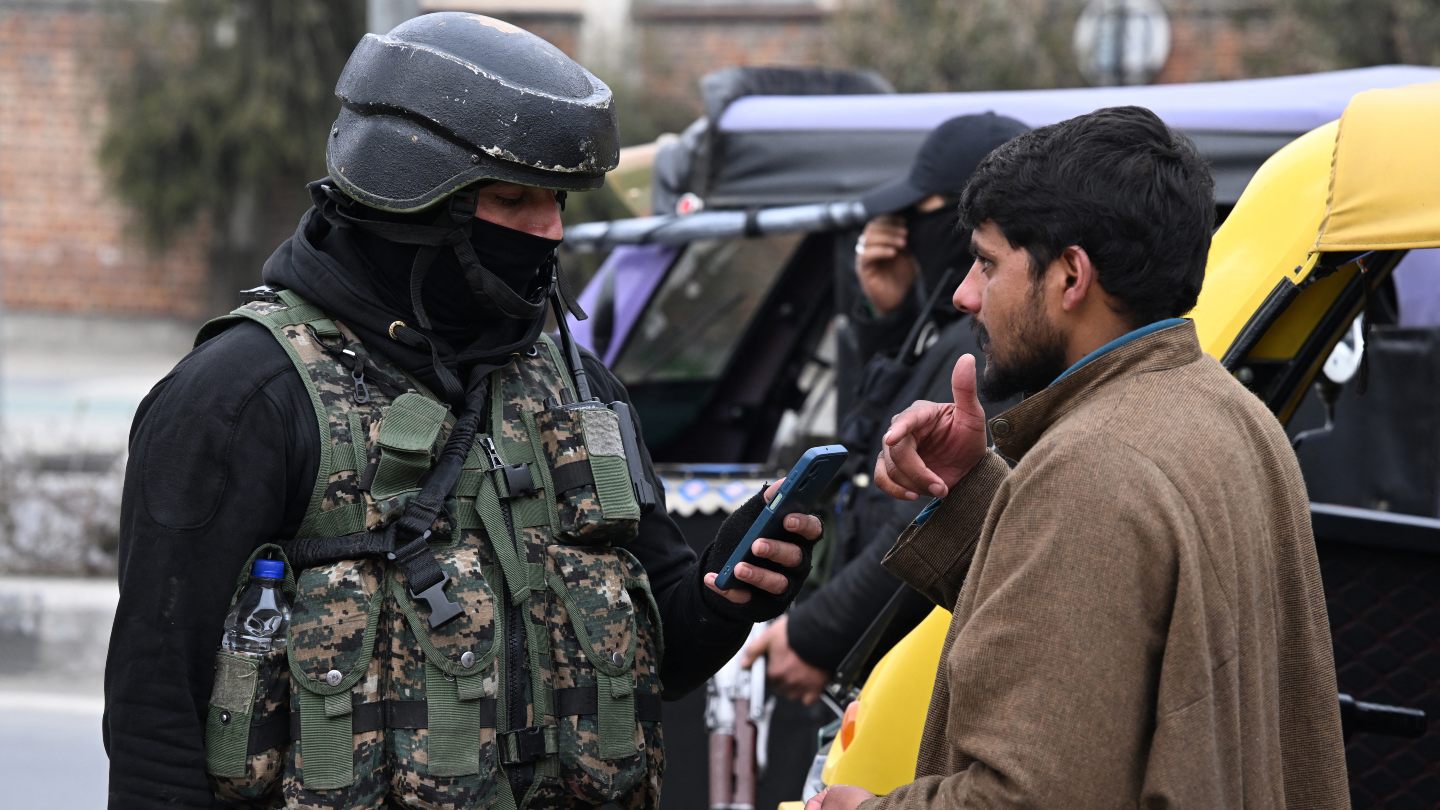
Seven years on, the promised economic boom and end to militancy that the BJP used to justify the 2019 changes have yet to materialize, and the region remains mired in volatility. In May 2025, suspected militants carried out a deadly attack on tourists in Pahalgam’s Baisaran Valley, killing 26 people in one of the deadliest civilian assaults on the region in recent years. Just last month, a police officer on security duty was shot and killed in Anantnag’s Lal Chowk; the killing triggered a massive government crackdown that resulted in the detention of more than 3,500 people across the region.
Local residents also highlight ongoing systemic economic and social crises. Unemployment among Kashmiris currently sits at roughly 6.7 percent, double the national average for India, and youth joblessness has fueled a growing drug crisis in the region. “We are plagued by high rates of unemployment among youth; they are going towards drugs,” said Muhammad Amin, a 55-year-old local resident. Critics also point to widespread government censorship, including revisions to school textbooks to erase dissenting perspectives and suppress native Kashmiri identity.
International and academic observers have echoed these criticisms, framing the 2019 changes and subsequent policy shifts as a deliberate project of political disempowerment. In 2021, a panel of United Nations special rapporteurs raised alarm that the revised residency rules were implemented without any consultation with the local Kashmiri population, warning that fast-tracking domicile status for outsiders risked severely deteriorating the human rights situation for native residents.
Scholars who study the region frame the cumulative changes through the lens of settler colonialism, arguing that incremental policy shifts over time have worked together to restructure control over land, political power and native sovereignty. Ather Zia, a political anthropologist, explained: “In my work, I describe this as the iterative temporal dynamic of settler colonialism, where successive changes over a period of time reinforce one another, and cumulatively they are focused on restructuring control over land, political representation, and Indigenous sovereignty, as we see that is what has unfolded. Settler colonialism as an analytical framework helps explain how changes in legal restructuring, policies of land expropriation, demographic engineering, increasing militarisation, and massive overhaul in how the region is governed illustrate an evolving structure rather than disconnected policies.” Zia added that the cumulative effect of these changes has fundamentally transformed everyday life for native Kashmiris: “There is heightened uncertainty and deep fear over land; political representation has diminished; journalism, activism, and civil society activity are curbed.”
Muhammad Junaid, a professor at the Massachusetts College of Liberal Arts, told reporters that the entire post-2019 restructuring is designed to erase the historical political rights of the Kashmiri people. “The post-2019 changes were designed as a strategy aimed at the total political disempowerment of Kashmiris as a people. To bring Kashmir to a level where people of Kashmir would be compelled to demand (or not even demand at all) things that had already once existed rather than seek their historical political rights as a people. This disempowerment is part of the broader history of imperial control in Kashmir. The history of such a process in other places and times tells us that the situation in Kashmir resembles many aspects of settler colonialism. The impacts of the 2019 events are gradually unfolding… as people are being governed by imperial bureaucrats as imperial wards with no say in their own administration.”
While the Indian government continues to maintain that the 2019 constitutional changes have improved governance, attracted new investment and integrated Kashmir more closely into the Indian Union, critics argue the policies have fundamentally and permanently altered the region’s political, legal and demographic character. Seven years after the repeal of Article 370, these deeply opposing narratives continue to shape the bitter debate over Kashmir’s future.