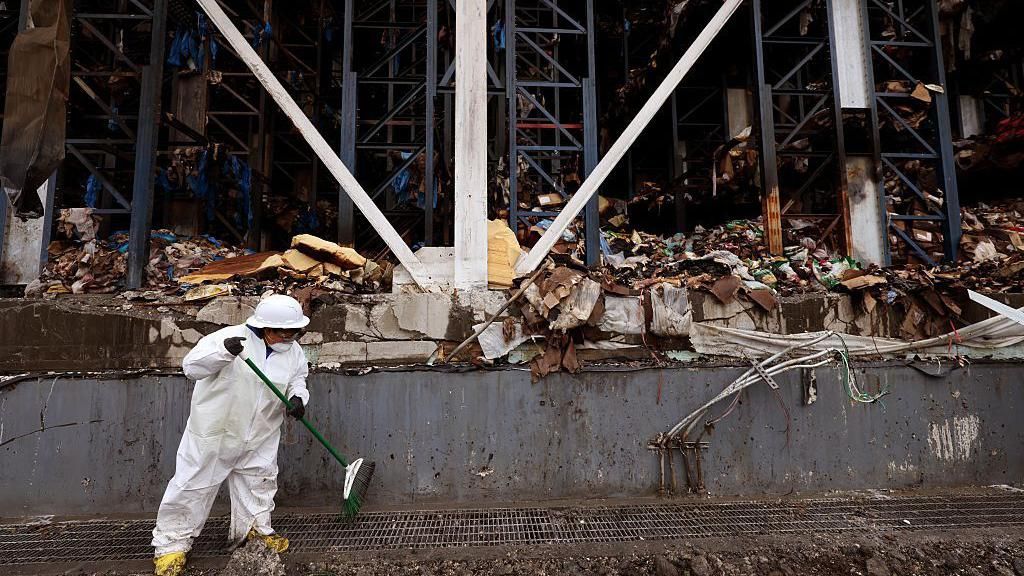
Two months after a devastating fire tore through a massive cold-storage warehouse in Los Angeles’ Boyle Heights neighborhood, local residents and small business owners are still grappling with a putrid stench, pest infestations, and public health risks from 39 million kilograms of rotting meat and seafood left behind by the blaze. What was once a bustling mixed neighborhood of industrial warehouses and residential homes has become an unbearable place to live and work, leaving the community frustrated with the slow, uneven cleanup process.
Alexis Sicairos, owner of local coffee stand Brew Sting, knows the impact of the ongoing crisis firsthand. On a normal day, his shop would have a steady line of customers waiting for signature drinks like banana buzz lattes and cloud matcha, including dozens of warehouse workers who stopped by daily. Today, his street corner stands mostly empty. After a two-week mandatory shutdown following the fire, Sicairos reopened, but business has collapsed. The warehouse workers who made up a core portion of his customer base are gone, and returning patrons have stayed away to avoid the overwhelming stench, thick swarms of flies, and residual smoke. “We still have to pay our bills, so we have to stay open,” Sicairos explained, noting that flies constantly cover his serving tables and equipment – a sight that drives away customers looking to enjoy food and drinks outdoors.
The fire, which broke out on June 17, completely destroyed the facility operated by temperature-controlled logistics giant Lineage, leaving behind more than 85 million pounds of spoiled food, including beef, pork, poultry, and seafood. With high summer temperatures accelerating decomposition, the stench has lingered across the neighborhood for weeks. Local security guard Mesha, who works outside a nearby marijuana dispensary, described the odor as so overpowering it triggers nausea, comparing it to the smell of a decaying body. Walking through the neighborhood now means constant swatting at swarms of multi-colored flies, and residents have reported sightings of unusually large rats that sidewalk traps are too small to contain.
Public health officials have warned the infestation poses tangible safety risks. A city-commissioned inspection conducted by a pest control firm found that the rotting waste and warm temperatures speed up fly breeding, and the insects can spread infection to open wounds on both humans and animals, increasing the risk of disease for local residents.
While Lineage claims that approximately 80 percent of the spoiled food waste has been removed from the site as of this week, city officials have blasted the company’s response as inadequate. Los Angeles Mayor Karen Bass, who is running for re-election this year, confirmed this week that the company’s efforts have “fallen short”, and the county public health department has issued daily $500 citations for unsanitary and public nuisance conditions. Bass has set a strict August 13 deadline for Lineage to complete the full bulk waste cleanup, and has issued an executive order pausing all plans to rebuild the warehouse until full public health and safety protections are in place. In a letter to Lineage shareholders released Tuesday, Bass criticized the company for delayed communication, limited transparency, and insufficient community engagement, noting that repeated requests for updates on cleanup, environmental monitoring, and recovery efforts have gone unanswered.
In response to the criticism, a Lineage spokesperson stated that cleanup crews are working around the clock to remove waste, clear debris, and dismantle damaged sections of the warehouse, acknowledging that odor reduction is a top priority. The company notes that the cleanup effort is a highly complex operation, and projects total costs will reach between $80 million and $100 million. The company expects to complete bulk waste removal by next week, up from 60 percent completion on July 31.
To address immediate community needs, Mayor Bass has mobilized city resources and coordinated with local, state, and federal partners alongside non-profit organizations to bring support to Boyle Heights. The city has deployed mobile health clinics to the neighborhood and distributed thousands of air purifiers to local homes and businesses. Bass emphasized that she has met directly with residents since the first day of the crisis to center their input in the city’s response, acknowledging their frustration and noting that the community deserves transparency, clear communication, and robust support.
Local residents, however, have repeatedly voiced anger at what they see as a slow, inadequate response from both the city and the warehouse operator, with many citing a lack of transparency and insufficient resources dedicated to the cleanup. As crews continue working to clear the site, the community remains trapped waiting for the stench and health risks to be eliminated.