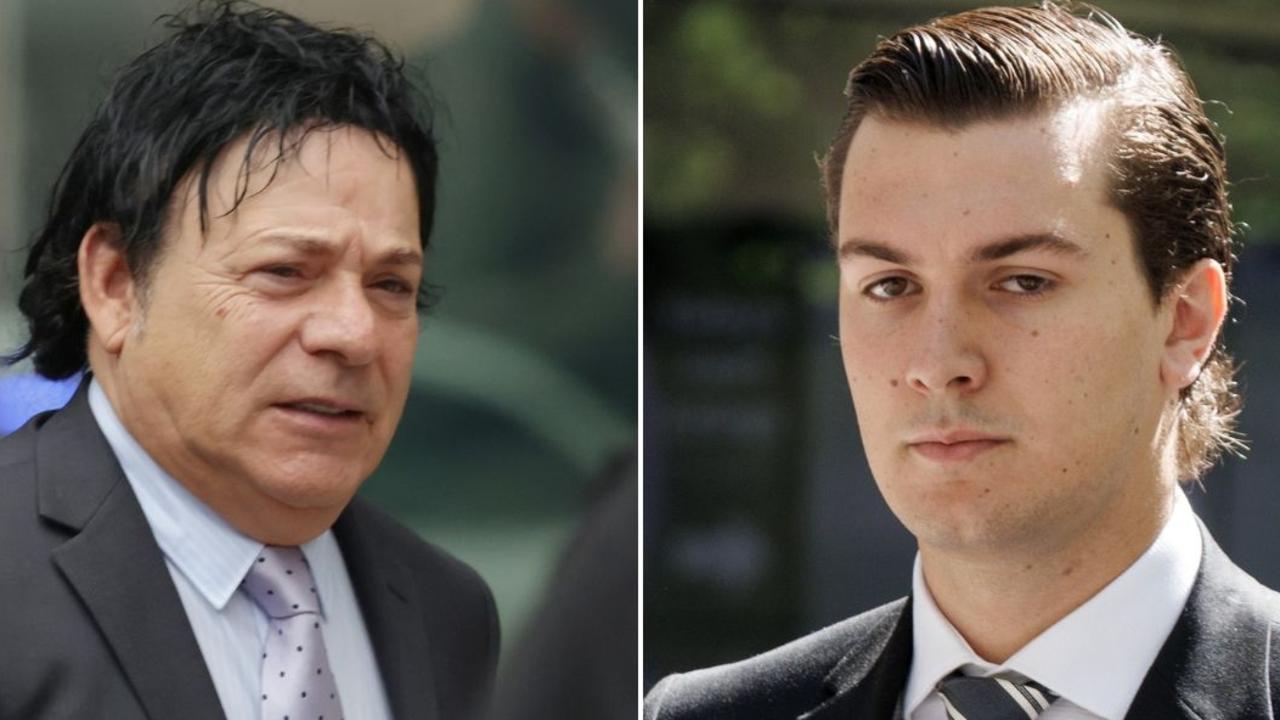
Two high-profile convicted rapists in Australia have drawn renewed scrutiny of a controversial legal loophole that allowed their identities to remain hidden from the public for years, leading legal experts to warn that the current system undermines open justice, erodes public trust, and perpetuates harmful stereotypes about sexual assault survivors.
Tom Silvagni, son of Australian Football League legend Stephen Silvagni, and Ralph Carr, a prominent sports and entertainment manager, both secured court-issued suppression orders during their separate rape trials, preventing public disclosure of their names until guilty verdicts were returned. Carr’s identity remained sealed for three years, with the order only lifted after his conviction this week. For Silvagni, who was found guilty of raping a friend’s girlfriend on two occasions, the defendant went to extraordinary lengths to maintain his anonymity: he hired a full additional legal team exclusively to argue for continued secrecy, successfully keeping his name out of public view for 18 months throughout his trial.
Legal analysts say the cases highlight deep structural flaws in Australia’s suppression regime, particularly in the state of Victoria, which has gained a reputation as the nation’s “suppression order capital.” Associate Professor Jason Bosland, a legal scholar at Melbourne Law School, argues that prolonged secrecy around high-profile sexual assault cases does profound damage to survivors and the integrity of the justice system. These extended orders, he explains, reinforce harmful cultural narratives that question the credibility of female complainants, while also creating the public perception that wealthy, connected offenders receive preferential treatment in the courts. This uneven application of justice, Bosland says, severely undermines public confidence in how justice is administered. He warns that open justice in Australia, and particularly in Victoria, is at a crisis point, with orders frequently remaining in force for months or even years after they are first granted – one case he reviewed only had its suppression order revoked after six years.
Current laws around the public disclosure of criminal defendants in sexual assault cases vary widely across Australian jurisdictions. In Queensland, new legislation only passed in 2023 to allow public identification of adult defendants charged with rape and other severe sexual offenses before they go to trial. In the Northern Territory, media outlets are still barred from naming defendants in sexual assault cases until they are formally committed for trial or sentencing.
Justin Quill, a partner at law firm Thomsons who represented media organizations in both the Silvagni and Carr trials, says the current system is fundamentally unfair. He notes that most ordinary Australians cannot afford to hire even one King’s Counsel, let alone two separate legal teams focused entirely on keeping a defendant’s name out of the press. Quill says the outcome of these two cases has justifiably left the Australian public angry and disappointed.
Under Australian law, judges grant suppression orders on a limited set of grounds: to protect the fairness of an upcoming trial, to prevent distress to victims, children or witnesses, to protect the personal safety of any individual, or for national security purposes. In both the Silvagni and Carr cases, defense teams centered their arguments for secrecy on mental health grounds, framing public identification as a threat to the defendants’ mental safety. Silvagni’s legal team secured an order citing risks of psychiatric harm and suicide, while Carr’s team argued his history of prior suicide attempts put him at risk of self-harm if his name was made public.
Quill argues that this interpretation of the “safety” provision of the 2013 Open Courts Act directly misrepresents the legislation’s original intent. When the law was drafted, he explains, the safety exception was intended to protect informers who faced deadly violence after providing evidence during the aftermath of Melbourne’s gangland wars – legislative drafters never contemplated that it would be used to shield criminal defendants from public scrutiny by claiming mental harm. Critics add that the process itself is stacked against transparency: defendants submit untested psychiatric evidence to support their claims, and neither media outlets nor prosecution teams are given the opportunity to cross-examine or challenge that evidence before the order is granted. To Quill, this amounts to defendants gaming the system, stretching the law far beyond its intended purpose.
To address these flaws, legal experts are calling for urgent reform. First, Quill says, legislators must close the loophole that allows the safety ground to be used for claims of mental health risk from public identification. Beyond legislative change, he argues, there must be a broad cultural shift among barristers and judges. While many legal professionals pay lip service to the principle of open courts, few are willing to uphold that principle consistently in high-profile, politically charged cases. Bosland is currently set to host a roundtable to discuss targeted reforms to the Open Courts Act that would limit the misuse of suppression orders in sexual assault cases, as the legal community pushes for change to restore public faith in open justice.