For nearly 30 years, a frozen body tucked into a rock overhang just 350 vertical meters below Mount Everest’s summit has served as one of the mountain’s most haunting and recognizable landmarks. Known universally by the distinctive lime-green mountaineering boots it has worn since the 1996 blizzard that killed its owner, “Green Boots” has guided countless climbers toward the peak of the world’s highest mountain, a grim reminder of the cost of conquering Everest. Now, three decades after the tragedy that claimed his life, Indian authorities are preparing to launch an unprecedented high-risk recovery mission to bring the remains — now confirmed to belong to Indian climber Dorje Morup — home to his waiting family.
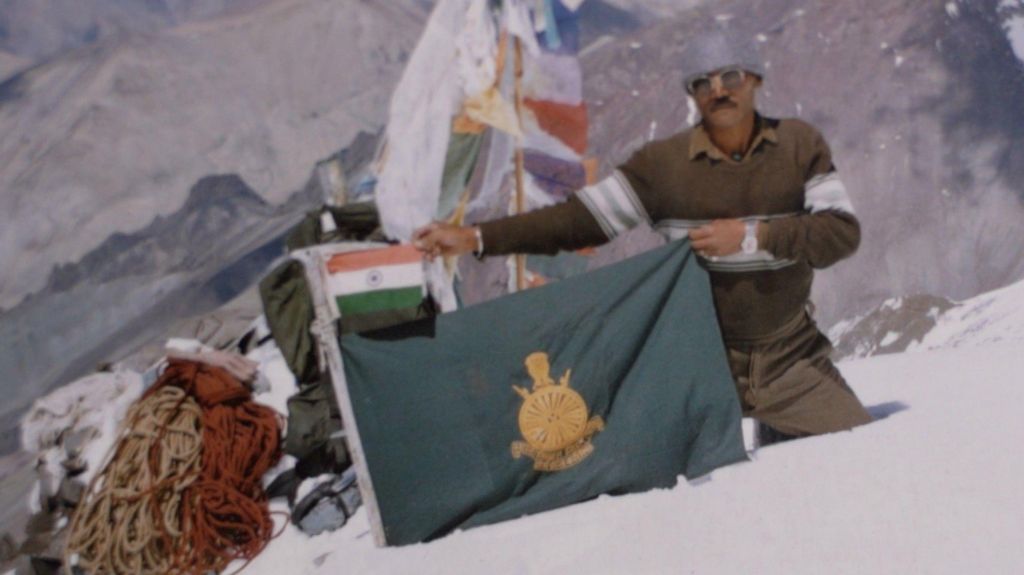
Morup, a 48-year-old lance corporal with the Indo-Tibetan Border Police (ITBP), was an experienced Himalayan mountaineer who had already summited Stok Kangri, the highest peak in India’s Ladakh range, when he joined a historic 1996 ITBP expedition. The team aimed to become the first Indian expedition to summit Everest from the treacherous northern slope, located on the Chinese-administered Tibetan side of the mountain, a far less popular and more dangerous route than the southern approach from Nepal.
The night before he departed his Ladakh home for the expedition, Morup made a promise to his wife, Konchak Yangskit: he would return a hero, and make India proud. He asked her to care for their children and wait for him at the airport on his return. But Yangskit carried a quiet premonition that night: she wondered if she would ever see him again.
When the expedition hit a brutal snowstorm mid-ascent, three of the six team members turned back early. Morup and two other climbers, Tsewang Smanla and Tsewang Paljor, pushed on, successfully reaching the 8,849-meter summit. Disaster struck as they began their descent, however, when a full blizzard engulfed the upper slopes, killing all three men. Like more than 300 other climbers who have died on Everest since record-keeping began, their bodies were left trapped in the mountain’s extreme altitude, where recovery was deemed impossible at the time. While the bodies of Smanla and Paljor were never located, Morup’s remains, identifiable by his bright green boots, settled into a stable snow cave at 8,500 meters — just inside what climbers call the “death zone,” where oxygen levels are one-third of those at sea level and temperatures can plummet to -40°C.
For decades, mountaineers assumed Green Boots was the remains of Tsewang Paljor. But new testimony from surviving 1996 expedition members, combined with analysis of the location of Morup’s final radio transmission, led Indian authorities to conclude the body is in fact Morup. A recent review of his climbing gear and clothing confirmed the preliminary identification, and ITBP has now spent years planning a mission to retrieve their former comrade. Officials say the goal is to confirm the identity via DNA testing and finally give Morup’s family the closure they have waited 30 years to receive.
“On some days, before I went to sleep, I would think that there’d be a knock on the door tonight and that when I opened, he would be there,” Yangskit, now in her mid-70s, told the BBC. “When he comes home, I will ask him: ‘Where were you all these years?’” For decades, Yangskit has refused to fully accept Morup’s death, because she never saw his body. “Even though we organised cremation prayers at home, my heart refused to believe he had died,” she said, through tears. “I didn’t see his dead body, so it was difficult for me to believe it.”
The recovery mission that will attempt to bring Morup home is one of the most complex and dangerous high-altitude recovery operations ever attempted on Everest. The body lies on the steep, underdeveloped northern slope, which lacks the helicopter evacuation infrastructure and support systems that exist on Nepal’s more popular southern side. Unlike the south, there is no option for emergency evacuation if the recovery team runs into trouble. Even in the mild spring climbing season, reaching 8,500 meters to retrieve a frozen body is a monumental challenge. Autumn, when ITBP hopes to complete the mission before September, brings far more unpredictable and dangerous weather.
Veteran mountaineers who have led prior recovery efforts say the operation will require a team of 10 to 12 experienced summit climbers just to fix support ropes to the recovery site. Frozen into the snow and encased in layers of ice, the body will weigh several times its original mass, and must be carried by hand down 1,000 meters of extremely steep, rocky terrain before it can be transferred to a helicopter or yak train for transport to India. The first 1,000 meters of descent, experienced Indian climber Kuntal Joisher noted, will be the most treacherous part of the entire mission, with logistical challenges that put the entire team at severe risk.
“The main thing is to not put Sherpa lives at risk for a dead body,” Joisher said. Most recovery operations on Everest cost between $40,000 and $80,000, a sum out of reach for most families of fallen climbers. This mission will be far more expensive, and is being fully funded by ITBP, which has never forgotten its fallen comrade. “We never forgot him. It was only a matter of time,” an anonymous ITBP official told BBC News Hindi.
For most fallen climbers left on Everest, authorities and local teams typically only move bodies out of sight of climbing routes, rather than undertaking the dangerous work of full recovery. For example, American climber Francys Arsentiev, known as the “Sleeping Beauty of Everest,” was only moved to a more private location on the mountain a decade after her death, rather than being brought down. But for Morup’s family, full recovery is the only way to finally close 30 years of uncertainty.
If the mission is successful, Morup’s eldest son Punchok Dorjai says the family will hold a public funeral near the Martyrs Park in Leh, the capital of Ladakh. “My father gave his life for the country and he should be remembered as a martyr,” Dorjai said, noting that his two fallen teammates deserve the same recognition. The family plans to display Morup’s famous green boots alongside his Chinese-issued Everest summit certificate in their home, as a permanent reminder of his legacy.
For the thousands of climbers who have passed Green Boots on their way to the summit over the past 30 years, the landmark has been a permanent part of Everest’s landscape. If the recovery mission succeeds, it will bring an end to one of the mountain’s most famous stories, and finally give a fallen hero the homecoming he promised 30 years ago.