Across Latin America, a pronounced political shift to the right has unfolded in recent years, with conservative candidates claiming victory in seven major presidential elections — most of those wins coming after Donald Trump’s second inauguration as U.S. President in January 2025. This sustained winning streak has been driven by widespread voter anxiety over surging violent crime, uncontrolled irregular migration, and years of sluggish economic growth that have left many working- and middle-class voters hungry for change.
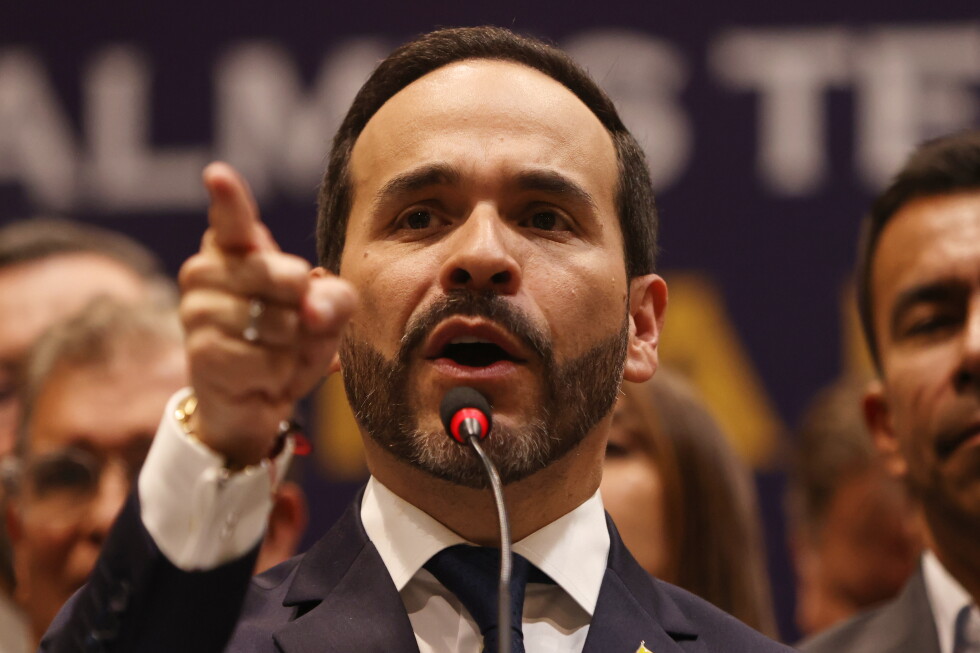
The latest leader to join this conservative tide is Abelardo de la Espriella, a Colombian lawyer and business owner endorsed by former U.S. President Trump. Set to take office this Friday, de la Espriella — who goes by the nickname “The Tiger” for his uncompromising stance on public safety — secured a narrow victory in June’s presidential race over progressive lawmaker Iván Cepeda. His election marks a dramatic reversal for Colombia, which spent the past four years under the leadership of a former rebel commander who openly criticized Trump administration policies on immigration and counter-narcotics.
During his campaign, de la Espriella ran on a hardline security agenda that includes scrapping existing peace negotiations with active Colombian rebel factions and constructing large-scale mega-prisons modeled after the controversial facility built in El Salvador to incarcerate gang members. Trump threw his full support behind de la Espriella, framing him as the only candidate capable of reestablishing widespread law and order across the country, and the new president has pledged to prioritize cracking down on extortion rings and transnational drug trafficking operations.
In Peru, another conservative, Keiko Fujimori, assumed office in July after winning a tight June runoff election by fewer than 50,000 votes. Fujimori, the daughter of late former President Alberto Fujimori — who defeated the Shining Path extremist movement in the 1990s but oversaw a widely criticized authoritarian government — has also centered her tenure on aggressive anti-crime action. She has pledged to build four new correctional facilities, including one mega-prison designed after El Salvador’s CECOT, militarize national borders to disrupt drug trafficking, and deport undocumented migrants residing in the country. Fujimori’s victory makes her Peru’s ninth head of state in just 10 years, underscoring the country’s prolonged period of political instability.
Argentina was an earlier adopter of this conservative shift, with libertarian economist Javier Milei — nicknamed “The Lion” — winning the presidency in November 2023 on a promise to slash runaway government spending and end the nation’s decades-long battle with crippling inflation. Milei defeated the long-dominant ruling Peronist movement, and has since implemented sweeping austerity measures: he has blocked the central bank from printing new currency to cover government deficits, cut thousands of civil service positions, paused public infrastructure investment, and reduced subsidies for public utilities. His policies have delivered measurable results on inflation, which has plummeted from 211% in 2023 to just 32% in 2025, but the reforms have drawn fierce criticism from opponents who argue austerity has eroded living standards for millions of working-class Argentines and public sector employees.
In April 2025, Ecuadoran voters handed a second four-year term to conservative incumbent Daniel Noboa, a scion of one of the country’s wealthiest families who won 56% of the vote. Noboa has expanded the military’s role in public security in coastal cities besieged by drug gangs fighting for control of key smuggling ports and trafficking routes. Despite the increased military presence, homicide rates have not seen a substantial drop, and Noboa’s administration has faced repeated allegations of human rights violations, including extrajudicial killings of suspected gang members. Under his leadership, Ecuador has launched joint counter-narcotics operations with U.S. forces, though a proposal he supported to reopen a U.S. military base on Ecuadoran soil was rejected by voters in a national referendum last year.
Central America has also felt the impact of the conservative shift. In Honduras, National Party candidate Nasry Asfura, a real estate investor and former mayor, claimed a narrow election win in November, edging out his closest rival by less than one percentage point. Asfura’s party is the same that counted former President Juan Orlando Hernández, who received a presidential pardon for his drug trafficking conviction from Trump after taking office. Trump personally endorsed Asfura, even threatening to cut U.S. aid to the small Central American nation if he lost. Since Asfura took office, Honduras has accepted dozens of deportees from third countries — mostly Guatemalan nationals — under a deportation agreement signed with the U.S. in early 2025.
In Chile, conservative activist José Antonio Kast, a devout Catholic, defeated the sitting progressive government in December’s presidential election, taking 58% of the vote to claim victory. Kast centered his campaign on voter fears of rising crime, promising to expel undocumented migrants from Venezuela and Haiti. One of his first policy moves after taking office was to expand a border trench along Chile’s frontiers with Peru and Bolivia, a measure his administration says will curb cross-border drug trafficking and irregular migration. Kast’s government has already faced widespread public protests over rising unemployment and austerity budget cuts that have reduced pay and benefits for public sector workers.
Most recently in Costa Rica, Laura Fernández, a former economy minister under outgoing conservative President Rodrigo Chaves, won February’s election with 48% of the vote — a 15-point margin over her closest rival, enough to avoid a runoff election. Fernández ran on a hardline anti-crime platform that included declaring a national state of exception allowing police to arrest suspects without judicial warrants, and plans to construct a mega-prison modeled after El Salvador’s CECOT. She has continued the previous government’s policy of accepting deportees from third countries deported by the U.S., with one June flight carrying migrants from China, Vietnam, Colombia and Azerbaijan.