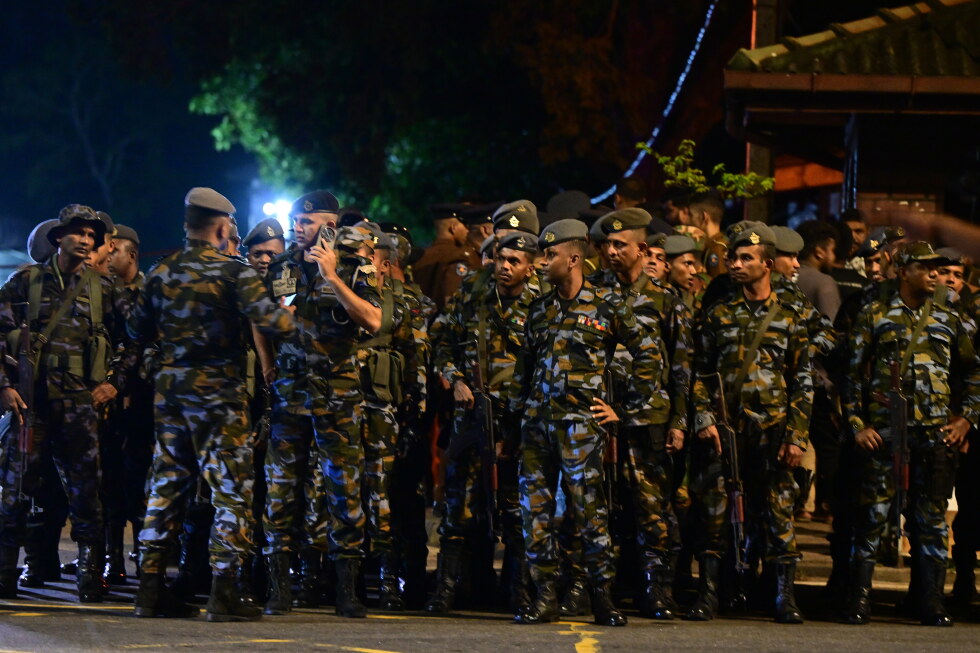
A wave of violent unrest has shaken Sri Lanka’s overcrowded prison system in the past 48 hours, leaving three inmates dead and more than two dozen others injured, the country’s top public security official confirmed to national lawmakers Friday.
Public Security Minister Ananda Wijepala told Parliament that the first fatal outbreak erupted at Colombo Magazine Prison, located in the capital, late Thursday. Around 40 inmates broke out of their cells before clashing with one another, leaving one detainee dead. The violence spread the following morning to Kuruwita Prison, a facility roughly 50 miles outside the capital in the town of Kuruwita, where a second clash claimed the lives of two more inmates. Across the two violent incidents, 23 injured detainees were transported to local hospitals for emergency care, Wijepala added. According to the minister, the fighting was tied to long-running power conflicts between rival criminal gangs and narcotics trafficking networks operating within the prison system. Prison administration spokespeople did not immediately respond to requests for additional comment on the incidents.
Separately, at a third detention center, the Pallansena Correctional Center, prison authorities deployed tear gas Friday to disperse a peaceful inmate protest. No injuries or casualties were reported in that unrest.
These latest fatalities come just one month after a far deadlier clash at Negombo Prison on July 6, which left at least 26 people dead, including seven serving prison officers. Experts and prison rights advocates have long warned that systemic overcrowding has created a tinderbox inside Sri Lanka’s corrections facilities, pointing to structural policy failures that have driven the ongoing crisis.
Justice Minister Harshana Nanayakkara revealed in a recent parliamentary address that Sri Lanka’s prisons currently hold more than 39,000 inmates across a system designed to hold a maximum of just 10,000 detainees — meaning the national prison population is four times the facility network’s intended capacity. Senaka Perera, president of the Committee for Rights of Prisoners, noted that overcrowding and inadequate living conditions have left detainees in a constant state of frustration, creating fertile ground for repeated outbreaks of violence.
A large share of the current prison population is made up of suspects awaiting trial on narcotics-related charges. Perera explained that recent legislative reforms that tightened national bail requirements have drastically increased the number of pre-trial detainees held behind bars, worsening overcrowding across the country. His rights organization has repeatedly called on national authorities to reclassify drug-dependent inmates as medical patients rather than criminal offenders, and to build dedicated, separate rehabilitation facilities to address the root of the narcotics crisis driving prison unrest.