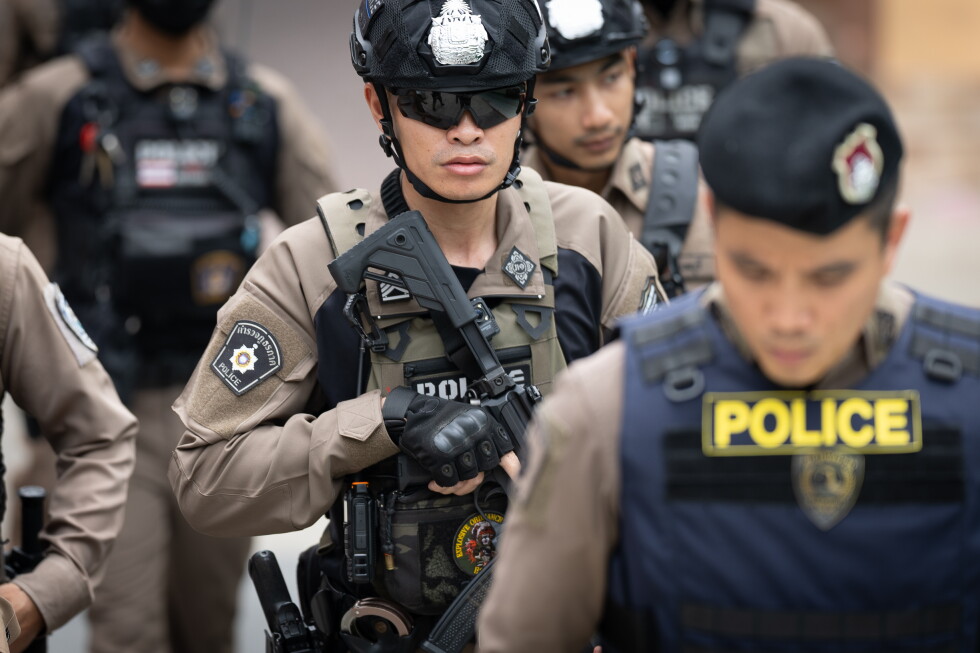
BANGKOK – A shocking act of gun violence has rocked Thailand, with authorities confirming that a 14-year-old student carried out a fatal shooting spree that left at least seven people dead on Friday in Nonthaburi province, a densely populated northern suburb of the Thai capital. Law enforcement officials have confirmed the identities of the victims: five are staff members from Debsirin Nonthaburi School, where the student is enrolled, and the other two are the teenager’s own grandparents, with whom he resided. No immediate updates have been shared on the suspect’s motive or condition as of the publishing of this report. This latest tragedy has once again thrown a spotlight on Thailand’s longstanding challenges with gun accessibility, a issue that has fueled repeated high-profile mass casualty attacks across the country in recent years. Thailand registers one of the highest per capita gun ownership rates across all of Asia, and while targeted attacks driven by political conflict remain rare, unprovoked mass shootings by civilian perpetrators have become an increasingly frequent public safety concern. To contextualize the scope of the crisis, a timeline of major non-political mass shooting incidents recorded in Thailand over the past six years underscores how often these deadly events occur: In February 2026, a 17-year-old male student stole a service weapon from a police officer and opened fire at a public high school in southern Thailand’s Hat Yai province, leaving one dead and two others wounded. The teen was taken into custody following a brief standoff with law enforcement. Less than six months prior, in July 2025, a gunman with a reported personal grudge opened fire at a crowded popular fresh food market in central Bangkok, killing five people before turning the gun on himself to die by suicide. In October 2023, another 14-year-old teen carried out a shooting at a major downtown Bangkok shopping mall, fatally wounding two people before he was apprehended by police. Investigators later confirmed that the weapon the teen used was originally manufactured to fire only blank rounds, but had been illegally modified to fire live ammunition. Three months before that mall attack, in March 2023, a gunman shot and killed three civilians in Phetchaburi province, located roughly 105 miles southwest of the Thai capital. The incident ended after a 14-hour standoff, when police commandos shot and killed the assailant. The deadliest mass killing in Thailand’s recent history took place in October 2022, in the northeastern province of Nong Bua Lamphu. A former police sergeant who had recently been terminated from his position carried out a brutal attack that left 37 people dead, more than two dozen of whom were toddlers attending a local daycare center. After the rampage at the childcare facility, the gunman returned to his home, killed his wife and stepson, and then died by suicide. In February 2020, a soldier enraged over an unresolved land dispute embarked on a 16-hour shooting rampage across the northeastern city of Nakhon Ratchasima. The attack left 29 people dead and dozens more injured, before joint police and military forces shot and killed the gunman following an overnight siege. Just one month prior, in January 2020, a masked gunman robbed a gold shop inside a shopping mall in central Thailand’s Lopburi province, shooting and killing three people including a 2-year-old toddler. The perpetrator was later identified as a local school headmaster; he was arrested less than two weeks after the attack, pleaded guilty to multiple murder charges, and was sentenced to death.