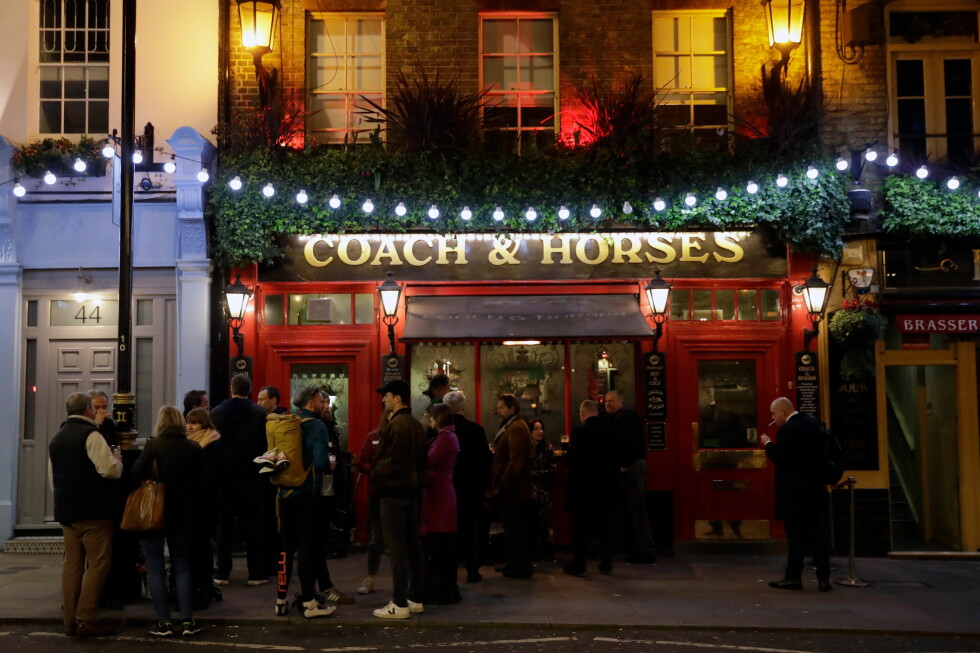
A seemingly mundane draft policy proposal from a London local government has ignited a fierce national political debate, after a plan targeting so-called “vertical drinking” — the bureaucratic term for standing while consuming alcoholic drinks — erupted into a major public relations headache for Westminster City Council.\n\nWestminster City Council oversees licensing for thousands of pubs, bars and restaurants across London’s iconic West End, a global nightlife destination that draws millions of tourists and local visitors each year. Standing drinkers who gather in small groups to socialize, often spilling out onto sidewalks on warm spring and summer evenings, have long been a defining feature of the district’s pub culture, particularly in bohemian Soho.\n\nVeteran Soho publican Lesley Lewis, who has managed the French House pub for 37 years, warned that cracking down on this beloved tradition would backfire badly for local businesses already struggling with soaring commercial rents and rising business taxes. “We rely on those people standing up with the rents and the rates put upon us,” she explained. “People want to enjoy themselves in Soho, they want to have a drink outside, they want to dance. They don’t want to sit down and just be where they are, they want to meet people and chat.” Driving these customers away, Lewis argued, would only push business to other parts of the UK capital.\n\nAfter British national newspapers seized on the proposal with splashy front-page headlines including “Sitting room only at pubs?” and “Soho’s pubs won’t take clamp down on ‘vertical drinking’ lying down,” Westminster council pushed back against what it called misleading and confusing media coverage of its draft plan.\n\nCouncil leader Paul Swaddle released an official statement clarifying that the policy, which is still open for public consultation, does not aim to ban people from standing with a drink entirely. Instead, he framed the proposal as a targeted effort to cut down on public noise and unruly behavior by encouraging venues to shift more open bar space to seated table service that also supports food orders. “Let me be clear about what we’re trying to achieve,” Swaddle said. “This is about safety, not stopping anyone standing at a bar with a pint in their hand.”\n\nThe full draft licensing policy clarifies that the proposal is designed to discourage excessive public drunkenness, by incentivizing business owners to create more seated space for drinkers and table food service, rather than maintaining large open bar areas dedicated to high-volume standing drinking. Westminster is home to more alcohol-licensed hospitality venues than any other local authority in the United Kingdom, and the council notes that while the hospitality sector is a critical driver of the local economy, local leaders also have a core responsibility to ensure Westminster remains “a great place for residents to live.”\n\nThat clarification did little to defuse the backlash from senior national and city government officials, who have prioritized reviving a UK hospitality sector that has yet to fully recover from widespread disruptions and financial losses during the COVID-19 pandemic. A spokesperson for Prime Minister Andy Burnham called standing pub culture not a nuisance, but a core part of “British life,” adding that Burnham is pushing local leaders to collaborate with the hospitality industry to help pubs thrive. During a recent visit to a pub in Essex, the prime minister doubled down on this stance, saying: “The pubs that we’ve got are at the heart of high streets, and I think it’s really important to signal at the start of my time in office that I will be a defender for them. I will speak up for them and act.”\n\nLondon Mayor Sadiq Khan has also waded into the row, signaling he plans to use new regulatory powers set to take effect for his office later this year to review the Westminster policy. Taking to social media platform X to share his criticism, Khan argued: “You can’t run a world-famous nightlife district with a village-hall mindset. London’s hospitality and nightlife support jobs, culture and growth.”\n\nThe controversy highlights the ongoing tension between local authorities’ efforts to manage quality of life for residential communities, and policymakers’ priorities to support the recovery of Britain’s iconic hospitality industry, which remains a cornerstone of national culture and local economic activity across the country.