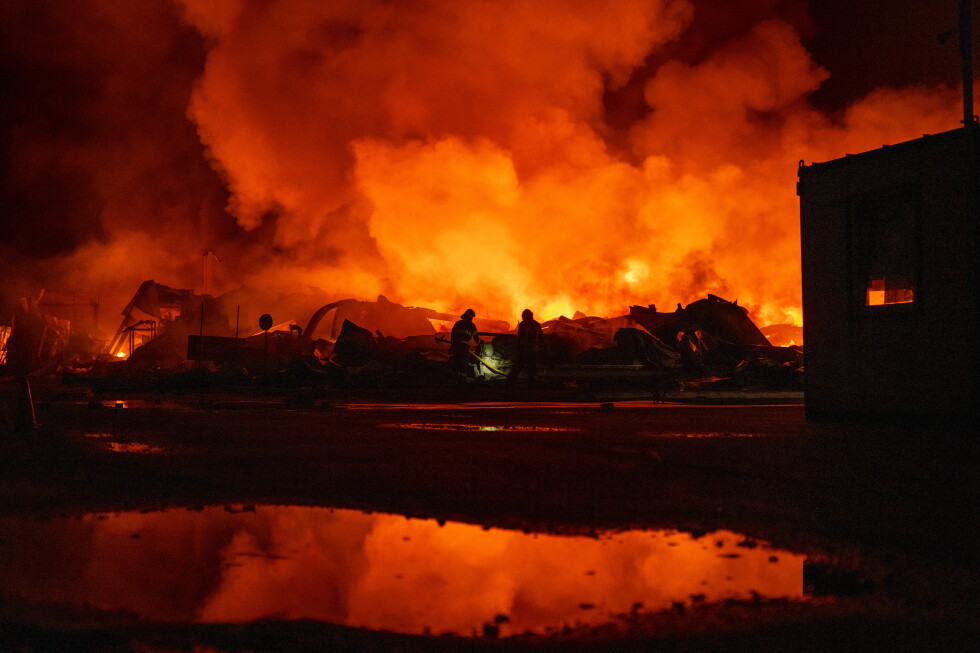
On Friday, local Russian officials and corporate sources confirmed that Ukrainian long-range drones have targeted a warehouse facility operated by Russia’s largest e-commerce retailer Wildberries, located in the Ural Mountains roughly 2,000 kilometers from the Russia-Ukraine border.
This strike is not an isolated incident. Throughout 2025, Ukraine has repeatedly carried out long-range drone attacks on targets deep inside Russian territory, even reaching an oil refinery in western Siberia nearly 2,500 kilometers from the shared border. These operations underscore the central role that drone innovation has played in Ukraine’s defense strategy against Russia’s full-scale invasion, now in its fourth year. Kyiv’s advancements in drone technology have also attracted global attention: Ukrainian officials confirm the country has already signed drone cooperation agreements with nine nations, and is currently negotiating additional partnerships with 15 more.
The targeted warehouse in this week’s attack is located in Yekaterinburg, Russia’s fourth-largest urban center. Wildberries confirmed the strike ignited a fire at the facility, but noted that most of the stored inventory avoided major damage. This outcome differs from more than a dozen recent attacks on other Wildberries depots across Russia, several of which were completely destroyed. Analysts view these strikes on commercial logistics infrastructure as part of Ukraine’s broader strategy to erode public confidence in the Kremlin and disrupt Russian domestic supply chains.
Regional governor Denis Pasler reported that three drones directly struck the warehouse’s roof. Artyom Zhoga, the Kremlin’s appointed representative for the Sverdlovsk Oblast, added that 800 people were safely evacuated from the facility, with no injuries reported in the aftermath of the attack.
Beyond long-range strike capabilities, Ukrainian President Volodymyr Zelenskyy announced Thursday that Kyiv is accelerating domestic weapons development, with a particular focus on air defense systems to counter escalating Russian ballistic missile attacks. Russia has increasingly exploited gaps in Ukraine’s current defense network caused by shortages of American-made Patriot interceptor missiles, launching repeated barrages that have hit civilian infrastructure across the country.
Zelenskyy revealed that a joint European anti-ballistic missile development program is already active, with 10 participating nations working together to build a new continent-wide ballistic defense shield. The project aligns with widespread European concern that Russia’s territorial ambitions extend beyond Ukraine’s borders. “Ukraine can manufacture its own anti-ballistic missiles and launchers, while our partners will supply necessary components and critical elements like radars and sensors,” Zelenskyy explained in a social media statement. “A large-scale, domestic anti-ballistic program will bring benefits to every country in Europe.”
In parallel, Ukraine is also advancing development of its own domestically produced ballistic missiles for use against Russian targets. Zelenskyy confirmed that initial testing has demonstrated strong operational potential, and work is ongoing to move the project from development to mass deployment as a functional weapon.
While weapons development progresses, Ukrainian frontline defenses in eastern Donetsk Oblast remain under intense pressure. Russia’s larger military force has continued incremental offensive operations, which Western analysts and officials note have come at an extremely high cost in Russian troop casualties, as Moscow seeks a long-sought breakthrough after months of stalled advances.
Kramatorsk, one of four major fortified cities that make up Ukraine’s strategic “Fortress Belt” in Donetsk, has ordered the evacuation of minors amid intensifying shelling. This 50-kilometer line of heavily defended urban centers has been the primary barrier blocking Russia from seizing full control of Ukraine’s industrial Donbas heartland. Vadym Filashkin, head of the Donetsk regional military administration, reported Friday that more than 800 civilians – including 91 children – were evacuated from high-risk areas in the region over the preceding 24 hours. To slow Russia’s push, Ukraine has deployed midrange strike drones to target Russian supply lines and disrupt offensive preparations.
The latest strikes come as both sides continue to exchange nearly nightly drone attacks across the front line and deep into each other’s territory. Russia’s Defense Ministry claimed its air defense systems downed 203 Ukrainian drones between late Thursday and early Friday. In contrast, Ukraine’s Air Force reported that Russia launched 147 long-range strike drones against Ukrainian targets in the same period.
In northern Ukraine’s Sumy Oblast, a Russian drone strike hit a busy public market on Friday morning, leaving 10 people wounded, according to local authorities. Regional administration head Oleh Hryhorov added that Russian forces also launched a combination of glide bombs and multiple drone types against the regional capital, targeting residential buildings, transport links, and civilian infrastructure. Two additional people were wounded in that wave of attacks, Hryhorov confirmed.