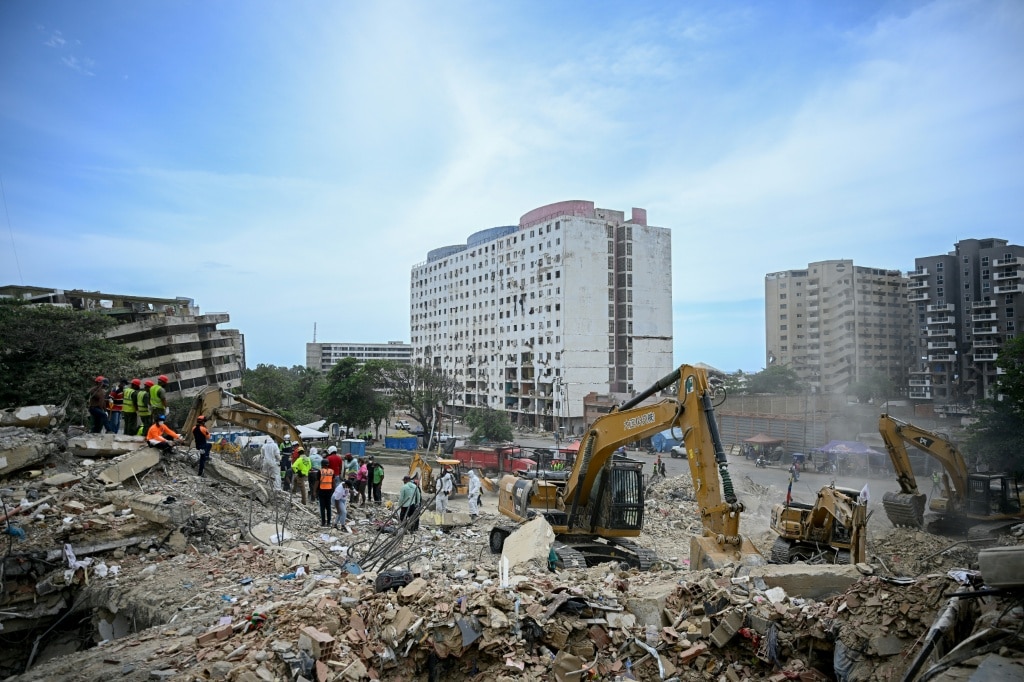
On June 24, a pair of powerful back-to-back earthquakes tore through northern Venezuela, reducing hundreds of structures to rubble and leaving a trail of devastating loss. Months after the disaster struck, one critical question remains unanswered: how many people are still unaccounted for, buried beneath the broken concrete and debris? Official government data confirms that more than 6,000 people have been confirmed dead from the tremors, but authorities have continuously refused to release any formal count of missing persons. With almost no hope of survival for anyone still trapped, families of the missing are trapped in a cruel, desperate limbo, clinging to faint hope while continuing their search for loved ones.
The most recent official government update, published Monday, put the confirmed death toll at 6,125. The report also noted that more than 60,990 injured people have received medical treatment, counted 43,679 households displaced or directly impacted by the quakes, and stated that roughly 346,755 tons of rubble have been cleared from disaster zones. But from the day the tremors struck, no consistent or official number of missing people has been made public.
Across the hardest-hit regions, particularly Venezuela’s coastal La Guaira state and its Caraballeda neighborhood, dozens of civilian volunteers have taken recovery efforts into their own hands, digging through collapsed structures by hand in search of any trace of missing family members. For 50-year-old carpenter Victor Morales, the search is personal: he has already recovered the body of his 13-year-old granddaughter from the rubble, but he refuses to leave until he finds his missing 11-year-old grandson. “We’ve been here since day one, digging holes all the way down to the ground floor,” Morales told AFP through tears. “Until I find him, I’m not going to stop.”
Conflicting estimates from public officials and international observers have only deepened the confusion around the true number of missing. In the immediate aftermath of the disaster, United Nations aid chief Tom Fletcher estimated that more than 50,000 people were unaccounted for, but a diplomatic source who spoke to AFP called that figure inaccurate. “It’s impossible to know exactly, but around 10,000 or more,” the source said.
The root of this uncertainty extends far beyond government reluctance to release data. Venezuela has not conducted a full national census since 2011, and years of severe economic and political crisis have made it impossible to update the country’s core demographic records. This gap in data aligns with the Venezuelan government’s longstanding pattern of releasing demographic and economic statistics only when it is politically convenient, rather than on a consistent, transparent schedule.
Even official statements from senior Venezuelan leaders are inconsistent. On June 30, National Assembly Chief Jorge Rodriguez — brother of interim president Delcy Rodriguez — claimed that 30,000 people were present in the disaster zone when the quakes hit. He stated that 19,000 had been rescued or fled the area, and the death toll at the time stood at roughly 2,000 — a math that leaves 9,000 people unaccounted for. Just last week, however, La Guaira Governor Jose Alejandro Teran put the number of missing at 1,338, based on local residential registry data.
With no reliable official information coming from government agencies, Venezuelan civilians have launched grassroots initiatives to track missing people on their own. Multiple independent websites have been created to crowdsource reports of unaccounted for victims, but even these efforts have produced wildly varying results, with the gap between the lowest and highest missing person estimates topping 20,000.
One of the most prominent citizen-led platforms, “Venezuela te busca” (Venezuela is Looking for You), initially recorded 44,274 reports of missing people, and says 17,790 people have yet to be located. A second site, “Desaparecidos terremoto Venezuela” (Missing Earthquake Venezuela), lists 44,418 total missing, with 29,518 still uncontactable. A third independent platform, venezuelareports.org, puts the total number of unaccounted for at 41,311. Despite the good intentions behind these grassroots projects, the diplomatic source who spoke to AFP confirmed, “there are no reliable figures.”
Experienced rescue volunteers say it is not unusual for large-scale disasters to leave some people permanently unaccounted for. “In disasters of this magnitude, it always happens that some people are not found and remain missing,” explained Esteban Chala, an Argentine rescue volunteer with years of disaster response experience.
For some families, the weeks-long search ends only after weeks of agonizing waiting. After 40 days of digging and waiting, 50-year-old police officer Fernando Bencomo watched as a specialist recovery team pulled the unrecognizable body of his 21-year-old son, student Fernando Antonio, and his son’s pet dog from the ruins. “He had his whole life ahead of him,” Bencomo told AFP. “From day one, I’ve been here searching. I didn’t want to stop until he could rest in peace.” Even after recovering his own son, Bencomo says he will continue helping other families search: “There are more bodies” to recover.
Bencomo’s find removes one more name from the list of missing, but as recovery efforts drag on, the official confirmed death toll continues to climb, leaving hundreds, possibly thousands of families still waiting for answers that the Venezuelan government has yet to provide.