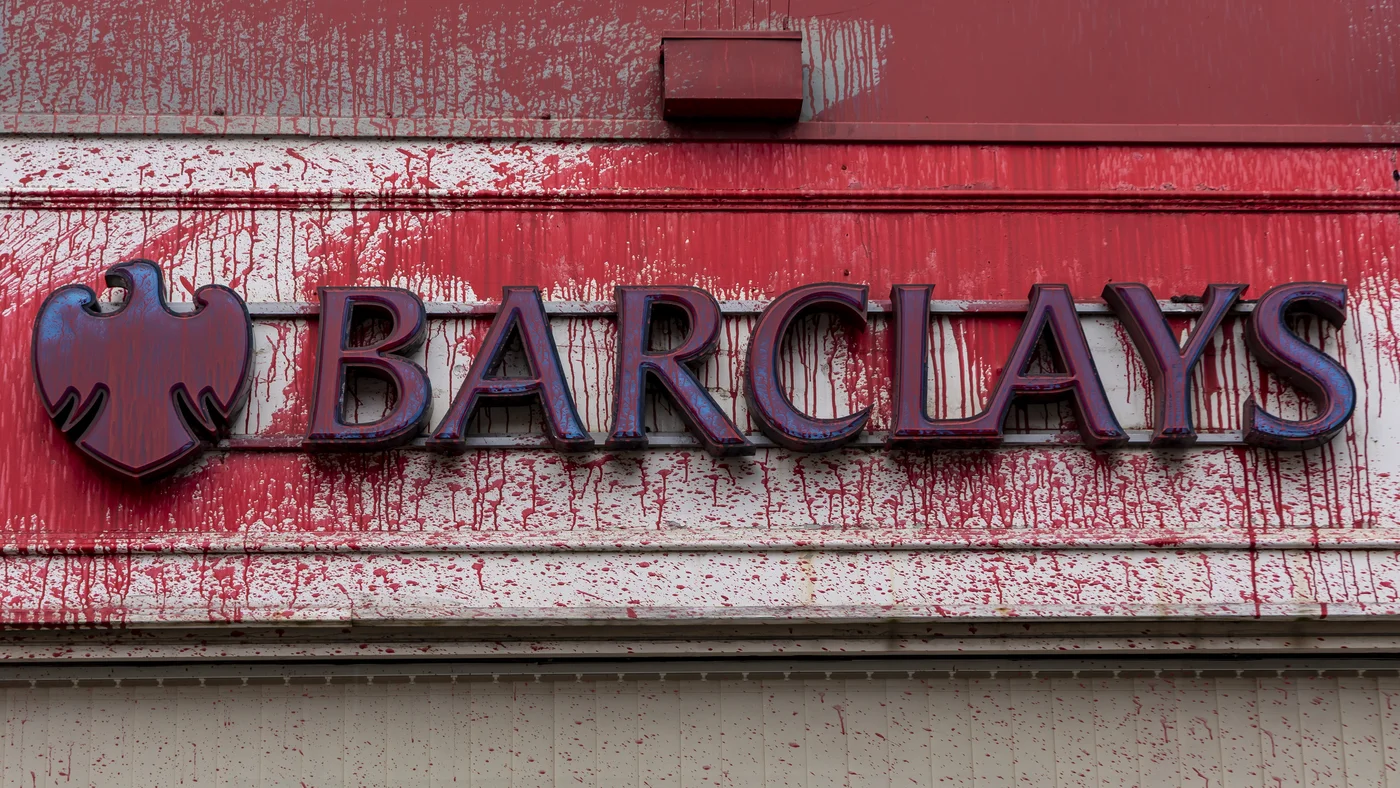
A high-stakes upcoming hearing in the UK legal system will determine whether five Palestine Action activists, already convicted of felony criminal damage, will be subjected to exceptional terrorist sentencing, a move that has sparked fierce criticism over judicial process and overreach.
The five defendants – Brendon O’Hagan, 28, Amanda Kelly, 31, Hmeera Atiqnisar, 31, Mohammed Malik, 28, and 70-year-old Alma Yaniv – were found guilty by a jury in June 2026 of causing more than £212,000 (equivalent to $283,000) in intentional damage to a Barclays bank location in Burnley back in August 2024. Notably, their direct action protest at the branch took place months before the UK government officially proscribed Palestine Action as a terrorist organization, and this specific incident is not included among the three group-related events the government has formally designated as terrorist activity – all of which are alleged to have caused more than £1 million in damage each.
What has made this case unprecedented in legal procedure is that the question of terrorist sentencing was never raised to the jury during the entire trial process. After the guilty verdict was returned, the trial’s presiding judge, Phillip Parry, notified defense counsel that he would consider attaching a formal “terrorist connection” to the conviction, a designation that carries far harsher legal penalties. He then referred the sentencing decision to senior judge Robert Altham, who will hold a dedicated hearing on August 21 to rule on the terror designation, two weeks ahead of the formal sentencing scheduled for September 4.
Judge Altham’s involvement in the case has already drawn significant scrutiny from activist and legal circles. A 2018 review by the UK Court of Appeal found that Altham had handed down “manifestly excessive” prison sentences to a group of anti-fracking activists convicted of public nuisance during a protest near Blackpool. The appellate court ruled the sentences were wholly inappropriate and ordered the immediate release of all activists. One of those activists, Simon Roscoe Blevins, who received a 16-month custodial sentence from Altham in 2018, has publicly criticized Altham’s role in the current case.
“It is surely another gross overreach to add a terror connection to sentencing after failing to mention the possibility at any point before or during trial,” Blevins said. “And given his history, Judge Altham in particular cannot be trusted to make a fair ruling on this.”
Criticism has also come directly from Palestine Action leadership. Huda Ammori, co-founder of the group, called Altham’s appointment to decide the terror designation “shocking.” Ammori noted that in both the current Barclays case and a separate high-profile Palestine Action case tried recently near Bristol, juries were given no indication that a criminal damage conviction could open the door to terrorist sentencing.
“In both the Filton and the Barclays cases, the jury operated under the clear impression they were only deciding whether criminal damage occurred,” Ammori explained. “They had no idea that a conviction for this straightforward offense would effectively amount to convicting the defendants of terrorism.”
The move to pursue terrorist designation follows a precedent set in the recent Filton case, where four activists convicted of criminal damage at an Elbit Systems facility were sentenced as terrorists despite only being convicted of non-terrorism criminal charges. Judge Parry circulated that ruling by Justice Johnson, the presiding judge in that case, to legal teams in the current Barclays trial after the conclusion of proceedings. The Crown Prosecution Service (CPS) has since formally backed applying the terror sentencing, even though it never raised the possibility during the trial itself.