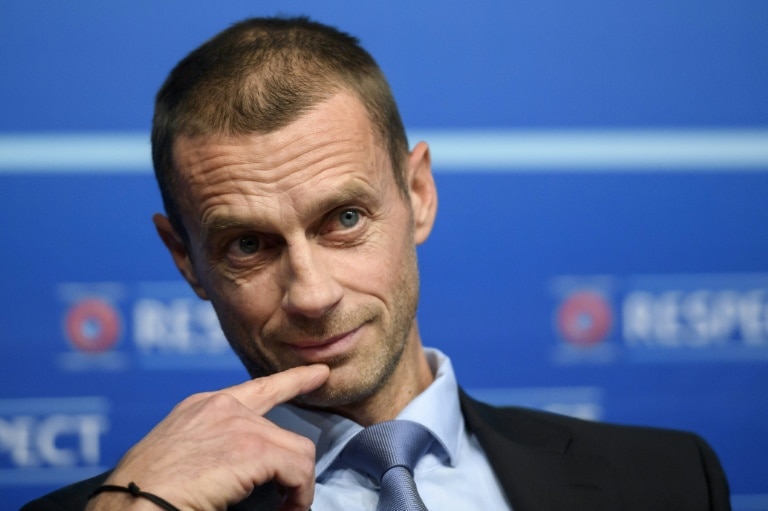
Global football is currently roiled by an unprecedented high-stakes power struggle between two of the sport’s most influential leaders: UEFA president Aleksander Ceferin and FIFA chief Gianni Infantino. For months, tensions between Europe’s top football governing body and the global governing body have simmered, reaching a dramatic boil in recent weeks that has reshaped the hierarchy of international football.
Ceferin, a 58-year-old Slovenian lawyer who has led UEFA since 2016, has long described himself as an “underdog” leader despite holding one of the sport’s most powerful positions. A controversial 2024 statute change allows him to run for a fourth term as UEFA president next year, a rule tweak that has drawn sharp criticism from within football circles and triggered the resignation of former UEFA chief of football Zvonimir Boban, the Croatian football legend. Even so, Ceferin has ruled out a challenge to Infantino in FIFA’s March 2025 presidential election in Rabat, where the FIFA chief is seeking his own fourth and final term. When asked last September if he would run for the global role, Ceferin told Politico simply: “No.”
Still, that public refusal to run has not stopped Ceferin and UEFA from waging an aggressive campaign to block Infantino’s policy agenda, and their efforts have already delivered multiple high-profile wins. The most recent victory came last weekend, when Infantino backed down from a controversial plan to bring in private investors to FIFA’s club competitions, a reversal widely seen as a humiliating climbdown. The turning point was UEFA’s explicit threat to boycott future World Cups if the proposal moved forward, a threat that industry insiders describe as both aggressive and uniquely credible.
Terrence Burns, a veteran brand and marketing strategist who worked on two successful World Cup host bid campaigns, told AFP that Ceferin emerged as the clear winner from the standoff. “Ceferin played it well,” Burns said. “UEFA carried the fight collectively while he issued no personal statement at any point. The boycott threat was aggressive and credible, which is a rare pairing.”
This is not the first time Ceferin has successfully pushed back against Infantino. In 2021, joint opposition from UEFA and South American football confederation CONMEBOL forced Infantino to abandon a controversial plan to shift the World Cup from a four-year cycle to every two years. Ceferin has also proven his willingness to take on powerful opponents close to home: when the breakaway European Super League launched in 2021, he condemned the project aggressively, even calling then-Juventus chairman Andrea Agnelli “a snake” despite being godfather to Agnelli’s daughter. Ceferin later recalled that the 48 hours after the ESL launch were some of the most stressful of his tenure, saying: “I didn’t sleep, eat or drink for 48 hours, because I had phone calls with governments and royal families… and pressures and threats.” In the wake of the ESL’s collapse, UEFA overhauled its flagship club competition, the Champions League, to address the structural grievances that had fueled the breakaway attempt.
Tensions between UEFA and FIFA first flared into public view during the 2024 World Cup, when Ceferin boycotted the tournament final in protest of a controversial FIFA decision. The dispute centered on US striker Folarin Balogun, who received a red card in the United States’ round of 32 win over Bosnia and Herzegovina. FIFA overruled the suspension, clearing Balogun to play in the round of 16 against Belgium, a decision that sparked widespread outrage after it was revealed that former US President Donald Trump had personally called Infantino to intervene in the case.
Ceferin’s background prepared him for high-stakes conflict: he served in the Yugoslav Army in the 1980s before being called up to Slovenian forces during the country’s 1991 War of Independence. He once told ESPN, “Luckily I never had to shoot (anybody).” Today, he frames his confrontations with Infantino through a long-held personal mantra: “I think you should in professional and private life, choose your battles. You should fight when it’s really a reason to fight, but every fight is tiring.”
The controversial 2024 statute change that clears Ceferin’s path to a fourth UEFA term has already drawn significant criticism. The rule did not eliminate the three-term limit entirely, but it stipulated that any terms started or served before July 1, 2016 would not count toward the cap, a carve-out that applies exclusively to Ceferin. Boban, who resigned in protest, noted that the shift directly contradicted reforms Ceferin himself introduced in 2017 to prevent exactly this kind of incumbency advantage. “Ironically, it was the UEFA president himself that proposed and launched a set of reforms in 2017 which were introduced to prevent such a possibility,” Boban said. “The reforms were to football’s great credit, and that of the UEFA president. His shift away from these values is beyond comprehension.”
Looking ahead, Ceferin’s core goal is to block Infantino from securing a fourth term as FIFA president. Infantino, who was re-elected unopposed in both 2019 and 2023, is facing public pressure for the first time during his tenure, largely due to the unified opposition from Ceferin and UEFA. While Ceferin has said he will not run for the top job himself, his behind-the-scenes organizing has already reshaped the race, and his track record of beating Infantino on policy fights suggests the coming months will bring more upheaval to global football governance.