ISLAMABAD, Pakistan – Early official results from the first two phases of legislative assembly elections in Pakistan-administered Kashmir show Prime Minister Nawaz Sharif’s ruling Pakistan Muslim League-N (PML-N) holding an overwhelming early lead, defying weeks of destabilizing protests and organized boycott calls from a recently banned opposition group.
Raja Shakeel, spokesperson for the region’s independent election commission, confirmed Wednesday that candidates backed by PML-N have secured 24 of the 34 seats decided in the first two rounds of voting. Even with 11 remaining seats set to go to the polls on August 10, election observers already project the party is on an unassailable path to form the next regional government — marking PML-N’s return to power in the territory after a 10-year absence.
Election officials extended voting across three phases to address two overlapping challenges: persistent security threats from unrest and severe disruption from annual monsoon rains, which made large-scale outdoor campaign rallies logistically unfeasible and dangerous. Despite these headwinds and the boycott campaign, voter turnout has outperformed many expectations: regional data shows turnout surpassed 50% across most voting areas, hitting 56% in the regional capital of Muzaffarabad.
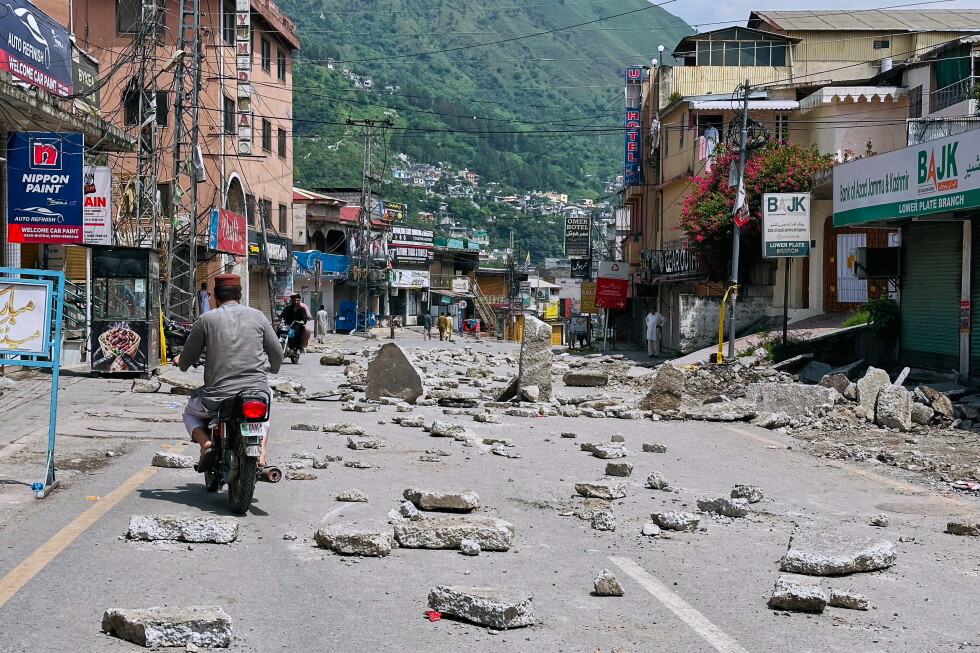
The electoral process was overshadowed for weeks by demonstrations led by the Joint Awami Action Committee (JAAC), an opposition group that was formally banned by the regional government over public order and national security concerns shortly before voting began. The JAAC has centered its protest on 12 legislative seats reserved for refugees displaced from Indian-controlled Kashmir following the 1947 partition of British India. The group argues these seats give unfair disproportionate political influence to people residing outside Pakistan-administered Kashmir and has repeatedly called for the reserved seats to be eliminated entirely. The controversy escalated in June when the region’s Supreme Court ruled that the reserved seats are constitutionally protected, and can only be altered through a formal constitutional amendment, a process that requires approval from the elected legislative assembly.
The reserved seats were first established to guarantee political representation for displaced families who settled across mainland Pakistan after partition, when Pakistan-administered Kashmir lacked the infrastructure and resources to accommodate a large influx of new residents. Decades later, many descendants of these displaced families still reside across Pakistan, while others have since relocated to the Pakistan-administered Kashmir region.
In the lead-up to voting, repeated clashes broke out between JAAC supporters and local police. Regional authorities have further alleged that members of the Pakistani Taliban have infiltrated JAAC protests to disrupt the democratic process, claims the JAAC has not issued any formal response to. Despite these threats of violence, the majority of registered voters turned out to cast their ballots, exercising their democratic right amid widespread insecurity.
Political analysts note that the strong turnout and rejection of the boycott campaign signals broad public confidence in the regional democratic process, even amid longstanding political tension. In a formal statement following the release of early results, former Prime Minister Nawaz Sharif offered congratulations to all winning candidates for their successful campaigns.
The Kashmir region has remained one of the world’s longest-running territorial disputes: both nuclear-armed neighbors India and Pakistan administer separate portions of the Himalayan territory, while each claims full sovereignty over the entire region. Since both states gained independence from British rule in 1947, two of the three full-scale wars fought between the two nations have been over control of Kashmir.