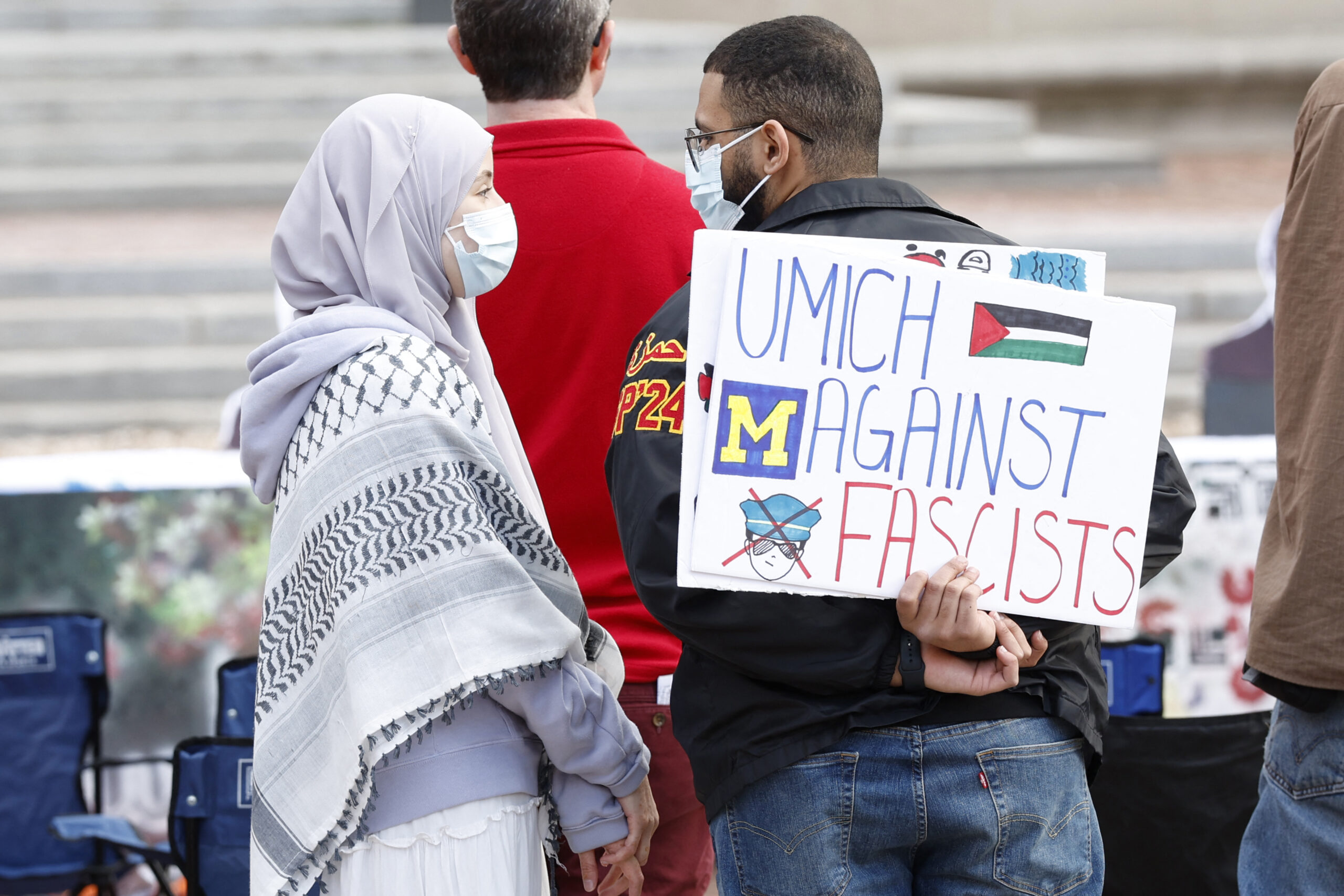
A wave of coordinated disciplinary action against pro-Palestinian student activists at the University of Michigan (UM) has sparked fierce criticism over alleged due process violations and institutional bias, with multiple students facing long-term career and academic penalties for their participation in anti-war demonstrations against Israel’s military campaign in Gaza. Just 15 months ago, Drin Shapiro, then a final-year history undergraduate and student program assistant at UM’s English Language Institute, was a typical campus worker on track to graduate. Today, he carries a record of criminal charges, has lost his campus position, spent time in jail, and remains subject to university discipline months after earning his bachelor’s degree in May 2024.
Shapiro’s ordeal began on May 21, 2024, when he joined a student encampment calling for an end to the war in Gaza. He was taken into custody during a police raid on the protest site and later released on bail. In September 2024, Michigan Attorney General Dana Nessel — a prominent public supporter of Israel — filed formal criminal charges against Shapiro. In a surprise reversal in May 2025, Nessel’s office dropped all charges, concluding that pursuing the case no longer justified the expenditure of public time and resources.
What followed the initial arrest, however, has drawn particular outrage: while Shapiro was out on bail, UM hired private investigators to conduct surveillance on his movements and those of other arrested protesters, a step that the university later walked back by firing the investigators. Shapiro told Middle East Eye (MEE) that he had heard surveillance was targeting other activists and had even noticed being followed on occasion, but did not realize he was under close monitoring by two separate private security teams until much later. Between two scheduled classes, Shapiro stayed on campus to post flyers calling out the university’s alleged complicity in the humanitarian crisis in Gaza, a choice that violated the strict terms of his bail, which only permitted campus access for official academic activities. Based on evidence collected by the private investigators, Shapiro was jailed for three days in late April.
“We were all surprised. We didn’t think that the judge would rule such a ridiculous punishment for handing tape to people between classes, but we understood,” Shapiro said.
Since the start of Donald Trump’s second presidential term in January 2025, U.S. institutions of higher education have faced mounting political pressure to crack down on campus speech critical of Israel, and UM has emerged as a central flashpoint in this national crackdown. In mid-August 2025, following a mandatory arbitration hearing, Shapiro received formal notice from Amy Grier, associate director of UM staff human resources, outlining the university’s findings. The notice stated that a review of the case had concluded Shapiro had committed multiple violations, including interfering with law enforcement operations and engaging in behavior a reasonable person could interpret as potentially violent or threatening to people or property. As a penalty, UM barred Shapiro from enrolling in any future degree programs at the institution, adding to a prior ban on his re-employment at the university. Shapiro is now part of a lawsuit against UM over these penalties.
Shapiro is far from alone in facing disproportionate punishment. Eaman Ali, a May 2025 graduate with dual bachelor’s degrees in political science and arts and design who previously worked as a campus administrative assistant, was fired from her university position roughly one month before graduation over her participation in a Gaza solidarity protest outside UM’s arts museum last year. Her case mirrors that of another UM activist, Zainab Hakim, who was profiled by MEE earlier this year, and all three are co-plaintiffs in the ongoing lawsuit against the university, arguing that UM has placed a permanent, damaging mark on their employment records.
Even after graduating and leaving the university, Ali was summoned to an arbitration hearing in June 2025, followed by a meeting with Grier — the same human resources official who handled Shapiro’s case. Ali told MEE she was accused of failing to comply with university officials, refusing to leave university-owned property, and causing violence or community harm at a separate protest held on the first anniversary of the October 7, 2023, attacks that precipitated Israel’s military offensive in Gaza. Ali denies all allegations, emphasizing that she was never arrested at either of the protests for which she is being disciplined. Already banned from future UM employment, she now faces a request from the complainant for a lifetime ban on enrolling in any UM academic program. Ali added that Grier refused to answer basic questions about who requested the investigation and where the allegations originated.
“They’re trying to make an example of us… the overreach… is essentially just them trying to come for whoever they can,” Ali told MEE. “And it also signals to me weakness, because they can’t come for and they can’t target the hundreds of protesters… they can only target and punish a select few that they believe that they have access to.”
Shapiro and Ali are among 11 students who faced formal conduct hearings this summer, all processed through UM’s Office of Student Conflict Resolution (OSCR), a body originally designed to function as a restorative justice mediation forum for campus disputes. Student activists and campus groups say OSCR has been systematically weaponized to target pro-Palestinian organizers. In a statement provided to MEE, UM’s pro-Palestinian campus group The Tahrir Coalition argued that the university’s Board of Regents has overhauled the once-restorative process into a tool for secret, unilateral punishment of protesters that lacks basic due process protections.
“Originally founded on principles of restorative justice, OSCR has been transformed by the Regents into a vehicle to unilaterally punish – and even expel – student protesters behind closed doors and without due process,” the group’s statement read. “The University… successfully transformed the OSCR process into a kangaroo court in which it is both plaintiff and judge.”
These summer 2025 hearings mark the third round of disciplinary proceedings OSCR has held against pro-Palestinian activists, based on alleged violations of UM’s Statement of Student Rights and Responsibilities (SSRR). The Tahrir Coalition highlighted two particularly controversial changes the university made to the SSRR in July 2024 that favor prosecution of protesters: the revisions allow UM itself to act as a complainant in OSCR cases, removing the requirement for an individual to file a formal complaint, and drastically shorten procedural deadlines, making it extremely difficult for student respondents to secure legal representation and prepare a defense. Activists also note that holding hearings during summer break, when most students are away from campus and many faculty supporters are unavailable, adds another barrier to fair process.
Kathleen Brown, a PhD candidate in American Culture at UM who participated in a three-hour remote OSCR hearing over her role in the arts museum protest, told MEE that every single pro-Palestinian student who has gone through an OSCR hearing has been found responsible for violations. “OSCR for pro-Palestine students has a 100 percent conviction rate. So we always joke like it’s up there with the Israeli military courts,” Brown said. Brown was accused of impeding police activity and disrupting university operations, and the university has recommended a formal reprimand and a mandatory educational essay reflecting on her actions that does not allow any justification for her protest. While this is the lightest available sanction, Brown — the former vice president of UM’s graduate employees union — argues the penalty is intended to mark her for harsher punishment in the future and set a punitive precedent for other activists.
MEE requested comment from UM’s Office of Public Affairs for this reporting, but did not receive a response prior to publication.
The crackdown at UM is part of a broader pattern of aggressive law enforcement and institutional action against pro-Palestinian protesters across Michigan. Human rights activists and legal experts have already condemned state authorities and the FBI for conducting what they call a political witch hunt against student activists, marked by excessive use of force. In April 2025, law enforcement raided multiple homes of current and former UM students who participated in pro-Palestinian demonstrations. Attorney Amir Makled, who represents one of the affected students, told MEE in April that he had filed a motion to disqualify Nessel from prosecuting the student cases over clear evidence of bias.
“Dana Nessel is not impartial in this cause,” Makled said. A 2024 investigation by The Guardian confirmed that UM’s governing board favored Nessel as the prosecutor in these cases specifically because they expected her to take a hard line against student protesters. Nessel had previously requested a special prosecutor take over the cases, acknowledging public perceptions of bias against Arab and Muslim communities. Within days of Makled filing his disqualification motion, Nessel moved to dismiss all criminal charges against the students.
Ali said the endless disciplinary proceedings ultimately serve as a deliberate distraction from the crisis that drove students to protest in the first place: the ongoing humanitarian catastrophe in Gaza. “I’m feeling fed up, to be honest,” she told MEE.