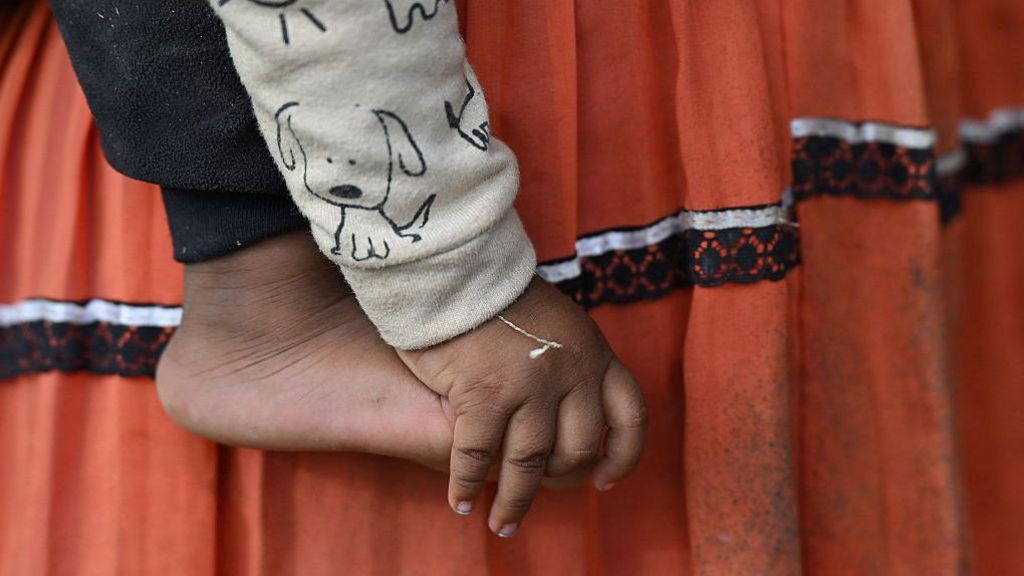
Last week, Colombia etched its name into regional history as the first Latin American nation to formally outlaw female genital mutilation (FGM), a milestone grassroots activists and Indigenous organizers have spent decades fighting to achieve. The groundbreaking ban passed with unanimous support in Colombia’s Congress, closing a long chapter of advocacy to eliminate a dangerous, largely hidden practice that has persisted in the country’s Indigenous Emberá community for generations.
FGM is defined by global health authorities as the partial or total removal of external female genitalia, or any other non-medically justified injury to female reproductive organs. The procedure, which is almost always carried out in unsanitary, secret conditions, carries immediate and lifelong health risks: severe hemorrhaging, chronic infection, complications with menstruation and childbirth, and permanent loss of sexual function. According to the World Health Organization, more than 230 million girls and women currently alive across the globe have undergone FGM, with the vast majority of cases concentrated in African nations.
For Carla Quiñonez, a 30-year-old Emberá activist who has led local campaigns against FGM, the fight for the ban is deeply personal. When Quiñonez’s own daughter was just six months old, the infant’s great-grandmother subjected her to the procedure without the family’s full consent. When the baby was returned, Quiñonez found her feverish, swollen, and bleeding, crying uncontrollably. When Quiñonez confronted her grandmother, the older woman dismissed the harm, claiming the procedure was normal and ordering her to keep it secret. “She said that men mock women who retain their clitoris,” Quiñonez recalled. The nearest formal health clinic was hours away, so Quiñonez’s mother, a traditional midwife, attempted to ease the infant’s pain with medicinal plants, but the baby was left with permanent trauma.
As Quiñonez grew older, she began to connect a pattern of unexplained early childhood deaths among Emberá girls to the hidden practice. She remembers a young female cousin born healthy under her mother’s care who died just three days after birth, with community elders blaming the death on “jai,” a so-called ancestral illness. Today, Quiñonez is convinced the baby actually died from complications of FGM. Experts and activists agree that official case counts vastly underrepresent the true scale of FGM in Colombia. Between 2020 and June 2026, only 240 cases were officially recorded, 90% of which involved girls under six years old. But Dr. Diana Ramos Mosquera, a pediatrician working at Pereira’s San Jorge University Hospital in northwestern Colombia, calls the official number just “the tip of the iceberg.” While examining girls seeking care for unrelated conditions, Dr. Ramos has repeatedly found evidence of scarring, burning, and mutilation. She once treated a young girl whose vaginal opening was fully sealed by the procedure, a complication that would have prevented her from menstruating or having intercourse in adulthood that required major reconstructive surgery.
Dr. Ramos frames FGM as a brutal form of gender-based violence that leaves lifelong physical and psychological scars, but she emphasizes that addressing it requires more than just punitive measures. She argues that widespread cultural education is critical, noting that many community members who carry out the procedure genuinely believe it is beneficial and harmless, rooted in long-held tradition.
The Emberá community, which counts around 300,000 members across Colombia, Ecuador, and Panama, is the only group in Latin America where FGM remains widely practiced. Scholars have put forward several theories for the practice’s persistence in the community. One hypothesis traces its origins to enslaved people brought to Colombia from West African nations where FGM was common, a theory that aligns with the practice’s higher prevalence in Colombian departments (Risaralda, Chocó, and Valle del Cauca) that border or host large Afro-Colombian populations. Other explanations cite a centuries-old community legend about the birth of an intersex child that left elders with a widespread fear that an uncut clitoris will grow into a penis. Still others point to deeply entrenched patriarchal beliefs that frame women who can experience sexual pleasure as more likely to be promiscuous.
Juliana Domico, legal representative and chief Indigenous councilor for the National Confederation of the Peoples of the Great Emberá Nation of Colombia, rejects the common claim that FGM is a protected cultural tradition. “Our culture is our clothing, our crafts, our dances and our language, not a practice that kills. Culture does not kill,” she emphasized. Domico was a key political advocate for the ban, which follows years of internal organizing within the Emberá community to end the practice. She says she now hopes the new legislation will be translated into targeted public policy with sufficient funding for community outreach and enforcement.
Quiñonez, who has faced repeated threats for her advocacy—mostly from male community leaders—says traditional power structures have long slowed progress toward ending FGM. While the ritual itself is traditionally kept hidden from men, discussions about reform must often be held with male community leaders, since many Emberá women only speak the Indigenous Emberá language and have not learned Spanish, cutting them off from accessing state support or medical care. That barrier is often compounded by stigma and judgment from non-Indigenous health workers, Quiñonez says. When she brought her daughter to a hospital for a urinary tract infection caused by FGM complications, a nurse berated her as a “savage” and threatened to remove her daughter from her care and place her in state foster care. Since then, Quiñonez says she has avoided formal hospitals, opting to treat her daughter at home with traditional medicines and over-the-counter medication.
Despite the many obstacles, Quiñonez says gradual change is already underway within the Emberá community, with more women now openly discussing the harms of FGM for the first time. She says she was deeply moved when one elderly grandmother who had carried out FGM on her own granddaughters reflected on the practice, admitting she had never acted out of malice, only wanting to protect her granddaughters from criticism by men.
Opening these conversations is painful, Quiñonez acknowledges: many older women who underwent FGM as children have never known any other bodily experience, and talking about the harm opens old wounds. One day, she will have to talk to her own daughter about what happened to her as an infant, a conversation she says will be difficult, but unavoidable. “All of us deserve to understand our bodies and to talk about them without shame,” she says. Activists across the country now hope the historic ban will not only deter future cases, but also open the door for widespread public education, improved access to medical care for survivors, and deeper cultural change to end the practice for good.