Tensions flared again in the strategically critical Strait of Hormuz on Tuesday, after an unidentified projectile hit an unspecified cargo ship just hours after US President Donald Trump claimed ongoing negotiations with Iran could see the vital global energy chokepoint reopened within 24 hours. The incident comes amid a bitter five-month conflict between Washington and Tehran, marked by shifting diplomatic overtures, repeated threats of violence, and public disagreement over whether talks are even taking place.
The current confrontation between the US, backed by Israel, and Iran erupted on February 28 with a surprise joint attack. While a ceasefire and preliminary agreement were reached in the months that followed, diplomatic efforts have failed to reach a lasting settlement to end the hostilities. The Strait of Hormuz, through which roughly a fifth of the world’s daily oil supplies pass, has repeatedly emerged as the flashpoint that reignites violence.
The core dispute over the waterway centers on new demands from Iran: Tehran now claims full control over the strait and seeks to impose tolls on transiting vessels, powers it did not exercise before the outbreak of war. The US has fiercely rejected these demands, setting the two sides at an impasse.
President Trump has followed a familiar pattern of shifting rhetoric in recent weeks. Last week, he issued a stark warning that the US would strike Iran “very hard”, even floating the possibility of targeting civilian infrastructure, before pulling back on Saturday to announce that the basic framework of a deal had already been outlined. On Monday, speaking from the White House, he blended unshakable optimism about a diplomatic breakthrough with new bellicose threats, calling this Iran’s “last chance before decapitation”.
Trump told reporters he had agreed to continue negotiations at the request of key Gulf nations including Saudi Arabia, the United Arab Emirates and Qatar. He insisted that talks were active “right now” focused on two key priorities: reopening the Strait of Hormuz, which he claimed could happen “literally by tomorrow”, and the denuclearization of Iran, a process he acknowledged would “take a little while”. “I expect we’ll know one way or the other how these talks go by Tuesday,” he said, adding “it’s not very complex.”
Hours before that statement, Trump took to social media to accuse Iran of being duplicitous for denying talks were underway. “Whether Iran wants to admit it or not, we are, in fact, talking of a solution to a problem that they have caused, for decades,” he wrote. He also highlighted the US-led counter-blockade of Iranian ports, saying “Nothing gets through to Iran, unless we want it to, and nothing will get through, unless a Deal, or Total Surrender, is accomplished.”
Iran has flatly contradicted Trump’s claims of active negotiations. Iranian foreign ministry spokesman Esmaeil Baqaei confirmed that Tehran is in discussions with Omani authorities in Muscat over a new southern shipping route through the strait, but emphasized these talks are not related to a broader deal to reopen Hormuz. Tehran has long maintained that its nuclear program, a key US demand for dismantling, is strictly for civilian energy and research purposes, despite repeated claims from Western nations that it is aimed at developing nuclear weapons.
Five months into the conflict, which has already cost the US billions of dollars, Iran still retains the capability to launch missile and drone strikes against US and allied targets across the Middle East, and continues to hold stockpiles of enriched uranium.
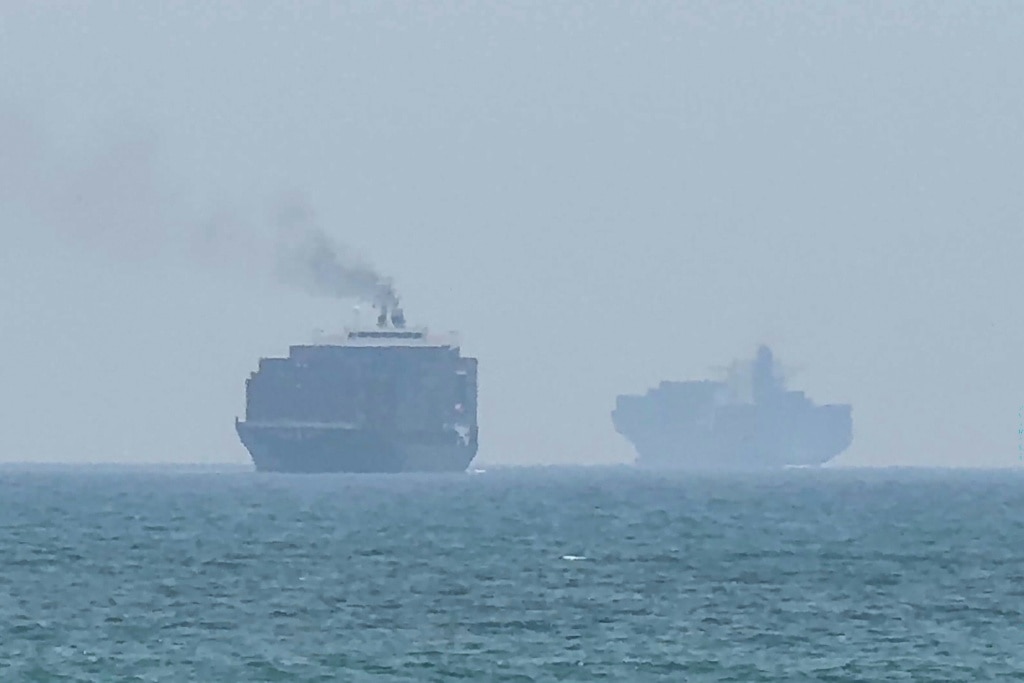
Early Tuesday, the UK Maritime Trade Operations (UKMTO) agency confirmed the latest incident: a cargo ship was hit by an “unknown projectile” in the Strait of Hormuz, off the Omani coast. The agency declined to name the vessel, and gave no details on damage or casualties, only noting that authorities were launching an investigation into the attack.
Currently, Iran enforces an effective blockade of the strait, requiring all transiting ships to coordinate passage with Iranian authorities and use a route close to the Iranian coast. In response, many commercial vessels have opted to reroute through the southern corridor of the strait, closer to Omani territorial waters.