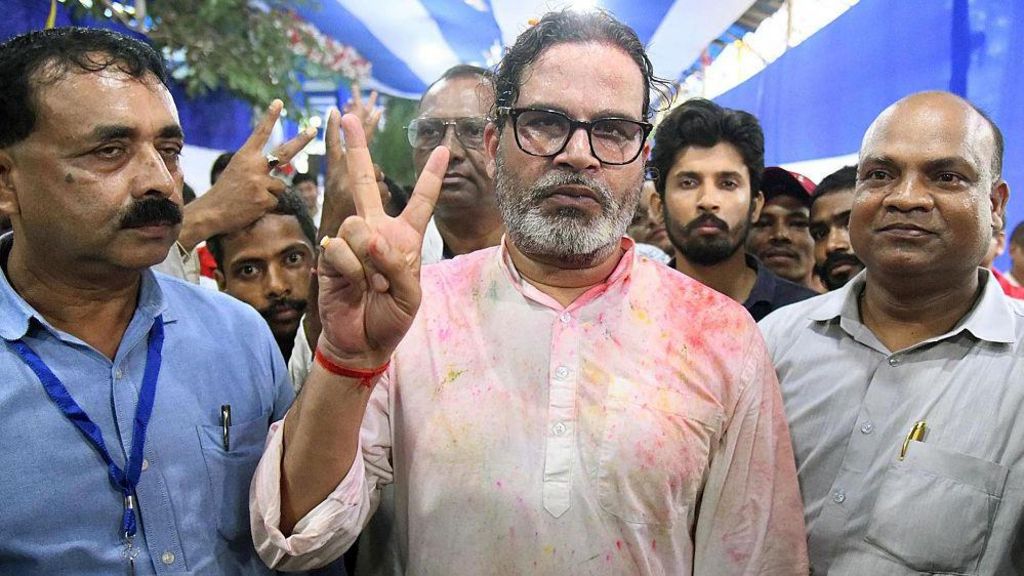
Twelve months ago, one of India’s most high-profile political masterminds left analysts questioning his future after a catastrophic debut as a party leader. Prashant Kishor’s newly launched Jan Suraj party failed to secure a single seat in Bihar’s hotly contested 2025 state assembly elections, a result that many political commentators wrote off as the end of his transition from behind-the-scenes strategist to frontline politician. Today, that narrative has been turned on its head: Kishor has pulled off one of the most surprising political comebacks in recent Indian electoral history, clinching the high-stakes Bankipur by-election and securing his first seat as an elected lawmaker.
The result has sent shockwaves through India’s political circles, particularly because the Bankipur constituency had been a solid stronghold of the ruling national Bharatiya Janata Party (BJP) for 30 years, stretching back to 1995. The seat was vacated earlier this year after its five-time incumbent Nitin Nabin, who inherited the constituency from his father, resigned following his election to India’s upper parliamentary house. Kishor’s defeat of the BJP’s candidate in the by-election marks a major upset, one that has reignited fierce debate over both Kishor’s national political ambitions and whether Jan Suraj can grow into a credible, long-term rival to Bihar’s established political parties. Most political observers remain cautious, noting that a single by-election result cannot be used to predict broader electoral shifts, but few deny the significance of Kishor’s win after his defeat just a year prior.
Kishor’s journey to this victory has been a decades-long career navigating India’s complex political landscape, built on a reputation as the country’s most in-demand election strategist. In 2014, he was a key architect of Narendra Modi’s breakthrough general election win, revolutionizing Indian campaigning by introducing innovative tactics – including hologram appearances that allowed Modi to address thousands of small grassroots gatherings simultaneously, a tactic that was unheard of in Indian politics at the time. However, his partnership with the BJP quickly fractured, and Kishor moved to the opposition, helping broker the JD(U)-RJD alliance that unseated the BJP in Bihar’s 2015 state assembly election. He then joined JD(U) as vice president under then-chief minister Nitish Kumar, only for another split to occur in 2020, when Kishor resigned from the party over its decision to back the BJP-led federal government’s controversial Citizenship Amendment Act.
In 2021, Kishor notched another high-profile win as a strategist, helping West Bengal Chief Minister Mamata Banerjee fend off a massive BJP challenge to retain her seat. That victory, he announced, would mark the end of his career as a political consultant, capping a career that saw him advise parties across the entire ideological spectrum of Indian politics, even working for rival candidates against one another. In 2022, he launched a months-long cross-state foot march (known locally as a padyatra) across Bihar, laying the groundwork for his own political party, Jan Suraj, which he officially launched in 2024.
When Jan Suraj failed to win a single seat in the 2025 Bihar state elections, most political observers wrote Kishor off entirely. His decision to contest the Bankipur by-election was widely dismissed as a high-stakes long shot, a gamble that would likely end in another defeat. But this time, the gamble paid off.
Bihar, one of India’s most politically critical states, sends 40 members of parliament to the Lok Sabha, India’s lower parliamentary house. With a population larger than that of the United Kingdom and a geographic footprint roughly the size of Portugal, the state has struggled with systemic unemployment for decades, a crisis that has pushed generations of Bihar residents to migrate across India and abroad to find low-wage manual work in sectors like construction. Addressing chronic unemployment and reversing mass out-migration has been the core of Kishor’s political agenda since he launched his 2022 padyatra, and he doubled down on these messaging priorities during the Bankipur campaign.
In a shrewd tactical move, Kishor framed the by-election as a head-to-head contest between himself and Bihar’s incumbent Chief Minister Samrat Chaudhary, repeatedly arguing that Chaudhary lacked the ability to solve Bihar’s long-standing crises. By shifting the focus to national political leadership rather than hyper-local constituency issues, Kishor sidelined his main opponent, the BJP’s Abhishek Kumar, and other minor candidates, keeping all voter attention on his challenge to the ruling establishment.
Demographics also played a key role in Kishor’s win. The Bankipur constituency is home to dozens of colleges and competitive exam coaching centers, with nearly one-third of all registered voters under the age of 30. This youth-heavy electorate comes at a time of rising nationwide youth unrest over unemployment and flawed public sector recruitment exams, a crisis that forced a senior Indian government minister to resign just weeks before the by-election. Kishor centered his campaign on addressing youth unemployment and stopping the mass exodus of young Bihar residents forced to leave the state for work, a platform that resonated deeply with the constituency’s large young voter base.
For now, political analysts warn that it is far too early to declare Kishor a major emerging force in Bihar or national politics. A single by-election win does not guarantee that his anti-establishment, youth-focused platform will translate to broader success in multi-seat state or national elections, and Indian politics has a long history of grassroots protest movements failing to convert public frustration into sustained electoral support. Even so, Kishor’s comeback from total electoral defeat to elected office has already upended expectations, and will keep political observers watching closely to see what he does next.