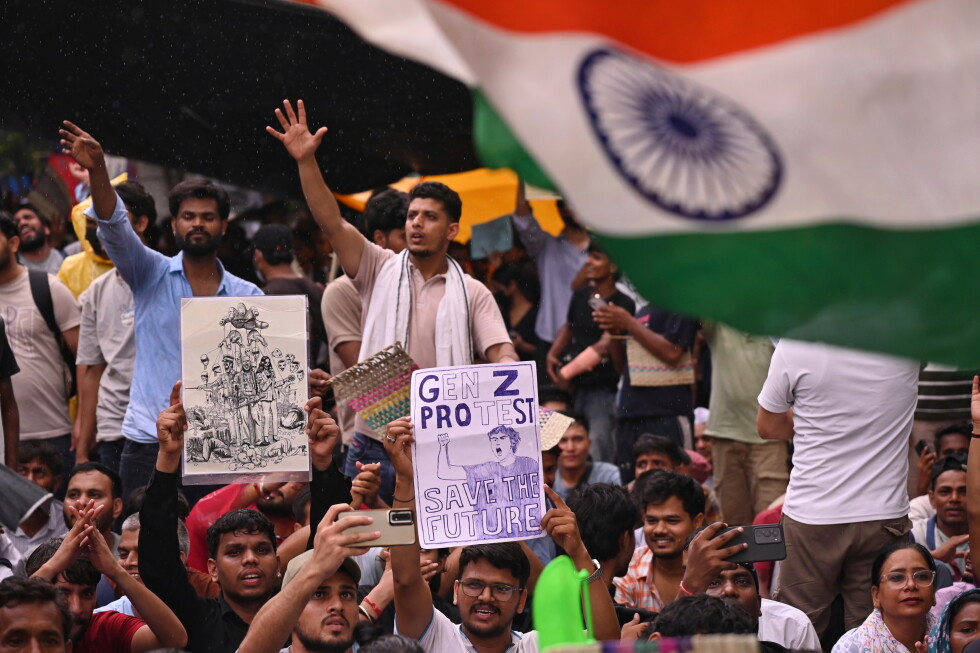
NEW DELHI — For weeks, a raucous cohort of young Indian activists gathered under a deliberately absurd, unapologetically provocative banner: the Cockroach Janta Party. Wielding hand-painted signs mocking Prime Minister Narendra Modi and his administration, this grassroots movement achieved what few opposition groups have managed in Modi’s more than 12 years in power: it forced the resignation of a sitting cabinet minister.
Widely regarded as one of the most dominant Indian prime ministers in modern history, Modi has built a public persona of unassailable, decisive leadership, with his government almost never backing down in the face of public pressure. But the late resignation of former Education Minister Dharmendra Pradhan stands as a striking exception, political analysts say, one that lays bare two shifting dynamics in Indian politics: the growing clout of India’s under-25 population, which makes up nearly half the nation, and the rising power of digital-first grassroots organizing.
“This particular round has ended in a very important defeat for Mr. Modi,” said Nilanjan Mukhopadhyay, a prominent political analyst and author of a biography of Modi. He added that the concession has shattered the widespread climate of fear that critics say the Modi administration has cultivated to suppress dissent. “The threshold of fear has been broken. People are no longer scared to go and step out and protest,” Mukhopadhyay noted.
The movement began as a small, satirical push in May with one clear, uncompromising demand: Pradhan’s resignation over widespread leaks of high-stakes examination papers, outcomes of which can make or break a young Indian’s career prospects. Fueled by young, urban Indians who organized across social media platforms before taking their demands to the streets, the protests quickly expanded beyond the initial exam leak controversy. They evolved into a broader call for governmental accountability, tapping into deep-seated public frustration over sky-high youth unemployment, lack of administrative transparency, and what activists see as the erosion of independence for India’s public institutions.
Mukhopadhyay emphasized that this marks the first time a student-led grassroots movement has maintained enough momentum to force the government to meet its core demand, without any backing from established mainstream political parties. “Each one had their own little grievance about life not taking them anywhere,” he explained of the protestors.
While it remains unclear whether this mass youth energy can be translated into electoral gains against Modi’s ruling Bharatiya Janata Party (BJP), movement leaders frame their success as proof that public pressure still holds weight in Indian democracy.
“An arrogant government which did not blink for 12 years was forced to blink when the youth united,” said Saurav Das, a spokesperson for the Cockroach Janta Party. Das reiterated that the movement has no plans to reorganize as a formal political party, instead aiming to operate as an independent public watchdog. “We want to remain a pressure group,” he said.
The unexpected success of the movement has already forced strategic adjustments within the BJP. In the weeks following the protests, Modi has increasingly appeared in short, vertical short-form videos tailored for Instagram and other platforms popular with young Indian voters. The party has expanded its youth outreach through targeted digital campaigns, with some sitting lawmakers even adopting Gen Z slang in public appearances, including speeches on the floor of Parliament. This shift comes in sharp contrast to the movement’s early days, when Modi and his allies dismissed the protests as a trivial, insignificant fringe movement. As crowds grew and momentum built, however, the government was forced to acknowledge the movement’s growing influence.
Following Pradhan’s resignation, Modi has also made public gestures toward reconciliation, saying he forgives those who mocked him — a clear outreach effort to win back alienated young voters. For Mukhopadhyay, the movement’s most lasting impact is that it has permanently damaged the carefully cultivated image of Modi as a leader immune to public pressure.
“That image of Mr. Modi is heavily tarnished,” he said. Not all reactions have been conciliatory, however: hardline BJP supporters online have moved to identify protestors and dox their personal information to intimidate activists into stepping back.
Solidarity protests popped up in cities across India, with supporters sending food and essential supplies to demonstrators camped in New Delhi who participated in extended hunger strikes to draw attention to their cause. Opposition leaders, human rights activists, and even several Bollywood celebrities have publicly backed the movement, helping spread its message far beyond the original protest camps.
For Neha Bora, a student leader who took part in the New Delhi hunger strike, the movement’s success proves ordinary citizens still have the power to hold powerful leaders accountable. “If they (ministers) do not serve the people of this country, no matter what cabinet minister they are, they will be brought down from their seats,” she said.