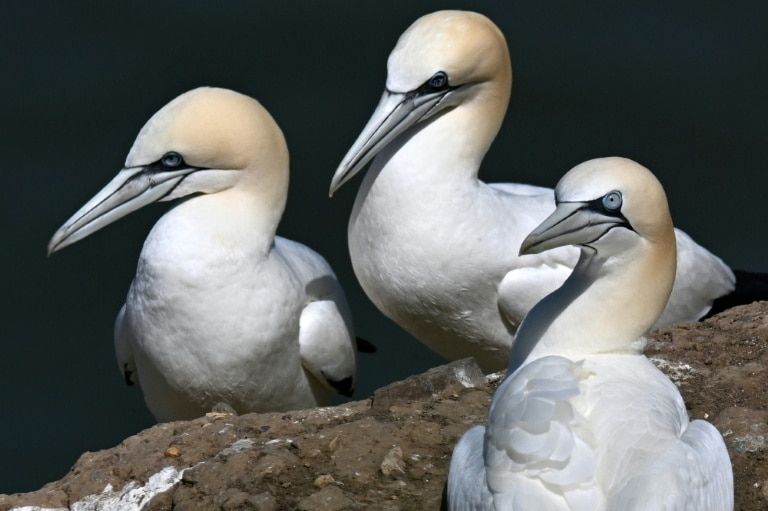
After nearly half a millennium of annual tradition, a historic gannet chick hunt on a remote uninhabited Scottish island has been halted for 2026, government conservation officials announced Monday. The centuries-old practice, widely known as the Guga Hunt, will not proceed this year in response to growing risks to the local northern gannet population, according to NatureScot, Scotland’s national natural heritage agency.
The hunt, which was first officially documented in 1549, sees a group of hunters from the Isle of Lewis called the Men of Ness undertake a grueling 40-mile voyage across rough, open seas to reach Sula Sgeir, a remote rocky islet off Scotland’s northwest coast. Once on the island, hunters use specialized long poles to remove juvenile gannets from cliffside nests, kill the birds, and cure their meat with salt before bringing it back to the Isle of Lewis to be prepared as a traditional local delicacy.
NatureScot confirmed that the Men of Ness had submitted an application for a license to harvest up to 2,000 young gannets this season. After a full review, the agency rejected the request, citing the latest scientific research on the health of the Sula Sgeir gannet colony. The region’s gannet population suffered widespread mass mortality between 2021 and 2023 driven by outbreaks of avian influenza, leaving the colony vulnerable to further population decline. Conservation officials determined that allowing the hunt to proceed this year would carry a measurable risk of long-term harm to the colony’s recovery. The license ban will remain in place through 206, with hunters eligible to reapply for permission to resume the hunt in 2027 should the population show signs of recovery.
The hunt has faced widespread opposition from animal rights advocates for decades, who have organized repeated petitions and campaigns calling for the practice to be ended permanently. However, the decision to cancel this year’s hunt has sparked disappointment among local communities who view the tradition as a core part of their cultural heritage. For centuries, wild bird meat was a critical source of nutrition for remote, marginalized communities in Scotland’s harsh northern island environments, where access to affordable food was often extremely limited. Guga, the salted gannet chick meat, is traditionally boiled for several hours and served with potatoes, and remains a cultural touchstone for local residents even today.
John Malcolm, a 46-year-old local resident, told reporters that while he recognized the ban was a necessary outcome of the latest conservation science, the loss of the annual tradition is a significant loss to the region. “It’s a real shame,” he said. “The hunt’s been going for almost 500 years, and for generations it was seen as a sustainable practice that supported our community.”