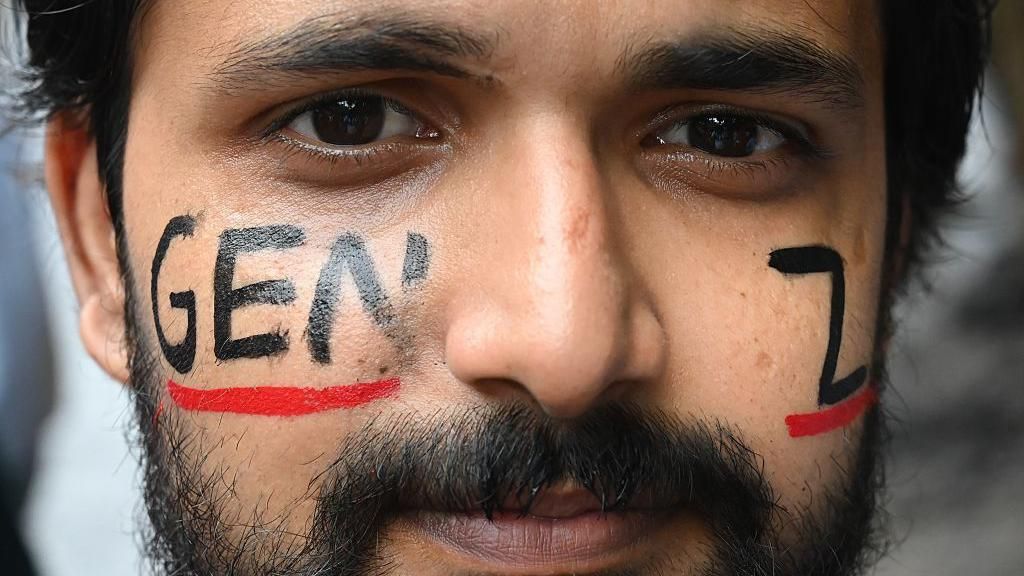
Last month, widespread street protests led by India’s Gen Z over repeated incidents of standardized entrance exam leaks forced the resignation of then-Education Minister Dharmendra Pradhan. While the resignation allowed Prime Minister Narendra Modi’s administration to defuse an immediate political crisis, analysts warn that simmering youth discontent over systemic failures in education and employment will remain a persistent, long-term challenge for the government. In the immediate aftermath of Pradhan’s departure, Modi moved quickly to implement immediate, visible reforms: he established fast-track courts to prosecute individuals accused of orchestrating exam leaks, and tapped Nandan Nilekani, a prominent Indian tech billionaire, to lead a national initiative to overhaul the country’s flawed examination system. But experts agree that these targeted steps are not enough to address the deep-seated anxiety gripping India’s young population, who have grown increasingly frustrated with a system that fails to deliver quality education pathways to stable, productive livelihoods.
Veteran economist Santosh Mehrotra, author of *India Out of Work: Rethinking India’s Growth Story*, described the dual crisis facing Asia’s largest economy in comments to the BBC. “The labour market has become brutal in the last 10 years. Non-farm jobs have not been growing and real wages have stagnated,” he explained. “India has a simultaneous problem. The economy is structurally weak as a result of which demand for labour is not growing. And our education system is so poor, that it is unable to supply new labour that is employable.” For years, the Modi government has leaned on rapid GDP growth driven by large-scale public infrastructure spending to push back against criticism of India’s uneven economic expansion. But the mass youth uprisings of last month may finally force policymakers to confront the interlocking crises of failing education and soaring youth unemployment, according to policy experts. Mehrotra notes that the expansion of India’s welfare state, particularly the rollout of direct cash transfers to low-income households, signals that the government has already recognized the severity of the crisis in private — even if it has not yet articulated a comprehensive public solution. The scale of the problem, however, is enormous.
India is home to the world’s largest youth population: more than 360 million people between the ages of 15 and 29. Over the past two decades, the country has made notable gains in expanding access to education, with enrollment rates climbing and the number of private colleges and vocational training institutes growing exponentially. Yet the 2026 *State of Working India* report from Azim Premji University confirms that the transition from classroom to the workforce remains one of the country’s most intractable social challenges, especially for young graduates. Data from the report shows that youth unemployment rates are nearly four times higher than unemployment among older workers, and far outpace global averages. Graduate unemployment has hovered between 35% and 40% for the last 25 years, but the crisis has been amplified in recent decades by India’s demographic boom and rising education attainment. In 1983, just 4% of Indians aged 20 to 29 held graduate degrees, and 13% of those graduates were out of work. By 2023, that share of young graduates jumped to 28% — and 67% of those graduates remained unemployed.
The disconnect between growing graduate numbers and available skilled jobs lies at the heart of the crisis. While India has produced millions of new graduates annually, the expansion of the educated workforce has not been matched by a corresponding increase in graduate-level employment. Between 2004-05 and 2023, India added roughly five million new graduates to the workforce each year, but only around 2.8 million of those graduates secured any form of employment, and an even smaller share landed stable salaried roles. This mismatch has driven up unemployment and suppressed wage growth for young workers. Worse, the *State of Working India* report finds that hard work and educational ambition rarely translate to stable success today: barely 3.7% of graduates and post-graduates secure white-collar roles, and fewer than 7% land permanent salaried positions.
Experts emphasize that this crisis cannot be fixed with short-term policy patches. Mehrotra argues that reviving small and medium-sized enterprises (SMEs), which have never fully recovered from the 2016 demonetization policy that removed 86% of India’s circulating currency in four hours, and the uneven rollout of the national goods and services tax, could deliver some near-term job gains. But India needs a sweeping new industrial policy focused on revitalizing the country’s manufacturing sector to create enough jobs for its growing youth workforce, he adds. Manufacturing’s share of India’s GDP has fallen from 17% in 2015 to 14% today. Manufacturing employment declined for five years after 2015, and has only rebounded slightly to pre-decline levels in recent years. Compounding this, total agricultural employment has risen by 80 million since 2020, a trend that Mehrotra calls a clear indicator of widespread disguised unemployment. In most fast-growing industrializing economies, workers typically move out of low-productivity agricultural work into manufacturing or services; the reverse trend in India signals a deep failure of job creation.
In recent years, the rise of artificial intelligence has added an entirely new layer of pressure to India’s job market, upending the business model of the software services industry that has been the backbone of India’s middle-class growth for three decades. A 2024 report from Wall Street investment bank Goldman Sachs estimates that between 8% and 12% of non-farm jobs in India are at risk of displacement by AI, and the impacts of this shift are already visible. Neeti Sharma, CEO of Team Lease Digital, one of India’s leading staffing agencies, told the BBC that IT hiring growth has slowed to single digits in recent months, while unstable contract work has become the norm and wages have remained stagnant for years. The stable knowledge-based jobs that Indian STEM graduates once took for granted are no longer available in large numbers.
The growing frustration in the once-thriving tech sector boiled over into public view recently, when a corporate event hosted by HCL Technologies, one of India’s largest software firms, in Chennai was disrupted by hundreds of employees chanting in unison for wage increases. The protest underscored how the tech industry, once seen as a golden ticket to upward mobility, has ceased to deliver on that promise for many young workers. Sharma argues that both young workers and educational institutions need to adapt to this new reality: graduates must abandon the expectation of traditional white-collar office jobs, and post-secondary institutions must shift their focus from academic degree programs to vocational skills training, as employers increasingly prioritize demonstrated skills over formal degrees. This means that even degree-holding young Indians may need to pursue careers in skilled trades such as plumbing, electrical work, and automotive repair, rather than expecting comfortable, air-conditioned office roles.
As leading market investor Devina Mehra observed on social platform X, this shift means that India’s current young generation can no longer take for granted that they will achieve a higher standard of living than their parents. For India, still in an early stage of economic development, stagnating earnings for a large share of the workforce could be a “disaster” — one that the Modi government will need to prioritize aggressively to avoid long-term social and political unrest.