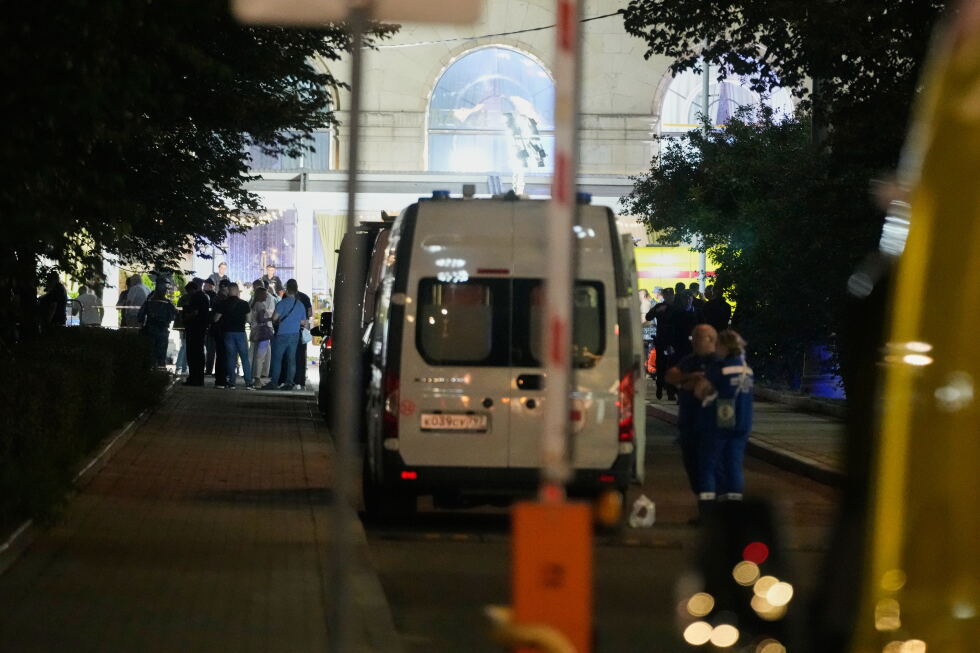
A deadly bombing that ripped through an upscale Moscow restaurant over the weekend has sparked a sharp diplomatic accusation, with Russia’s Embassy in Rome placing responsibility directly on Ukrainian authorities on Monday. The Saturday evening attack on the Balzi Rossi restaurant, a popular dining spot located on the ground floor of one of Moscow’s iconic Stalin-era skyscrapers, has left five people dead and 19 others injured, according to the Russian Embassy’s statement.
In the scathing public statement, the diplomatic mission labeled the attack as the work of “Kyiv terrorists,” framing the incident as a deliberate campaign to intimidate Italian citizens working in Russia. The bombing was intended, the embassy argued, to send a clear message that Italians based in Russia are intentional targets and could face violence as the next victims. The statement also noted that the restaurant’s Italian head chef and his team escaped unharmed, crediting the vigilance and self-sacrifice of a Russian security guard for their survival.
Initial official reports from Russia’s National Anti-Terrorism Committee, the inter-agency body that oversees domestic security responses, put the death toll at three immediately after the blast, with 21 people reported injured. The committee confirmed that the explosive device was brought into the venue by a female attacker, who died alongside a security guard that intercepted her and a restaurant guest. It did not, however, identify a suspected mastermind or state who the intended target of the attack was. To date, the Russian Foreign Ministry has not responded to requests to clarify the discrepancy between the updated death toll and the initial official count, nor has it issued an independent statement confirming the embassy’s claims. Ukraine has not issued any immediate comment in response to Russia’s accusations.
Unconfirmed local media reports have circulated in the hours after the attack claiming that the strike targeted a senior Russian military general celebrating a birthday at the restaurant. Multiple Russian outlets have named the alleged intended target as Colonel-General Alexander Chaiko, recently appointed to lead Russia’s aerospace forces. These claims have not been verified by independent third-party observers.
This latest bombing fits a pattern of targeted attacks on Russian soil that Moscow has repeatedly blamed on Kyiv since the full-scale invasion of Ukraine began in February 2022. Following a string of earlier strikes on senior military and political figures earlier this year, Russian federal security officials announced sweeping measures to tighten protective security for high-ranking government and military personnel.
The list of high-profile attacks stretches back more than two years. In December 2024, a scooter bomb killed Lieutenant General Igor Kirillov, commander of Russia’s nuclear, biological and chemical protection forces — one of the few such attacks that Ukraine openly acknowledged responsibility for. That same year in April 2025, a car bomb that Russia blamed on Kyiv killed Lieutenant General Yaroslav Moskalik, a deputy chief of the Russian General Staff’s main operational department; Ukraine did not claim the attack but suggested it was behind the strike. In December 2024, a car bomb attack in southern Moscow killed Lieutenant General Fanil Sarvarov, head of the Russian Armed Forces General Staff’s Operational Training Directorate, which Ukraine did not comment on. Earlier this year, Lieutenant General Vladimir Alexeyev, deputy head of Russia’s GRU military intelligence agency, survived an assassination attempt that left him shot three times at his Moscow apartment, an attack Ukraine denied involvement in.
Beyond senior military officials, two other high-profile figures linked to the Kremlin have been killed in attacks on Russian soil: Daria Dugina, daughter of prominent ultranationalist thinker Aleksandr Dugin, and Vladlen Tatarsky, a widely followed pro-Kremlin military blogger. Ukraine denied any role in Dugina’s death and has declined to confirm or deny involvement in Tatarsky’s killing.