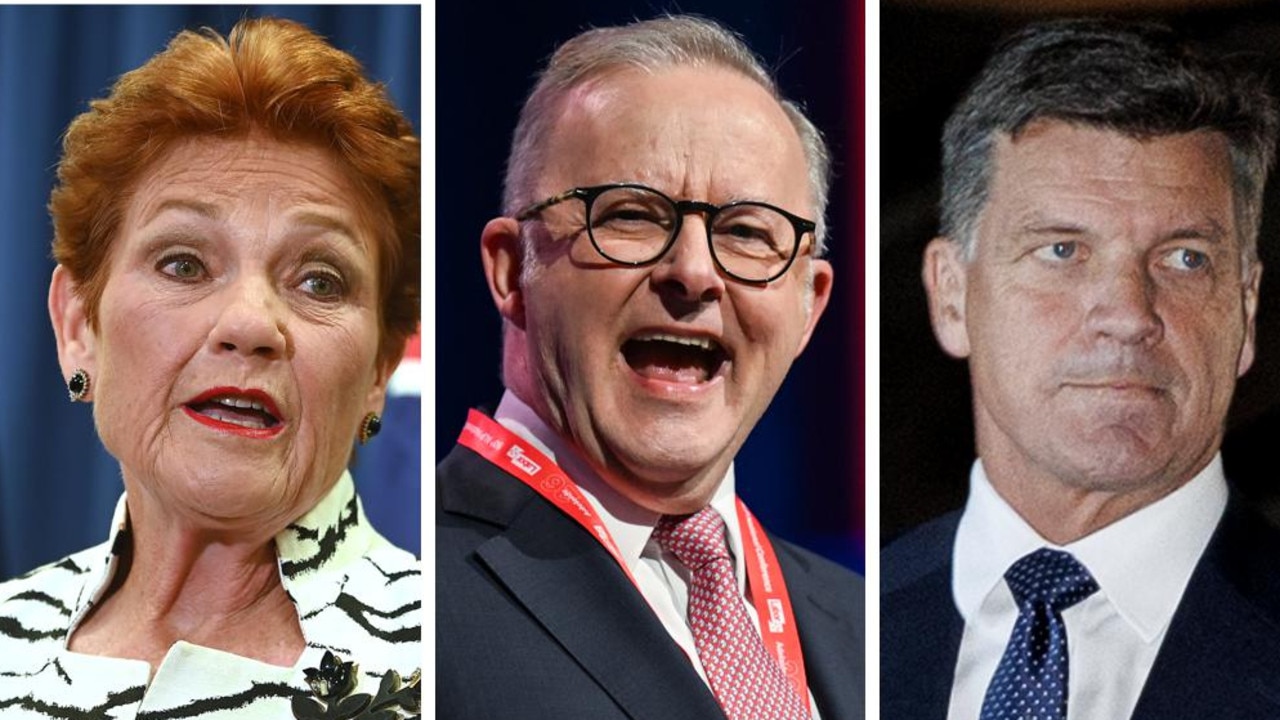
Australia’s upcoming federal election landscape has been upended by freshly released polling data from research firm Roy Morgan, which positions right-wing populist party One Nation as the primary opposition to incumbent Prime Minister Anthony Albanese’s Labor Party, pushing the traditional center-right major opposition Coalition into third place. The data, published in mid-2024, paints a startling new picture of voter sentiment, breaking the long-standing two-party duopoly that has dominated Australian federal politics for decades. According to the poll, primary vote support for the ruling Australian Labor Party (ALP) currently stands at 27.5%, enough to deliver a parliamentary majority if an election were held today regardless of whether the ALP faced One Nation or the Coalition as its main competitor for power. One Nation, the nationalist party led by Pauline Hanson, recorded a primary support rating of 24% – a 1.5 percentage point drop from the previous survey, but still enough to place it well ahead of the Liberal Party, the largest member of the Coalition. The Liberal Party saw a 1.5 percentage point rise in support to reach 20%, while its traditional rural coalition partner, the Nationals, held steady at 3.5% aggregate support. Combined, the two Coalition parties sit at just 23.5% primary support, half a point behind One Nation. Beyond voter intention, the polling also tracks a notable dip in public confidence in the federal government, with the overall confidence index falling 1.5 points to 67.5 out of 100. A majority of Australian voters – 59.5%, up 1.5 points from the last poll – now believe the country is headed in the wrong direction, a reading that signals broad underlying voter dissatisfaction with the current political trajectory. The survey also highlighted stark divides in confidence across party bases. Unsurprisingly, ALP supporters recorded the highest confidence rating, at 137.5, far above the baseline 100 mark. Greens supporters came next with a confidence rating of 70, down 16.5 points from the previous survey, followed by Coalition supporters at 50 – up 7.5 points. One Nation supporters, who are among the most dissatisfied with the current government, recorded a confidence rating of just 6.5, a seven-point drop from the last poll. Based on the data, Roy Morgan’s analysis concludes that the next federal election will now be framed as a head-to-head contest between the ALP and One Nation, rather than the long-running ALP-Coalition battle that has defined Australian federal elections for over a century. The research firm acknowledged the fragmented nature of modern Australian politics, noting that multiple three-way and four-way contests will play out across different electorates, with battles also occurring between the ALP and the Coalition, One Nation and the Coalition, and all major parties facing challenges from the Greens, centrist Teal Independents, and smaller regional parties including Katter’s Australian Party (KAP). The shake-up in voter polling comes amid concurrent political controversy for One Nation leader Pauline Hanson, who this week banned three major Australian news outlets – The Guardian, the Australian Broadcasting Corporation (ABC), and The Age – from a public event scheduled for Monday, where the party is set to unveil eight candidates for the upcoming Victorian state election this November. The move has drawn criticism from media freedom advocates, who argue that excluding major independent outlets from public political events undermines transparency in the lead-up to state polling. This realignment in voter support marks a significant shift in Australian politics, reflecting growing voter dissatisfaction with the traditional major parties and the rising influence of right-wing populist messaging ahead of the next federal election, which is scheduled to be held by mid-2025.
New polling reveals Labor maintains ‘election-winning’ lead as One Nation overtakes Coalition as main rival