Ninety-six years after its launch as the British Empire Games, the Commonwealth Games finds itself at a critical crossroads, with the 2026 edition hosted by Glasgow doing little to ease growing uncertainty over the event’s long-term place in the global sporting landscape.
The multi-sport gathering was thrown into deep crisis in 2023, when the Australian state of Victoria shocked the sporting world by pulling out as 2026 host, citing soaring project costs that had become unmanageable for public budgets. With existing infrastructure already in place from the city’s successful 2014 Commonwealth Games, Glasgow stepped forward at the eleventh hour to rescue the event, delivering a streamlined 10-sport programme on a far tighter budget than previous iterations: the total 2026 cost came in at just £160 million ($216 million), a stark drop from the £780 million price tag of the 2022 Birmingham Games.
As the 10-day 2026 competition draws to a close, the next chapter is already mapped out: India’s city of Ahmedabad will stage the centenary edition of the Games in 2030, with plans to expand the sports programme back to between 15 and 17 disciplines. With the future of the event under intense scrutiny, AFP Sports examines the key takeaways from the 23rd Commonwealth Games and whether the historic gathering can remain relevant in an increasingly crowded modern sporting calendar.
### A Proven Launchpad for Emerging and Underrepresented Athletes
For decades, positioned two years away from the Olympic Games on either side of the quadrennial cycle, the Commonwealth Games has carved out a unique role as a springboard for rising athletic stars. “The Commonwealth Games is where champions are made,” Dr. Donald Rukare, president of Commonwealth Sport, told AFP.
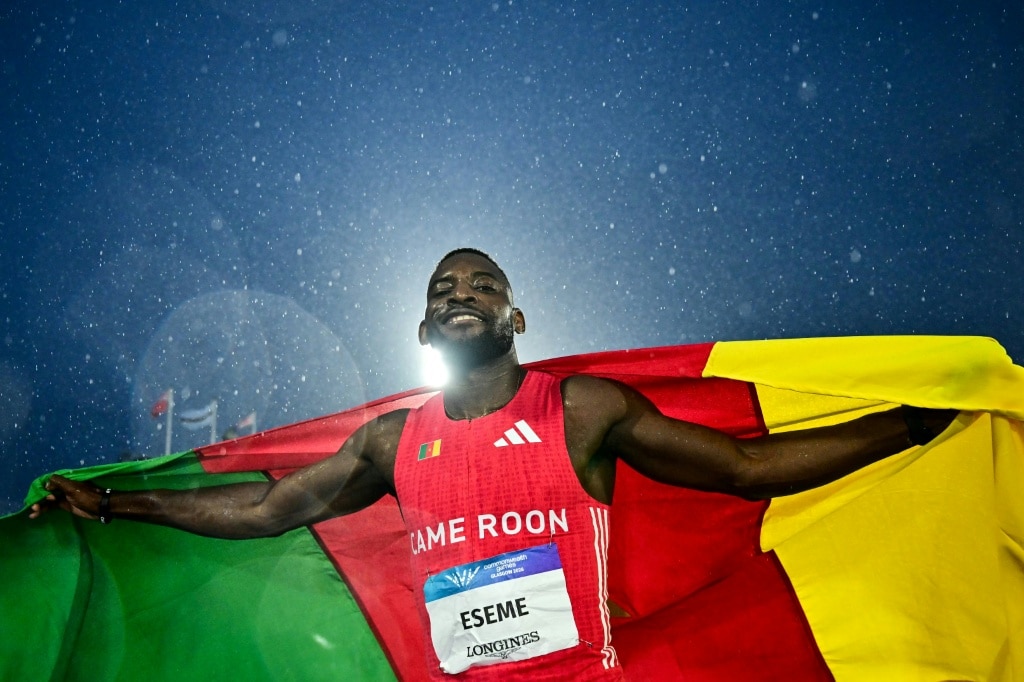
That reputation was borne out again in Glasgow, according to Cameroon sprinter Emmanuel Eseme, who stormed to gold in the blue riband 100m event despite wet, sodden track conditions. Eseme credits the 2022 Commonwealth Games with launching his elite-level career, running a national record of 10.08 seconds in Birmingham that opened doors no other competition had managed. “The Commonwealth Games has been like a door opener for me,” Eseme said after his 9.83-second gold medal run in Glasgow. “No one in my country ever thought someone from Cameroon was going to run 10.08, I did it in the Commonwealth Games. It was great and you know things have just been going well since.”
While Australia dominated the 2026 medals table, finishing far ahead of the pack with 171 total medals including 70 gold (followed by England, Canada and India in the top four), the event has long prided itself on creating opportunities for the 74 small and lesser-known nations and territories that compete. This year was no exception: Jersey, Dominica and the British Virgin Islands all left Glasgow with gold medals.
“This is where it all started for me, and this is probably where it will end,” said Thea LaFond, Dominica’s Olympic triple jump champion, after her win. “It feels amazing to be a trailblazer for Dominica.”
Unlike the Olympic and Paralympic movement, which separate able-bodied and para-sport events, the Commonwealth Games also gives athletes the chance to compete as part of their home nation or territory, rather than being grouped into larger combined teams that are common at other international events. For Scottish runner Josh Kerr, who arrived in Glasgow as the event’s homegrown poster boy fresh off breaking a 27-year-mile world record, that sense of distinct national representation is irreplaceable. Kerr delivered on expectations, taking gold in the first running of the mile at the Commonwealth Games in 60 years. “To have Flower of Scotland playing versus the GB national anthem, it’s just different,” Kerr said. “Not many times in my career I’ll ever have that.”
The event’s reputation as an inclusive “friendly Games” was further reinforced by the largest para-sport programme in Commonwealth Games history, with six para-disciplines fully integrated into the main competition schedule.
### Lingering Problems Cast Shadow Over Long-Term Prospects
While Katie Sadleir, chief executive of Commonwealth Sport, says she is optimistic about the future, pointing to potential hosts led by New Zealand that have already expressed interest in staging the 2034 Games and beyond, the event’s history of recent host withdrawals tells a different story. This year marked the second consecutive Commonwealth Games that has been forced to find a new host at short notice, after Durban pulled out of staging the 2022 edition before Birmingham stepped in.
Ahmedabad’s 2030 candidacy is driven largely by India’s broader ambition to host its first Olympic Games, but it remains unclear what political and financial motivation will exist to stage the Commonwealth Games after the 2030 centenary.
The 2026 Games also laid bare the event’s growing struggle to attract top-tier talent: many of the world’s biggest sporting names opted to skip Glasgow to prioritize other competitions on the global calendar. Alongside Kerr, Britain’s top athletics draw, Olympic 800m champion Keely Hodgkinson, chose to focus on the upcoming European Athletics Championships instead. Other major absentees included women’s 100m Olympic champion Julien Alfred and Canadian swimming sensation Summer McIntosh.
This lack of star power translated directly to low spectator turnout, with large swathes of empty seats across venues – a stark contrast to Glasgow’s 2014 Games, which sold 1.3 million tickets and generated a buzzing atmosphere across the city.
Glasgow’s last-minute rescue effort has kept the Commonwealth Games project alive for now, but the 2026 edition has failed to resolve the deep structural issues that threaten the event’s long-term survival.