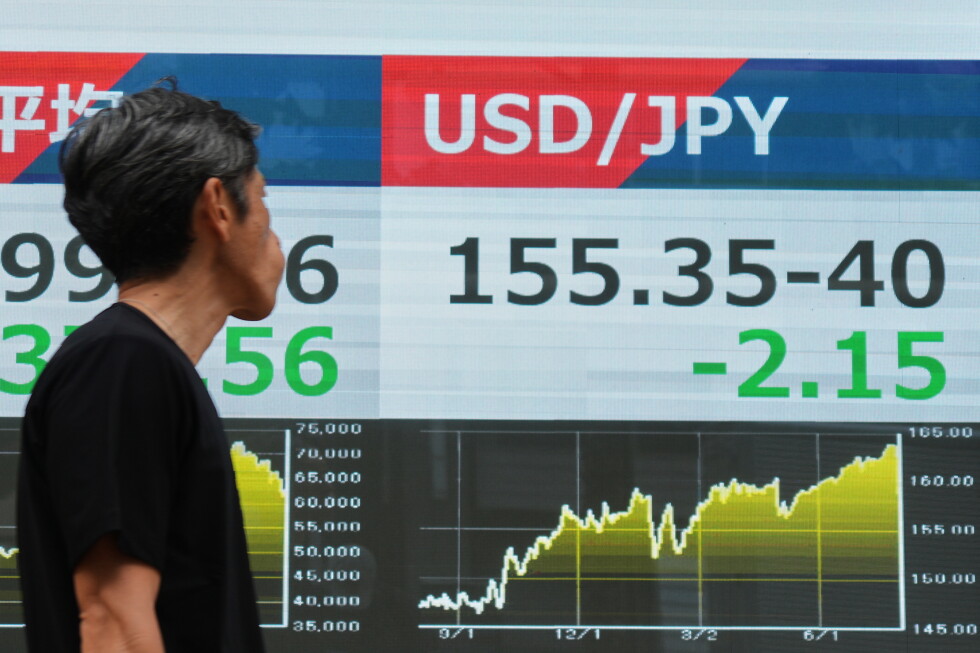
TOKYO – A coordinated currency intervention by the United States and Japan has triggered a sharp downward shift for the U.S. dollar against the Japanese yen, marking one of the most significant movements in global foreign exchange markets in decades. Following official confirmation from U.S. President Donald Trump and Japan’s Finance Minister Satsuki Katayama that the two economic powers had intervened jointly to shore up the battered yen, the dollar dropped roughly 1% to 156.34 yen in early trading on Monday.
This pullback caps a weeks-long period of historic yen weakness that pushed the dollar as high as 163 yen just before last week, a 40-year peak for the U.S. currency. Unconfirmed reports of regulatory intervention late last week already pulled the dollar below the 160 yen threshold, but the official public confirmation of the joint action drove an even steeper decline on Monday. Exchange rate movements of this magnitude are rare in major currency markets, underscoring the scale of the coordinated action taken by the two governments.
For Japanese policymakers, the intervention comes after months of growing frustration over the yen’s prolonged slump. As a nation heavily reliant on imports for most of its core consumer goods and energy supplies, a chronically weak yen drives up import costs, fuels domestic inflation, and erodes household purchasing power. Earlier intervention attempts launched by Japanese authorities this year failed to produce any sustained shift in the exchange rate, leaving policymakers searching for a more impactful solution that required U.S. backing.
In comments to reporters Sunday, Trump confirmed the U.S. participation in the intervention, framing the move as a gesture of partnership between the two nations. “We have a good relationship with Japan. We’re very strong — very, very strong financially — and they have a weakening yen, and they wanted a little bit of help, and we’re always there for Japan,” Trump said, adding the offhand remark: “Japan’s been very good to us, with the exception, of course, of Pearl Harbor.”
Trump also noted that the U.S. would gain financial benefits from the intervention, described the action as a clear “signal of friendship,” and argued that the coordinated step would deliver broader positive outcomes for the global economy.
In a formal statement issued from Tokyo, Katayama confirmed that Japan’s finance ministry purchased yen in close coordination with the U.S. Treasury Department. The intervention aligns with a joint policy framework agreed by the two nations last year, and was implemented to counter “excessive volatility and disorderly movements in the Japanese yen in recent months,” the statement read. Katayama also warned that Japanese authorities stand ready to take additional aggressive action if currency markets return to unstable movement, saying the ministry “will not hesitate to act further if necessary.”
The joint intervention marks a rare moment of coordinated currency action between the world’s two largest advanced economies, and it remains to be seen whether the move will sustain the yen’s recovery after years of downward pressure driven by divergent monetary policy between the U.S. Federal Reserve and the Bank of Japan.
US dollar weakens sharply against the Japanese yen after market interventions