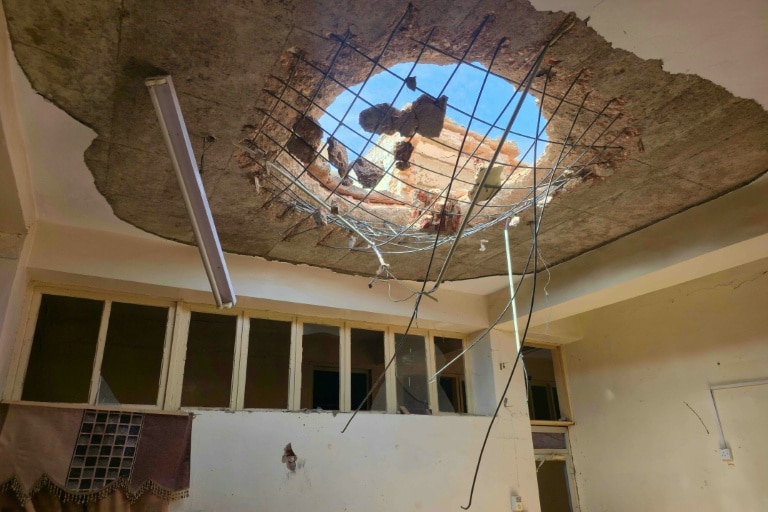
A drone attack carried out by Sudan’s regular army on a traditional civilian court in the war-torn western region of Darfur has killed at least 35 people, according to a human rights documentation group that has tracked abuses across Sudan’s three-year civil conflict. The strike, which took place around 1:00 pm local time on Sunday, targeted the village of Garra al-Zawaya in North Darfur state, an area currently held by the paramilitary Rapid Support Forces (RSF), the army’s long-standing opponent in the ongoing conflict that broke out in April 2023.
The Emergency Lawyers, the group that first documented the incident, confirmed that the strike hit the court while dozens of local civilians had gathered to attend routine hearings on local disputes and community cases. An anonymous local witness, who spoke to Agence France-Presse (AFP) on condition of anonymity to protect their safety, added that the open-air court session was being held under a large tree with local community leadership in attendance. The witness confirmed that the death toll includes four prominent local tribal leaders and two senior RSF commanders, alongside a number of ordinary civilian attendees. The RSF’s self-declared interim government has issued a formal condemnation of the attack, framing it as a “horrific crime” and claiming the actual death toll is higher at 37 killed, with an additional 50 people wounded. As of Monday morning, the Sudanese army had not issued any official response to the claims.
Garra al-Zawaya sits roughly 150 kilometers west of El-Fasher, the former last major Sudanese army stronghold in Darfur that RSF forces captured in a deadly offensive last October. United Nations war investigators have already concluded that the violence perpetrated by RSF forces during the siege and capture of El-Fasher bears all the key hallmarks of genocide. After seizing control of El-Fasher, the RSF – which grew out of the infamous Janjaweed militia accused of mass atrocities in Darfur during the early 2000s – has consolidated its control over most of the broader Darfur region.
In the months following the El-Fasher campaign, both warring parties have sharply ramped up their reliance on drone warfare to strike enemy positions. UN data shows that more than 1,000 civilians were killed in drone strikes across Sudan in just the first five months of 2025, marking a dramatic escalation of civilian harm from aerial attacks. The escalating violence has spread beyond Darfur in recent weeks, focusing on the key southern Kordofan city of El-Obeid. After RSF forces seized control of a critical highway connecting the capital Khartoum to El-Obeid last week, RSF leader Mohamed Hamdan Daglo released a public video telling his fighters they were “unleashed” to wage all-out war against the army.
El-Obeid, the largest urban center in southern Kordofan, has faced relentless drone attacks in recent weeks, prompting the United Nations to issue a rare “red alert” over what UN officials describe as an unfolding humanitarian catastrophe in the city. The RSF has moved to reimpose a full blockade on El-Obeid, and intelligence assessments suggest the paramilitary group is preparing for a large-scale ground offensive to capture the city. The UN has repeatedly warned that a full RSF takeover of El-Obeid and the wider Kordofan region could trigger a new wave of mass atrocities against civilian populations.
Sudan’s ongoing civil war between former allies Daglo and army chief Abdel Fattah al-Burhan has already killed tens of thousands of people, displaced more than 10 million Sudanese, and created what the United Nations calls the world’s worst current humanitarian crisis, with the largest population facing acute hunger and displacement globally. Both the army and the RSF have been formally accused of committing widespread war crimes, including indiscriminate attacks on civilian infrastructure and population centers. The RSF has faced particularly robust international condemnation for systemic sexual violence, widespread looting, and targeted mass atrocities against civilian communities.