On Tuesday, a powerful 7.1-magnitude earthquake shook southwestern Japan’s Kyushu Island, triggering widespread structural damage, multiple fires, and a developing emergency that has left dozens unaccounted for in a collapsed regional shopping mall. The Japan Meteorological Agency (JMA) recorded the tremor striking at 4:27 p.m. local time, registering a maximum intensity of 7 on Japan’s domestic Shindo intensity scale— the highest possible warning level for seismic activity, while the U.S. Geological Survey measured the quake at a magnitude of 6.8. A 6.1-magnitude aftershock followed just 41 minutes after the initial quake, adding to chaos across the affected region.
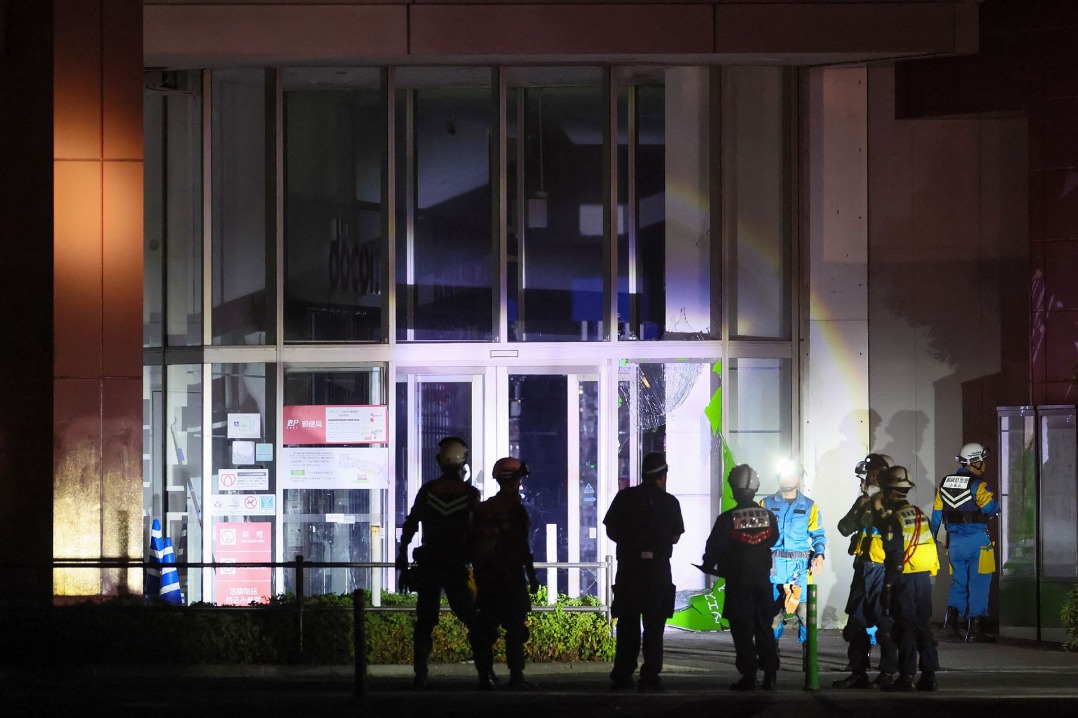
The most urgent search-and-rescue operation is centered on a shopping mall in Kashima, where the building’s second floor collapsed during the tremor, according to local fire department statements. Japanese public broadcaster NHK, citing police sources, reports that between 20 and 30 mall employees remain unreachable, with footage showing fleets of emergency vehicles with flashing lights massed outside the damaged structure. Private broadcaster TBS has warned that a “considerable number” of fatalities may be confirmed inside the mall, though national police have not yet verified any deaths at the location. Kyodo News notes that four people were transported from the site to area hospitals, all arriving in conscious condition.
Emergency response teams are also tracking multiple missing people at a paper manufacturing facility in Yatsushiro City, where the top of the plant’s chimney collapsed during the shaking. One confirmed fatality has been recorded: a resident killed when their private home collapsed, per Kyodo’s initial reporting. NHK’s on-the-ground footage from across Kumamoto Prefecture captures the full scope of the disaster: multiple active blazes, fractured and collapsed bridges, a derailed cargo train, and dozens of residential homes left teetering on the edge of collapse.
Chiharu Hara, a 35-year-old recruitment agent working in Kumamoto, described the chaotic moments when the quake hit in an interview with Agence France-Presse. “The office swayed violently side-to-side. I was afraid it would collapse. Everyone panicked,” Hara said, adding that the experience left her “terrified.”
Across the affected region, critical infrastructure has been severely disrupted. Major arterial roads have been closed to traffic, high-speed Shinkansen bullet train services were suspended immediately after the quake, and Kumamoto Airport halted all operations for several hours before reopening that evening. Two major local hospitals each reported admitting at least 50 injured patients, with staff overwhelmed by the steady flow of incoming casualties. “People are coming in with burns and fractures from being trapped under objects due to the earthquake, and ambulances are constantly bringing in injured people,” one hospital employee told NHK. “Inside the hospital, there are water leaks and electrical system failures.” Around 10 additional injuries were recorded at a local elderly nursing home.
Japanese Prime Minister Sanae Takaichi confirmed that the disaster has caused “human casualties, building collapses, road damage, fires,” alongside widespread water and power outages across the prefecture. Japan’s Defense Ministry announced that 3,600 military personnel have been mobilized to lead disaster relief and search operations, with 20 aircraft deployed to conduct aerial damage assessments across the quake zone. The JMA initially issued a tsunami alert shortly after the quake, but canceled the warning at 6:10 p.m. local time after no dangerous sea level changes were recorded.
This earthquake hits 10 years after a devastating pair of quakes struck the same Kumamoto region in 2016: a 6.5-magnitude tremor followed two days later by a 7.3-magnitude event that killed 273 people and injured more than 2,800. Located at the intersection of four major tectonic plates on the Pacific Ocean’s “Ring of Fire,” Japan is one of the most seismically active countries on Earth, recording hundreds of earthquakes annually. The vast majority of these events are minor and cause no significant damage, but large, destructive tremors remain a persistent threat to populated areas across the archipelago.