Six months of escalating conflict between Iran and the United States has upended global energy markets, triggering sky-high fuel prices, widespread supply shortages, and historic windfall profits for major American and European oil and gas producers. The disruption has completely choked off most commercial shipping through the Strait of Hormuz, the critical Persian Gulf chokepoint that historically carried roughly 20% of the world’s daily oil and natural gas supplies.
With global energy supplies sharply constrained, benchmark Brent crude prices surged from a pre-conflict level of around $70 per barrel to trade consistently above $100 throughout the second quarter of this year, peaking at $126 per barrel. This market upheaval has delivered extraordinary financial gains to large Western energy firms, even as households and businesses across the globe grapple with soaring fuel costs and emergency supply measures.
In recent quarterly earnings reports, two of America’s largest energy producers posted staggering results. Texas-based Exxon Mobil announced Friday that its second-quarter net profit doubled year-over-year to $14.53 billion, with total revenue jumping 42% to $116.02 billion, driven in large part by record high diesel production. Houston-based Chevron reported even stronger relative growth, with net profits nearly quadrupling to $12.07 billion and revenue rising 56% to $70.06 billion. Across the Atlantic, six of Europe’s biggest oil companies recorded a combined $22 billion in first-quarter profits, a more than 40% increase from the same period last year.
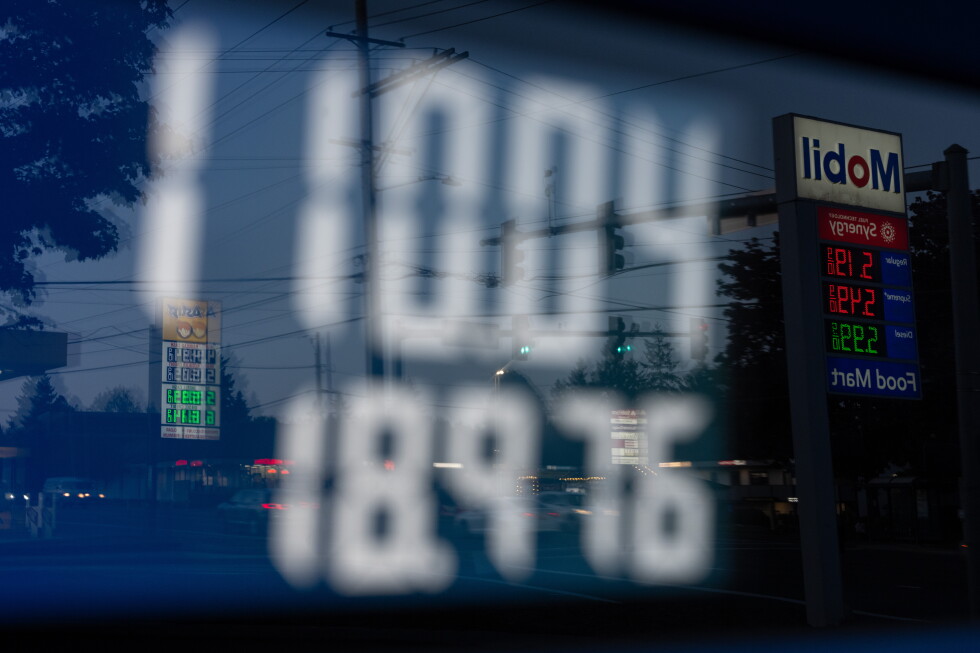
The massive windfalls have drawn intense public and political scrutiny, as consumers around the world face the fallout of constrained supplies. Some countries have already been forced to implement emergency measures: Australia has introduced sporadic fuel rationing, while Nepal and Sri Lanka shut down government offices to conserve fuel. In the United States, the average price of regular gasoline has climbed to $4.11 per gallon, up $1 from a year ago and well below the sub-$3 average seen before the conflict disrupted Hormuz shipping. For working households that rely on vehicles for commuting and work, the price spike has become a major financial burden.
In response to public anger over the profiteering, Congressional Democrats have introduced legislation to impose a windfall profits tax on large oil producers, with the revenue targeted for direct redistribution to American consumers. “It’s fair to put a windfall profits tax on inordinate windfall profits rather than cut off children’s food programs,” said Sen. Sheldon Whitehouse of Rhode Island, sponsor of the Senate bill. The legislation, paired with a House version introduced by Rep. Ro Khanna of California, would amend the U.S. tax code to place a per-barrel tax on any company that produces or imports at least 300,000 barrels of oil daily starting in 2025. The proposal follows similar measures adopted by the UK and other European nations, which implemented temporary windfall taxes on fossil fuel firms in 2022; the UK has since extended its tax through 2030.
Oil industry leaders have pushed back hard against the proposal, arguing that they do not set global oil prices, which are determined by market supply and demand dynamics and trading activity. Exxon CEO Darren Woods argued that windfall taxes discourage future investment, telling investors on a Friday call that the company canceled planned European investments after the region introduced its first windfall tax, calling such policies “very short-sighted.”
Energy analysts note that integrated energy firms that own both production operations and refineries have been the biggest winners of the current market crisis. Global refining capacity is already stretched thin, with key suppliers Russia and China having pulled back on exports, while many refineries in the Middle East have been damaged by the conflict. American refineries, which have secure access to crude supplies, are currently operating near full capacity, and their profit margins have exploded. Chevron reported that its second-quarter refinery profit was six times higher than pre-conflict levels, even as the company processed less crude and sold fewer finished products. “The return on refining, on a percentage basis, has skyrocketed,” said Tom Seng, assistant professor of energy finance at Texas Christian University. “Oil right now is priced what it is priced because of the Iran war. But in the meantime, the refineries are making money hand over fist.” Rob Thummel, senior portfolio manager at Tortoise Capital, added that global shortages of jet fuel, diesel, and gasoline are likely to persist, keeping refining profits high for the foreseeable future.
Timothy Fitzgerald, a business economics professor at the University of Tennessee who studies the petroleum industry, explained that U.S. refiners with ample crude access are reaping extraordinary gains, particularly from jet fuel and diesel – which currently trade at a 41% premium to pre-blockade prices in the U.S. The higher energy costs ripple through every sector of the global economy, he noted, since almost all goods have embedded energy costs that get passed on to consumers. “Ultimately, users of the energy services pay,” Fitzgerald said. “Consumers, people like you and me buying retail motor gasoline or diesel fuel or airplane tickets. But it also means that almost everything else we buy has an embedded energy content to it … and this is where you start to worry about it driving increases in costs.”
Analysts emphasize that not all oil and gas companies have benefited equally from the current crisis. U.S.-based producers and international firms with large production holdings outside the Persian Gulf have seen profits surge, as they sell existing supplies at elevated global prices. By contrast, Middle Eastern producers trapped by the Hormuz blockade and facing damaged infrastructure have seen sharp revenue declines, as their export volumes are drastically curtailed and they face much higher transportation and security costs. Additionally, the timing of price gains benefited different firms unevenly: European companies with large volumes of stored oil available for spot market sales were able to capitalize on March’s price surge, while U.S. majors like Exxon and Chevron only began capturing higher prices starting in April, due to standard oil trading timelines.