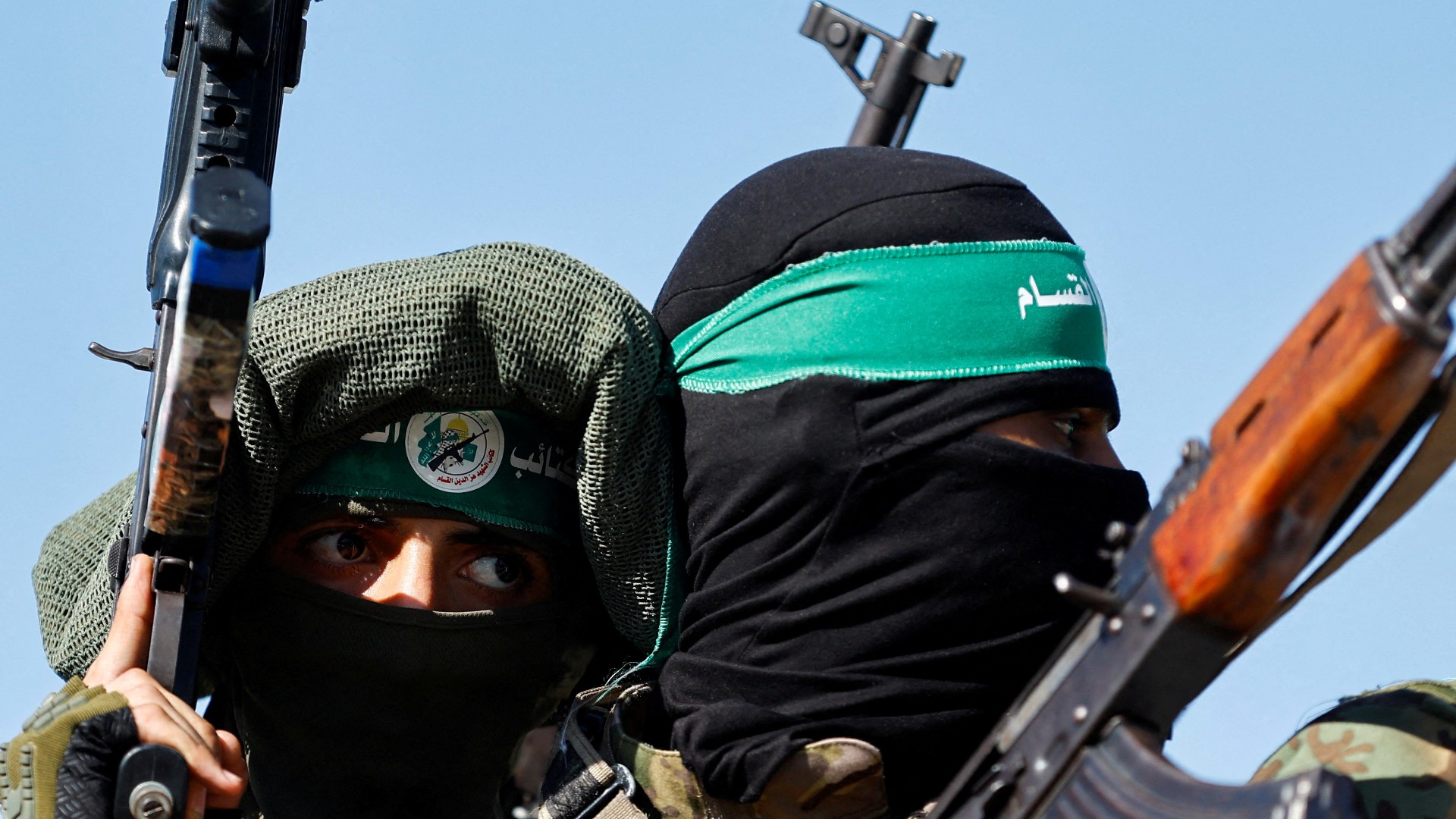
After months of intensive, good-faith negotiations, Hamas has formally signed off on a detailed, U.S.-mediated framework to advance further phases of a Gaza ceasefire, a move billed as a historic breakthrough toward ending nearly a year of catastrophic Israeli military operations in the blockaded Palestinian enclave. The plan, developed in coordination with U.S. President Donald Trump’s Board of Peace, aligns with Trump’s broader comprehensive peace vision and United Nations Security Council Resolution 2803, outlining a phased roadmap toward security, new governance, humanitarian relief, and long-term reconstruction in Gaza.
The announcement comes amid a staggering humanitarian crisis that has left Gaza in ruins. Since the start of Israel’s military campaign, more than 73,000 people in Gaza have been killed, with thousands more still missing and presumed dead. Roughly 90% of Gaza’s 2 million residents have been displaced from their homes, now sheltering in overcrowded, unsanitary tent camps with no access to basic services. Middle East Eye, which obtained the full Arabic draft of the agreement Hamas approved, has published the complete English translation of the text publicly.
The core framework of the agreement anchors all future progress in verified compliance from both parties, with each phase of implementation proceeding only after the International Verification Committee confirms all prior obligations have been met. That oversight body, established by the Board of Peace, includes representatives from guarantor states, the Board of Peace, and the International Stabilisation Force. Key initial obligations require both Israel and Hamas to immediately end all military operations in line with the existing Sharm el-Sheikh Memorandum, with detailed timelines and mechanisms for Phase Two of the agreement set to be finalized within 14 days of the deal’s signing (a deadline that can be extended by the verification committee if needed). Once those logistics are confirmed, the newly established National Committee for the Administration of Gaza (NCAG) will enter the territory to take up its governing duties.
Under the terms of the deal, Hamas and all other Palestinian armed factions will transfer full civil and security governing authority for Gaza to the independent NCAG during the transitional period, with factions agreeing to refrain from any interference in the committee’s work. The NCAG will be tasked with maintaining continuity of public services, ensuring fair treatment for all civil servants, conducting a full administrative and financial audit of Gaza’s public resources, and addressing outstanding financial commitments capped at $400 million over a three-year implementation period.
A core security pillar of the agreement establishes the guiding principle of “one authority, one law, one weapon” for Gaza. All police personnel will undergo mandatory vetting, with unqualified officers offered alternative civilian roles or retirement benefits protected under Palestinian law, and no penalties imposed based solely on political affiliation. All police weapons will be transferred to NCAG control immediately upon the committee’s entry into Gaza. A full inventory and secured storage process for heavy weapons, military infrastructure, weapons depots, and militant tunnels will begin after the Sharm el-Sheikh obligations are met, NCAG is deployed, and the International Stabilisation Force enters the territory. No weapons will be surrendered to Israel or any non-Palestinian entity, and once the process is complete, the NCAG will be the sole body authorized to control weapons in the enclave. Personal weapons will be regulated under existing Palestinian law, with the NCAG holding exclusive authority for registration, licensing, and enforcement.
Militia personnel will not be integrated into Gaza’s new security or police forces, and all militia weapons will be collected and stored under NCAG control per the agreed timeline, with compliance verified by the International Verification Committee. The deal also requires all factions to sign a social peace agreement committing to an end to internal Palestinian violence, and banning acts of revenge, shows of force, military parades, and armed demonstrations.
To separate Israeli forces from NCAG-controlled areas, an interim International Stabilisation Force will be deployed to Gaza. The force will not carry out domestic policing, ceasefire enforcement, or police training, instead focusing on monitoring compliance with the deal and facilitating the flow of humanitarian and essential supplies into the territory, along with other non-policing tasks requested by the NCAG. Israel will complete a phased withdrawal from all of Gaza in line with the agreed timeline, with a formal commitment not to force any Gaza residents to leave the enclave. All internal security incidents will be handled exclusively by the NCAG.
Long-term reconstruction of Gaza, which has seen most of its built infrastructure destroyed, will be overseen jointly by the Board of Peace and the NCAG, which will develop a detailed implementation plan and timeline aligned with international standards and Palestinian law. The overarching goal of the entire process, the agreement notes, is to end the cycle of violence and destruction in Gaza, secure full Israeli withdrawal, restore normal life for Palestinian residents, and open a credible political path to Palestinian self-determination and the establishment of a sovereign Palestinian state.