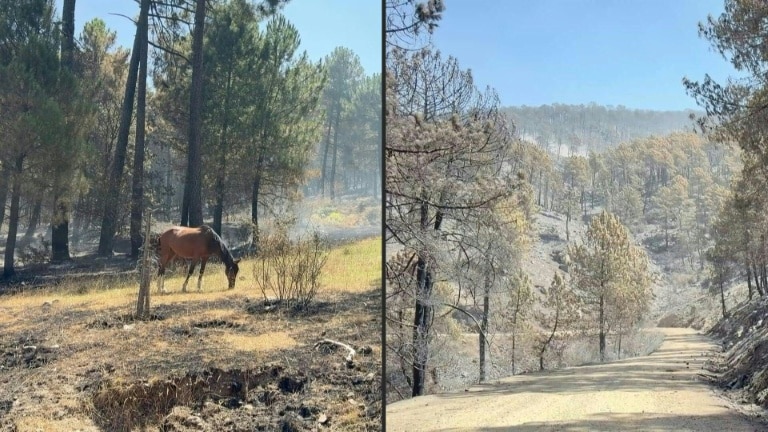
As a summer of unprecedented wildfire activity sweeps across Southern Europe, firefighting teams from multiple nations are working around the clock to contain out-of-control blazes that have scorhed hundreds of thousands of hectares of land, displaced hundreds of thousands of residents, and claimed multiple lives. On Friday, Greek crews remained on high alert for new fire ignitions amid dangerous conditions, while France and Spain braced for potential new flare-ups even as progress was made containing their most destructive infernos.
Climate scientists have long warned that rising global temperatures driven by climate change create the perfect dry conditions for more intense, fast-spreading wildfires, and this season’s extreme blazes across the continent have only underscored this growing systemic risk. Parched vegetation across the Mediterranean has turned vast swathes of land into tinder, allowing small ignitions to explode into massive infernos that are far harder for crews to contain.
In Greece, the largest blaze burning on the popular tourist island of Crete has already destroyed roughly 4,500 hectares of land since Wednesday. While local authorities noted modest improvements in conditions near the town of Rethymno on Friday, a fire department spokesperson confirmed to AFP that the fire has not yet been fully contained, with hundreds of active hotspots still posing a major risk of flare-ups. Smaller blazes are also burning across the Aegean Sea on the islands of Paros, Kalymnos, and Andros, though officials report those situations are under better control. Nearly all of Greece remained on high alert Friday, with the Athens metropolitan area and large parts of the Peloponnese peninsula ranked at “very high” wildfire risk — the second-highest level on the country’s five-tier warning scale.
France, one of the countries worst hit by this season’s wildfires, received much-needed good news this week. Near the southwestern city of Bordeaux, a massive inferno that blackened 42,000 hectares of land has finally been stabilized after days of spread, thanks to favorable overnight weather conditions. With the fire fully contained within its perimeter, more than half of the 224,000 evacuated residents have been allowed to return to their homes across 12 affected municipalities. Local officials plan to launch coordinated operations to clear underbrush and treat fire perimeters in coastal dune areas to eliminate remaining hotspots. Gironde prefect Sophie Brocas noted that Thursday brought an optimistic shift, with residents beginning to resume normal daily life. However, the fire has already left a devastating mark: at least 200 homes have been destroyed, and two firefighters have died battling the blazes. Ukraine has stepped in to support French response efforts, deploying a team of 70 specialized rescuers and 15 fire vehicles to assist with containment and mop-up operations.
To the east, Portugal is also grappling with an out-of-control blaze that has been burning in the northern part of the country since Tuesday. Regional civil protection commander Albano Teixeira described Friday’s overnight operations as “intense”, with nearly 800 firefighters deployed to contain the Valpacos fire. The blaze has so far injured at least five people lightly and has consumed more than 6,000 hectares of land.
Turkey has also seen a surge in new ignitions over the past 48 hours, with hundreds of firefighters battling wind-driven blazes near popular Mediterranean and Aegean tourist regions. In the western province of Balikesir, five people have been injured fighting blazes across three towns. Authorities have evacuated three villages near the coastal town of Ayvalik, located opposite the Greek island of Lesbos, and relocated 720 head of cattle to safer ground. Turkish Agriculture Ministry data shows that at least 169 new wildfires broke out across the country between Wednesday and Friday, though 163 of those have already been brought under control.
In Spain, officials are cautiously easing emergency measures but remain on high alert amid an ongoing second heatwave that threatens to reignite contained blazes. Prime Minister Pedro Sanchez lifted the state of emergency for a major wildfire west of Madrid on Thursday, after officials confirmed all active fire fronts had been extinguished. More than 60,000 residents were evacuated at the height of that blaze, and most have now been allowed to return to their homes. However, the country is also grappling with a historic blaze in the neighboring Avila region, which has burned 50,000 hectares of land since it ignited last week — making it the largest wildfire recorded in Spain since national record-keeping began in 1961. Officials warned that the new heatwave moving across the country could reignite smoldering hotspots in the Madrid region, forcing residents to remain prepared for new evacuation orders.