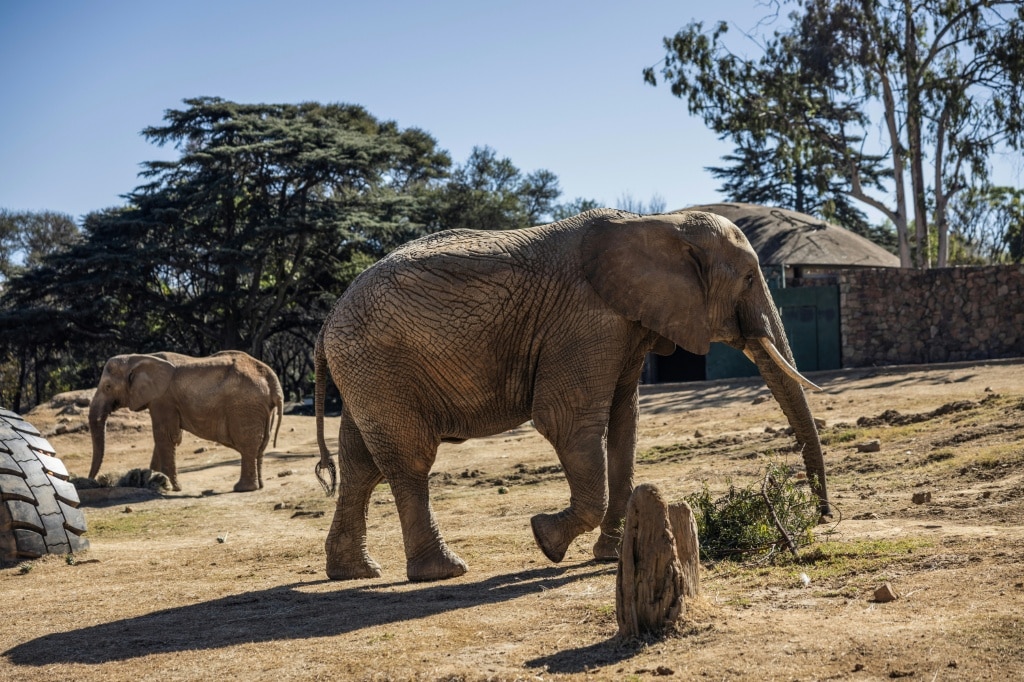
On a recent day at Johannesburg Zoo, the three remaining elephants Lammie, Ramadiba, and Mopane walked single file into their public enclosure, where scattered fresh fruit and vegetables had been laid out to encourage natural foraging behavior. For the dozens of tourists and local schoolchildren gathered at the viewing platform, the moment was a rare thrill: a chance to observe Africa’s iconic largest land mammal up close in person. But behind this seemingly cheerful tourist attraction lies a bitter, high-stakes legal battle over the fate of the three pachyderms— the last elephants still kept in a traditional urban zoo enclosure across the entire African continent.
Animal welfare campaigners, backed by a team of international elephant conservation experts, have taken their case to South African courts to force the immediate transfer of the trio to a dedicated rewilding sanctuary, arguing that their current captive conditions amount to unnecessary cruelty that has left the animals in chronic psychological distress. The three elephants, with ages ranging from 26 to 47, are highly intelligent, socially complex sentient beings, the campaigners argue, and the limited space of a zoo enclosure cannot meet their basic physical and psychological needs. In court filings submitted in May, the legal team documented repeated observations of abnormal, depressed behaviors among the animals that signal poor welfare. They are asking the judiciary to order an urgent relocation to a sanctuary where the elephants can regain a more natural lifestyle and rehabilitate from decades of captivity.
Megan Carr, senior researcher at the EMS Foundation, one of the organizations leading the legal application, confirmed to Agence France-Presse that a ruling is expected in the coming weeks. She emphasized that this case is unprecedented: Lammie, Ramadiba, and Mopane are the final elephants still held for public exhibition in a conventional zoo setting anywhere in Africa. The legal push follows a recent win for animal welfare advocates earlier this year, when a 42-year-old elephant that spent 40 years in captivity at Pretoria’s national zoo was successfully transferred to a private game reserve after years of negotiations with the South African government.
During an on-site visit by an AFP reporting team, young children crowded the fence, excitedly calling out for the elephants as the trio slowly moved through their enclosure. Lammie, the 47-year-old matriarch who was born in the Johannesburg Zoo and has never lived anywhere else, focused entirely on foraging for the scattered food. Ramadiba, 28, and Mopane, 26, were brought to the zoo in 2019.
Johannesburg City Parks and Zoo, which manages the facility, has pushed back hard against the relocation effort, arguing that the three elephants are well cared for and have recently received a clean bill of health from veterinary professionals. An anonymous senior official at the zoo noted that the enclosure can accommodate up to five elephants, and each animal has two dedicated full-time keepers. Food is intentionally scattered across the enclosure to encourage natural movement and foraging, in line with modern captive care practices. In court filings, zoo managing director Thanduxolo Mendrew argued that the elephants have lived in captivity their whole lives, particularly Lammie, and are well-suited to their current conditions. Losing the elephants would eliminate a critical educational and research opportunity for the public, he added, especially for schoolchildren from low-income backgrounds who would never otherwise get the chance to see a live elephant in person.
But campaigners reject this reasoning outright. Carr argues that educational goals do not justify keeping elephants in compromised living conditions, noting that high-quality videos and documentaries can give children a clear view of elephants without subjecting the animals to unnecessary confinement. According to data presented in the case, the elephants are held overnight in two 160-square-meter enclosures—each smaller than a standard tennis court. During the day, they are moved to a larger unshaded outdoor area roughly the size of a football pitch, a space that campaigners insist is still far too small to meet the needs of a species that roams across dozens of kilometers of wild territory in their natural habitat. Carr points out that elephants require vast open spaces to maintain long-term physical and mental health, and no zoo enclosure, no matter how large, can ever replicate that.
As the nation awaits the court’s decision, South Africa already has one of the largest African elephant populations in the world: official government data from August 2023 counts roughly 44,000 wild savannah elephants across the country, with around 6,000 of those held in private and community-owned reserves and sanctuaries, giving the country ample space to accommodate the relocated trio if the court rules in the campaigners’ favor.