A massive, market-shaking reversal unfolded across Asian equities on Friday, as AI-linked technology stocks mounted a dramatic double-digit rebound just three days after a steep sell-off driven by bubble fears. The recovery was triggered by stronger-than-expected quarterly earnings from Microsoft, which reassured investors that massive corporate investments in artificial intelligence are already translating into solid bottom-line growth.
South Korea’s benchmark Kospi Index led the surge, rocketing 16.5% higher to 6,515.40 by mid-session after opening sharply up and extending gains through early trading. The jump came on the heels of a 17% cumulative drop over the prior three trading days, when investors rushed offload tech holdings amid growing concerns that the global AI boom had become overinflated, and that rising competition from Chinese chip and AI developers would erode the profits of industry leaders.
Blue-chip tech stocks in South Korea led the rebound: Samsung Electronics, the world’s largest memory chip manufacturer, jumped 24.8%, while rival SK Hynix soared 27.8%. Both companies are key suppliers to major AI firms including Microsoft and Google, whose demand for high-performance memory chips has driven their revenue growth over the past two years.
The market turnaround traces directly to Microsoft’s quarterly earnings release Thursday, which reported $90 billion in revenue — beating Wall Street consensus forecasts. The company’s shares surged 15.5% in U.S. trading overnight, marking their best single-day performance in nearly 18 years. The strong results dispelled widespread investor anxiety that heavy AI capital spending would not deliver near-term returns, drawing bargain hunters back to battered tech shares across global markets.
“The market went from throwing AI stocks overboard to fighting for the remaining seats before most traders had finished writing the obituary,” Stephen Innes, senior market analyst at SPI Asset Management, noted in a client commentary Friday.
Even with the historic one-day jump, the Kospi remains far below its June peak of more than 9,000 points, leaving room for continued volatility as investors reassess AI valuations. The rally extended across other major Asian markets as well: Japan’s Nikkei 225 climbed 5.5% to 65,282.21 in early trading, with SoftBank Group — a major early investor in OpenAI — rising 15%, and leading chip equipment manufacturer Tokyo Electron gaining nearly 11%. Taiwan’s Taiex index, heavily weighted toward AI chipmakers, jumped more than 7%, while Australia’s S&P/ASX 200 added a modest 0.5% to 9,015.60.
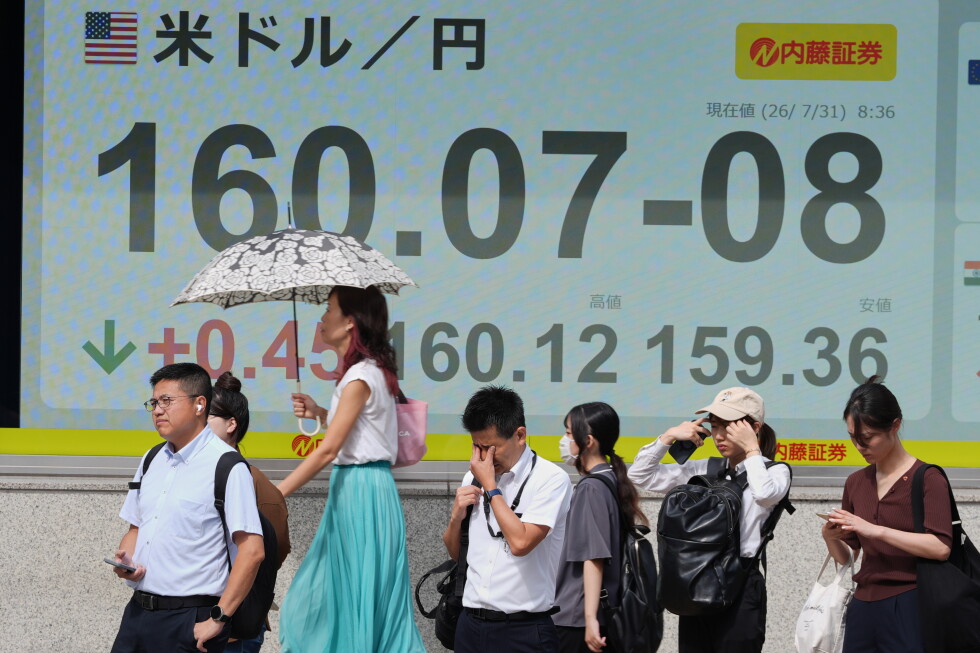
Beyond equities, currency markets saw significant action driven by suspected intervention by Japanese authorities to prop up the slumping yen. After weeks of trading above 160 yen to the dollar, the greenback plummeted more than 2.4% overnight before bouncing back 0.6% early Friday to 160.59 yen. Japan’s Nikkei financial newspaper reported the intervention was coordinated, with the Federal Reserve Bank of New York conducting a so-called “rate check” to support the move.
The suspected intervention came ahead of the Bank of Japan’s policy meeting concluding later Friday, where the central bank is widely expected to hold interest rates at current levels. Analysts say the timing was designed to head off speculative currency moves tied to the central bank’s policy announcement. Jonas Golterman, emerging markets economist at Capital Economics, noted that past interventions have had limited sustained impact on yen valuations. “Intervention in support of the yen may not work any better now than it has previously, but the persistence of the Japanese authorities suggests to us that the yen will remain around the 160 level this year before staging a more sustained rebound next year,” Golterman wrote in a note. The euro slipped slightly to $1.1515 from $1.1524 against the dollar in early Friday trading.
Oil prices edged higher Friday amid ongoing geopolitical tensions between the U.S. and Iran, which have disrupted shipping through the Strait of Hormuz — the critical chokepoint that carries roughly a fifth of global oil supplies. Brent crude, the global benchmark for oil prices, rose 0.3% to $87.14 per barrel, up from roughly $72 per barrel before the outbreak of conflict between Israel and Iran in late February.
On Wall Street, the rally in tech shares spilled over from Microsoft to the broader market overnight. The benchmark S&P 500 gained 1.7% to close at 7,437.63, the Dow Jones Industrial Average added 1.2% to 52,208.06, and the technology-heavy Nasdaq Composite rose 2.8% to 25,122.18. The positive U.S. session set the stage for the rally across Asian markets when they opened for trading Friday.