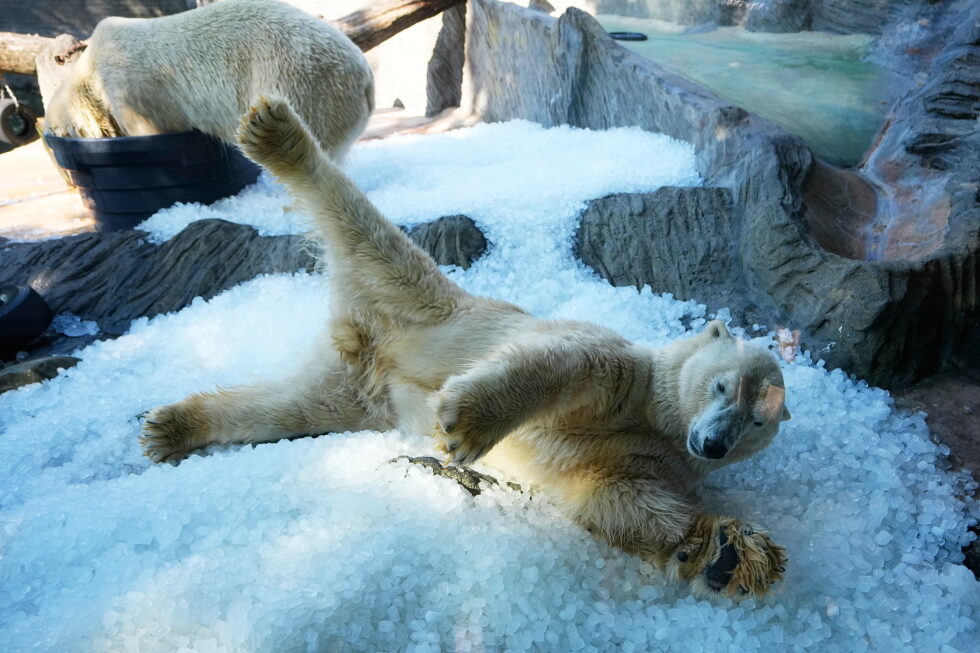
As a record-breaking early heat wave bakes much of Central Europe, keepers at Prague’s leading zoological park have turned to a simple but effective solution: massive quantities of ice to protect their animal residents from dangerous extreme temperatures. On Thursday, as forecasts predicted peak temperatures would climb to 38 degrees Celsius (100.4 degrees Fahrenheit) by mid-afternoon, zoo teams rolled out ice beds across outdoor enclosures, giving heat-sensitive animals a much-needed escape from the sweltering conditions.
Among the first to take advantage of the cooling treat were 16-year-old polar bear twin brothers Aleut and Gregor. Born in Germany’s Nuremberg Zoo and now long-term residents of Prague, the pair immediately began rolling and playing in the beds of ice cubes, combining essential heat relief with an entertaining enrichment activity. “The bears cool off with it and at the same time it’s an enrichment of their life in the zoo,” explained Filip Mašek, the official spokesperson for Prague Zoo.
The ice cooling program is not a new initiative for the facility. Mašek noted that the zoo first launched the practice two years ago, a proactive adjustment to the growing impacts of climate change, which has steadily increased the number of extreme heat days across Central Europe each summer.
Of all the zoo’s residents, the polar bears have proven to be the biggest fans of the ice protocol. Though they have adapted to the region’s temperate European climate over their 16 years in the region, they still benefit greatly from the chance to mimic the cold Arctic conditions their species evolved to inhabit.
This year, the zoo’s original scheduling aligned with long-term seasonal patterns: the ice delivery and distribution plan was set to launch in July and August, the months historically marked by the highest summer temperatures in the Czech Republic. But shifting weather patterns driven by climate change upended that timeline. An unprecedented early heat wave hit Central Europe in late June, bringing the Czech Republic its hottest recorded temperature in history: 41.9 degrees Celsius (107.4 degrees Fahrenheit) on June 28.
The unseasonal extreme heat forced the zoo to roll out its ice program weeks earlier than planned, and officials say they will adjust their timeline for future years to account for the new normal of earlier heat waves. “The weather keeps surprising us,” Mašek said. “We’ve been taught a lesson,” he added, confirming ice will be prepped and ready for deployment much sooner in 2025.
While polar bears are the most enthusiastic users of the ice cooling program, they are far from the only animals that benefit. In previous years, the zoo has distributed ice treats to a range of species, including otters, elephants, and parrots. Gorillas have even received special blocks of ice with frozen fruit hidden inside, combining cooling relief with a foraging enrichment activity. For other species better adapted to warm temperatures, the zoo provides additional cooling options including access to shaded enclosures, indoor climate-controlled habitats, and shallow pools for swimming.