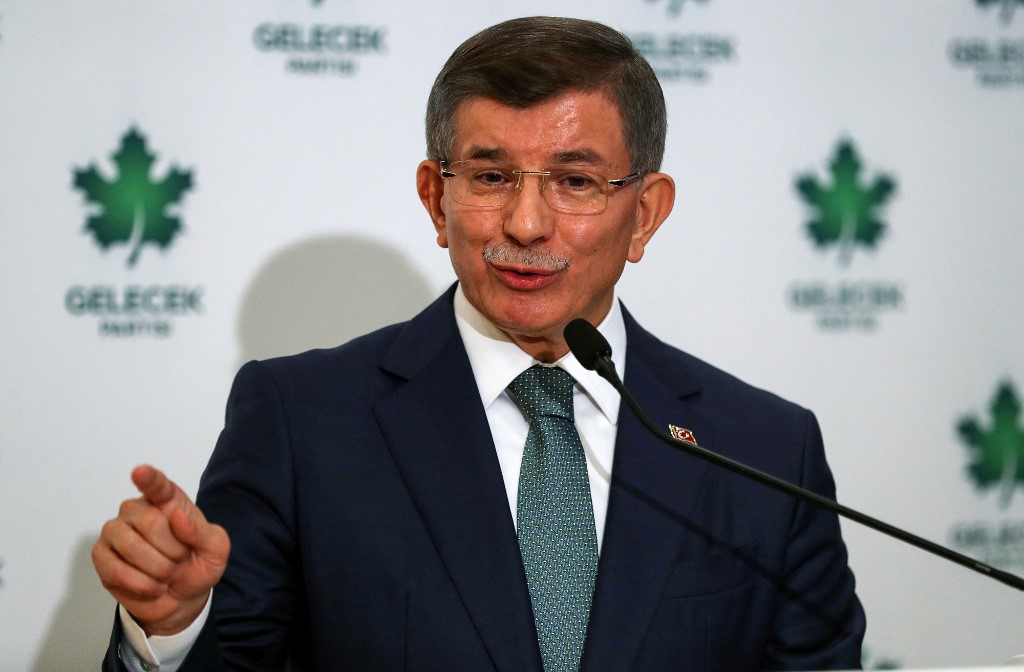
On Wednesday, a pivotal shift shook Turkish politics as former Prime Minister Ahmet Davutoglu, once one of President Recep Tayyip Erdogan’s closest allies, announced the full dissolution of his opposition Future Party and his permanent withdrawal from organized party politics. In a formal written statement shared on the social platform X, Davutoglu framed his exit as a response to what he described as Turkey’s toxic and unethical domestic political environment.
Davutoglu stressed that his choice is not an act of surrender, nor a complete abandonment of political engagement. Instead, he positioned it as a moral protest and a urgent call for broader political reflection across the country, urging all actors to reevaluate the current state of Turkish politics.
Davutoglu launched the Future Party back in 2019, with a clear strategic goal: to siphon disillusioned conservative voters away from Erdogan’s long-governing Justice and Development Party (AKP), and build a new, democratic conservative alternative that could challenge the AKP’s decades-long hold on power. But the venture never gained the popular traction Davutoglu had predicted. The party failed to convince voters it could serve as a credible replacement for the AKP, securing just 0.11% of the national vote in the 2024 local elections, a result that underscored its marginal status in Turkish politics.
A key strategic decision that weakened Davutoglu’s standing among his core conservative base was his 2023 choice to join the Table of Six opposition coalition and back Kemal Kilicdaroglu, then-leader of the Republican People’s Party (CHP), in that year’s presidential election. For many Turkish conservatives, long-held skepticism of the CHP’s staunch secularist ideology dates back to the founding of the Turkish republic, and the alliance eroded much of the limited support Davutoglu had retained.
While the coalition arrangement allowed the Future Party to win 10 seats in the 2023 general parliamentary election, the party’s parliamentary caucus shrank to just four members in recent years, as multiple deputies defected to both the AKP and other opposition groups. Beyond political challenges, the party also faced crippling financial strain: an anonymous source familiar with Davutoglu’s thinking confirmed to Middle East Eye that covering organizational costs and sustaining the party’s national infrastructure had become increasingly unfeasible.
Discussions of a potential merger between the Future Party and the AKP had been circulating in Ankara political circles as early as last year, but talks collapsed after Erdogan rejected the inclusion of both Davutoglu and his close ally, former AKP official Selcuk Ozdag, blocking any path to a political reunion.
Before his split with Erdogan, Davutoglu built a decades-long career in Turkish politics and academia: a respected academic and once a doctrinaire foreign minister, he pioneered Turkey’s transformative “zero problems with neighbours” foreign policy, which pushed Ankara to deepen political and economic engagement across the Middle East and North Africa. This marked a clear break from Turkey’s historically cautious approach to relations with Arab states, reshaping Turkish foreign policy for nearly a decade.
Davutoglu ascended to the prime ministership in 2014, after Erdogan won election to the presidency, and for a time remained one of Erdogan’s most trusted lieutenants. But tensions between the two former allies began to mount steadily from 2015, particularly after Davutoglu led the AKP to an election victory in that year’s November snap vote. Internal divisions ultimately centered on constitutional order: Davutoglu privately argued that political authority should rest with the office of the prime minister, aligning with Turkey’s then-parliamentary constitutional framework, while Erdogan pushed to expand the powers of the presidency.
This power struggle culminated in Davutoglu’s forced removal from the prime ministership in 2016, and he was further sidelined from mainstream AKP politics after the 2018 presidential election that expanded Erdogan’s executive powers. The 2020 state-ordered closure of Istanbul Sehir University, an institution Davutoglu himself founded, only deepened the public rift between the two former allies.
Davutoglu’s exit from party politics closes a chapter of intra-conservative opposition to Erdogan’s government, leaving remaining opposition groups to adjust to a shifting political landscape ahead of future national elections.