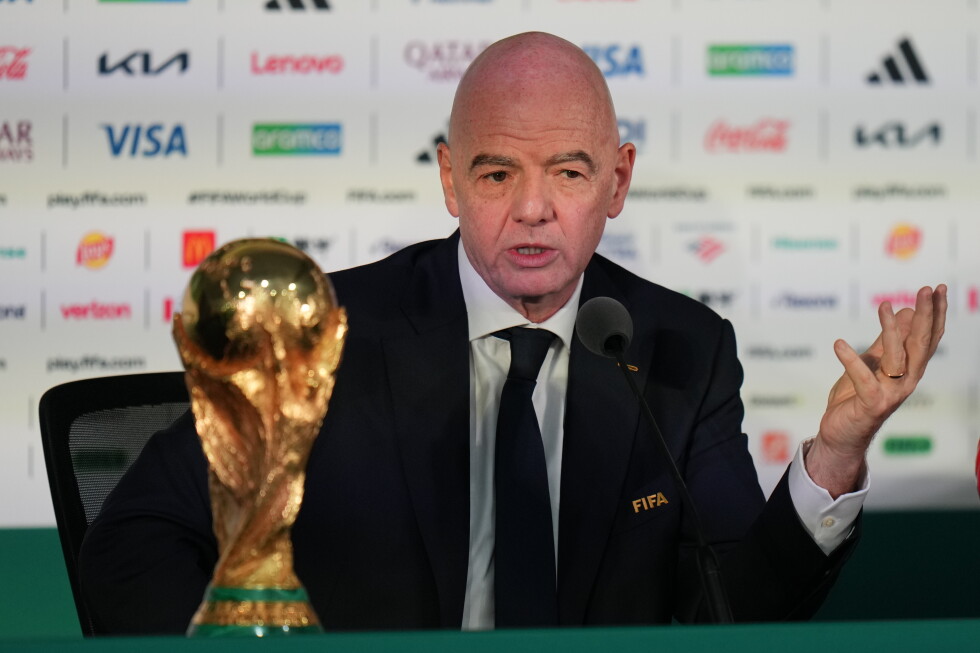
GENEVA — In a move that has plunged international soccer into turmoil, FIFA President Gianni Infantino has given the governing body’s 211 national member federations until September 19 to approve a groundbreaking and divisive proposal: selling a 20% stake in a newly created $20 billion FIFA subsidiary that would control the World Cup, Club World Cup and all of FIFA’s top competitions. The one-time $20 million payout promised to every approving federation is underwritten by Thrive Capital, the investment firm founded by Joshua Kushner — brother of Jared Kushner, former U.S. President Donald Trump’s son-in-law, who is listed as the anchor backer for the deal.
In the confidential letter obtained by The Associated Press, Infantino framed the proposal as a once-in-a-generation, game-changing opportunity for FIFA’s global membership. “It is my duty and responsibility as FIFA president to present such game-changing opportunities to you, our members,” he wrote, adding that the initiative would unlock unprecedented capital to grow soccer across all member nations. If approved, the subsidiary, called FIFA Forward Enterprise, would bring on a pool of additional international investors, with global banking giant J.P. Morgan tapped to lead the fundraising process. The $20 million payout to each member would be disbursed over the four-year commercial cycle leading up to the 2030 men’s World Cup; if the plan fails, members will only receive the originally promised $10 million in funding over the same period.
The proposal, which became public earlier this week, has triggered immediate and widespread pushback from every major regional governing body in global soccer. Europe’s UEFA, which operates the continent’s flagship competitions including the European Championship and UEFA Champions League, was the first to condemn the plan, arguing that the World Cup is not FIFA’s to sell. UEFA has already called an emergency online meeting for its 55 member federations this Thursday to coordinate a collective response.
Concern has also spread to other continental confederations. The Confederation of North, Central America and Caribbean Association Football (CONCACAF) released a public statement Wednesday highlighting deep unease over the lack of transparent due process in the plan’s development. The Asian Football Confederation, based in Kuala Lumpur, added its voice to criticism, saying it was disappointed that such a high-stakes proposal became public before member confederations had the chance to review and debate the details internally.
Regional governing bodies warn that the restructuring would create direct competition for their own elite competitions, as FIFA would likely increase the frequency of men’s and women’s World Cups and expanded Club World Cups to boost revenue for private investors, undercutting the value and audience share of existing continental events.
Opposition has also extended to the highest levels of British politics, where the country is currently lined up to host the 2035 Women’s World Cup in a joint bid by England, Scotland, Wales and Ireland — a bid FIFA is expected to formally approve at a November virtual meeting. Andy Burnham, a lifelong soccer fan and prominent British political leader, publicly rejected the plan in an Instagram video message, saying “Football does not belong to investors. Once you have sold a piece of (the World Cup), you have sold out. Football belongs to the fans. It always has, and it always will.”
This is not the first time Infantino has pushed an ambitious, controversial restructuring initiative during his 11-year tenure as FIFA president. Critics have long noted that Infantino has increasingly advanced major changes to global soccer without meaningful consultation with key stakeholders. Past proposals have included a FIFA Peace Prize and a plan to shift the men’s World Cup from a four-year cycle to a biennial event, both of which faced widespread pushback. This new plan also echoes the 2021 European Super League controversy, when widespread British political opposition — including threats of legislation from then-Prime Minister Boris Johnson — helped collapse the breakaway competition that threatened UEFA’s Champions League, a project that Infantino had quietly supported behind the scenes.