In a remarkable intersection of digital youth culture and traditional Indian politics, internet slang born from a mass youth protest movement has made an unprecedented entrance into the hallowed halls of India’s national legislature, marking a new chapter in how politicians engage with the country’s largest demographic of young voters.
The chain of events began when what started as the satirical online collective Cockroach Janta Party (CJP) evolved into a grassroots protest movement drawing tens of thousands of young demonstrators. Fueled by widespread anger over persistent exam irregularities, broader frustration over systemic youth unemployment, failing public institutions and perceived political apathy turned the group into an unexpected rallying point for young Indians. Organized across WhatsApp, Telegram, and Instagram, the movement spread through meme culture, first-person vlogs, viral Reels, and sardonic viral edits, turning street protests into viral online content that drew millions of views and amplified participation. Within days, the pressure from this youth-led movement forced the resignation of India’s federal education minister Dharmendra Pradhan. In response, the ruling government introduced a new anti-exam leak bill to address protester demands, setting the stage for an extraordinary parliamentary debate on Tuesday.
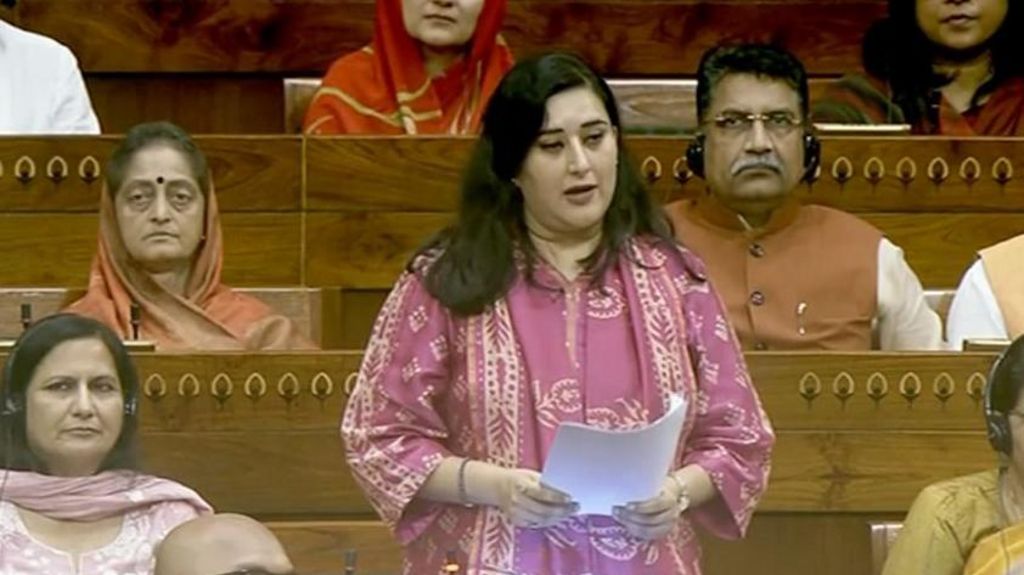
During discussion of the bill in the Lok Sabha, India’s lower house of parliament, the digital slang of Gen Z echoed across the chamber rather than being confined to Instagram comment sections and private group chats, where terms like “delulu”, “FOMO”, and “clock it” originated. Shiv Sena MP Shrikant Shinde opened the trend of lexicon usage, accusing the opposition bloc of being “MIA” (missing in action), paralyzed by “FOMO” (fear of missing out) and ultimately turned “delulu” — the popular Gen Z shorthand for being detached from reality. Congress leader Deepender Singh Hooda hit back at the ruling party by adopting the CJP’s viral nonsensical protest catchphrase “waste-guna-huiya” to mock the government’s legislative response. Even ruling Bharatiya Janata Party (BJP) lawmakers leaned into the digital lexicon: Bansuri Swaraj claimed Prime Minister Narendra Modi had “clocked it” — Gen Z terminology for getting a solution right — by introducing the new bill, while fellow BJP MP Tejasvi Surya also labeled the opposition “delulu” for criticizing the bill after failing to pass similar education reforms when they held power. Even opposition leader Supriya Sule, who initially questioned the absurdity of politicians adopting Gen Z lingo, ended up using the term “delulu” herself mid-debate. Sansad TV, India’s official parliamentary broadcaster, confirmed that multiple lawmakers from across the political aisle joined the trend.
Political analysts have offered mixed perspectives on this unusual moment in Indian parliamentary history. Rahul Verma, a political scientist at the Centre for Policy Research, argues that the shift is far from revolutionary, pointing out that politicians have long borrowed language from popular culture to connect with voters. Decades of precedent support this: phrases from cricket, Bollywood cinema, and advertising have long made their way into parliamentary speeches. Most recently, the 2019 blockbuster war film *Uri: The Surgical Strike* gave the political mainstream the rallying catchphrase “How’s the josh?”, which quickly became a staple of election rallies and legislative speeches. “The language may be new, but the instinct behind it is not,” Verma explained, noting that this is simply politicians doing what they have always done: adapting their speech to match the electorate they hope to win over.
However, digital anthropologist Payal Arora notes that internet slang differs meaningfully from the cultural phrases politicians have borrowed in the past. Unlike Bollywood lines or cricketing metaphors, which are created by industry figures or public personalities, internet slang emerges organically from millions of ordinary online users, evolving collectively, shifting rapidly and fading quickly. This organic origin, Arora argues, is what makes its arrival in parliament a significant milestone. “Language is often the first thing politics borrows when it is trying to connect with a new constituency,” she explained. Yet she also cautions that adopting a generation’s vocabulary is far easier than addressing the systemic frustrations that pushed that generation into protest. Using Gen Z slang, she argues, only signals cultural awareness, not a commitment to substantive political transformation.
In the weeks following the end of mass street protests, the Indian government has grown increasingly uneasy about the movement’s lingering digital presence. Authorities have requested the removal of multiple protest-related posts from social platforms, and police have opened legal cases against dozens of students and activists linked to the CJP movement. CJP leaders have accused the government of intimidation, making the withdrawal of these legal cases a core demand following Pradhan’s resignation, and have threatened to resume mass street demonstrations if their demand is not met.
The movement’s irreverent, meme-driven tone has also sparked debate, with critics arguing that profanity and ironic humor trivialize the push for education system reform. Supporters counter that irony is simply the native language of a generation raised online, and that humorous, irreverent content can coexist with serious demands for government accountability.
For many young protesters, the sight of politicians adopting their slang has left them distinctly unimpressed. Speaking on condition of anonymity, one CJP protester summed up the sentiment of many demonstrators: “Speaking our language isn’t going to impress us without meaningful change. We want accountability, not politicians trying to copy us. That’s cringe. We didn’t ask them to speak like us. We asked them to listen.” Whether Gen Z slang will become a permanent feature of Indian parliamentary debate remains to be seen, as internet trends evolve and fade faster than traditional political culture can keep up.