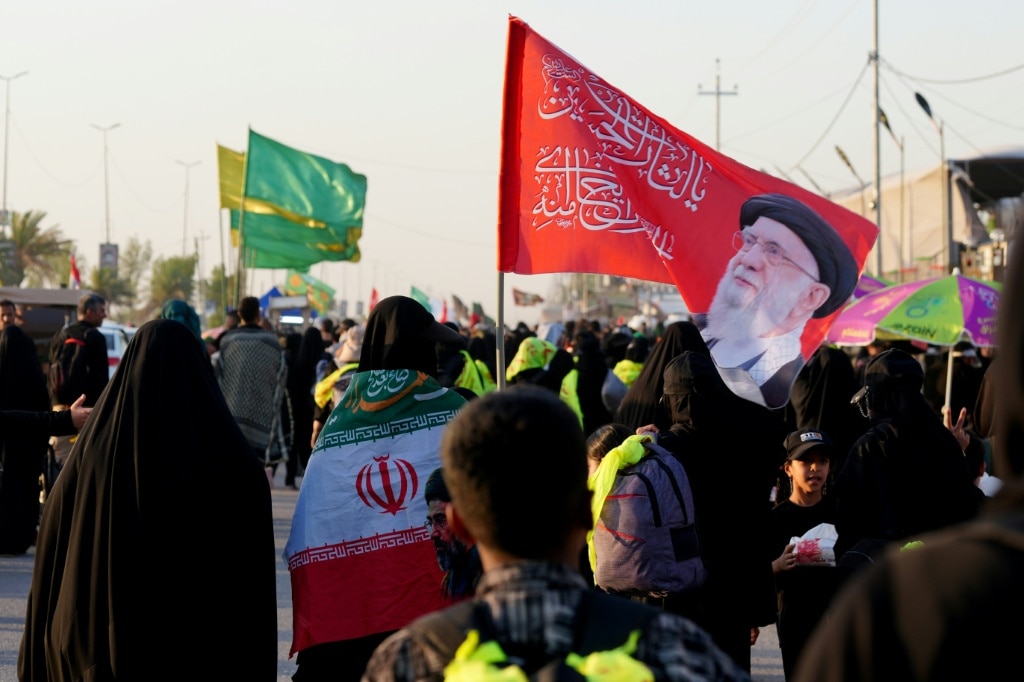
A new wave of instability has swept through the Middle East after the United States and Saudi Arabia launched coordinated retaliatory airstrikes against Iran-aligned militant sites in eastern Iraq this Wednesday, ending a brief multi-day ceasefire between Washington and Tehran.
According to statements from the US military, the joint air operation targeted weapons depots and logistics hubs belonging to what it described as “Iran-aligned terrorists”. Saudi Arabia’s defense ministry echoed the claim, confirming the strikes targeted militias linked to previous attacks on Saudi oil infrastructure. The resumption of hostilities came hours after the ceasefire collapsed late Tuesday, when US forces intercepted Iranian missiles fired at American military bases in the Persian Gulf.
The escalation comes at a key diplomatic moment: US President Donald Trump hosted Israeli Prime Minister Benjamin Netanyahu at the White House for their first face-to-face meeting since the latest round of Middle East hostilities began in late February. The closed-door talks, which ran for roughly 90 minutes, aimed to bridge public disagreements between the two leaders over the ongoing regional conflict. Both leaders described the meeting in positive terms: Netanyahu called it “one of the best conversations I’ve ever had with the president of the United States”, while Trump simply noted the pair held a “very good meeting”. The core focus of the discussions, Netanyahu confirmed, was the shared priority of preventing Iran from acquiring nuclear weapons. While leaders had been expected to cover the stalled implementation of the US-brokered Israel-Lebanon framework deal and the deadlocked reconstruction of Gaza, no official confirmation has been given on whether those topics were addressed. Israel has not directly participated in the recent US-Iran hostilities that reignited earlier this month when an April ceasefire broke down.
Fresh tensions over the strategic Strait of Hormuz, a critical global chokepoint for 20% of the world’s oil supplies, have amplified market volatility. On Wednesday, Iran’s Islamic Revolutionary Guard Corps (IRGC) announced it had intercepted and attacked three oil tankers that it accused of ignoring navigation warnings and using an unauthorized route through the waterway. Tehran has repeatedly asserted it maintains “full control” over the strait, a stance that puts it at direct odds with the international community’s demand for free navigation.
Recent diplomatic moves around the strait have only deepened divisions. Earlier this week, Tehran held talks with neighboring Oman, which also borders the waterway, to agree on joint principles and operational mechanisms for shipping traffic. Back in June, the two nations discussed imposing service fees for transiting vessels, a proposal that the US has openly opposed. A recent rift emerged after Oman announced vessels could transit the strait through its territorial waters, a move that prompted Iran to respond with attacks on passing ships.
The renewed conflict has already sent shockwaves through global energy markets: benchmark crude oil prices jumped more than 4% on Wednesday, as traders renewed fears that disrupted shipping through Hormuz could cut off global oil supplies. Three years after the outbreak of the Israel-Hamas war, the humanitarian situation in Gaza remains catastrophic, with Israel continuing to carry out regular operations targeting individuals it identifies as militants. Danny Danon, Israel’s ambassador to the United Nations, framed Netanyahu’s Washington visit as taking place at a “critical time for the Middle East”, arguing Iran continues “to choose terrorism over negotiations” by blocking access to the strait.