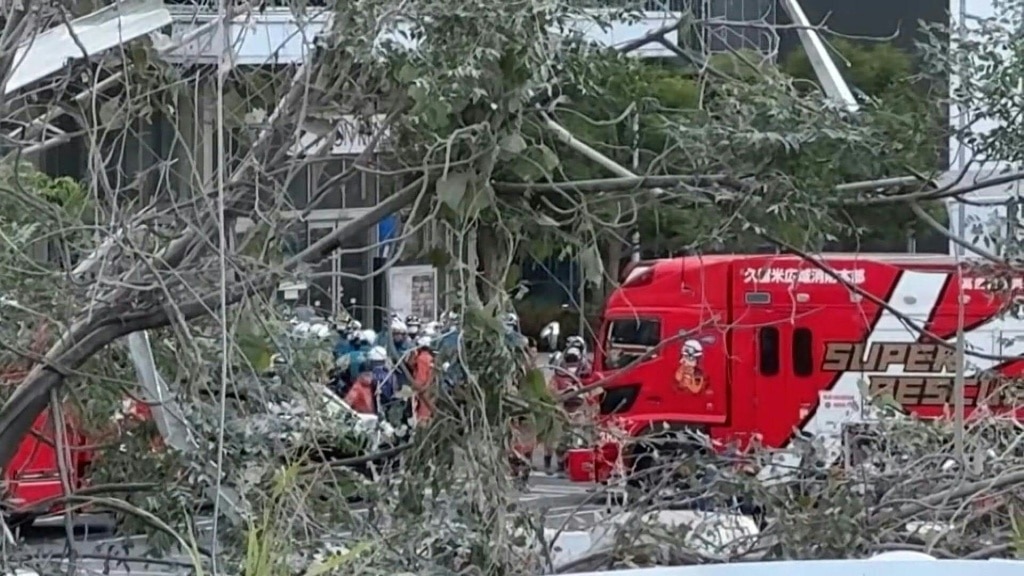
Just one day after a powerful 7.1-magnitude earthquake struck Japan’s southwestern Kumamoto Prefecture on Kyushu Island, officials have confirmed at least 13 fatalities, with emergency crews racing against time to reach potential survivors trapped beneath collapsed infrastructure across the disaster zone.
The tremor, which hit at 4:27 pm local time (0727 GMT) on Tuesday, registered the highest possible rating on Japan’s domestic Shindo seismic intensity scale. The U.S. Geological Survey recorded the event at a slightly lower magnitude of 6.8, placing its epicenter 10 kilometers below the Earth’s surface. Widespread destruction followed in the quake’s wake: multiple buildings collapsed, dozens of small fires broke out, more than 36,000 households and public facilities were left without electricity, and key transport links were severely damaged.
Japanese Prime Minister Sanae Takaichi confirmed the death toll to reporters on Wednesday, noting that authorities are still working to verify that all fatalities are directly linked to the seismic event. “Extensive damage has been confirmed, including casualties, collapsed buildings, fires and damage to roads,” Takaichi said. Early data from the Fire and Disaster Management Agency shows the victims include two women killed at a local shopping mall in Kashima and three others killed across other parts of the prefecture, with seven more people suffering severe injuries.
The Kashima Aeon shopping mall suffered catastrophic damage after a gas explosion triggered by the quake collapsed ceilings and internal walls, according to government sources cited by Kyodo News. A spokesperson for Aeon confirmed that the explosion took place after all customers and staff had completed an emergency evacuation, but local officials say eight people were pulled from the rubble of the mall, five with injuries. Early unconfirmed reports suggested 20 to 30 people could be trapped inside, but Japanese public broadcaster NHK quoted police Wednesday morning stating that the actual number of trapped people is lower than initial estimates. “The exact number is not known. It is certain that staff members are trapped, but it is unclear whether any members of the public are among them,” NHK reported police as saying. As of Wednesday, rescue teams had still not gained safe access to the damaged mall structure, delaying full search operations.
At a second major disaster site, the Nippon Paper Industries factory in Yatsushiro, nine people remain unaccounted for after a partial collapse of the facility’s smokestack.
Witness accounts and verified video footage paint a picture of widespread chaos and fear when the quake struck. Chiharu Hara, a 35-year-old recruitment agent working in Kumamoto, told AFP she was terrified as the office building she was in swayed violently. “The office swayed violently side to side. I was afraid it would collapse. Everyone panicked,” Hara said.
Verified footage shows heavy construction equipment, streetlights and traffic signals shaking violently during the tremor. Part of a historic wall at the centuries-old Kumamoto Castle collapsed, and multiple sections of major roads buckled, forcing vehicles to navigate dangerous, damaged sections. A pedestrian bridge partially collapsed into a local river, a freight train was capsized, and all high-speed shinkansen services through the region were suspended. Kumamoto Airport was closed for several hours after the quake but reopened Tuesday evening. As of Wednesday morning, hundreds of roads across the prefecture remained closed to traffic.
This is not the first major seismic disaster to hit Kumamoto: in 2016, two large quakes in the same region killed 273 people. Japan is one of the most seismically active countries on Earth, located atop four major tectonic plates along the Pacific Ring of Fire. The country of 125 million people experiences an average of hundreds of small to medium quakes every year, accounting for roughly 18 percent of the world’s total seismic activity. Most tremors are mild, but major quakes have had devastating impacts on the country in recent decades, most notably the 9.0-magnitude 2011 Tohoku undersea quake that triggered a massive tsunami, killing nearly 18,500 people and causing a catastrophic meltdown at the Fukushima Daiichi nuclear power plant.
In response to the latest disaster, Japanese authorities have deployed extensive emergency resources: Defense Ministry officials confirmed that 3,600 military personnel have been mobilized for search and rescue operations, and 20 military aircraft have been deployed to conduct aerial damage assessments across the impacted region.