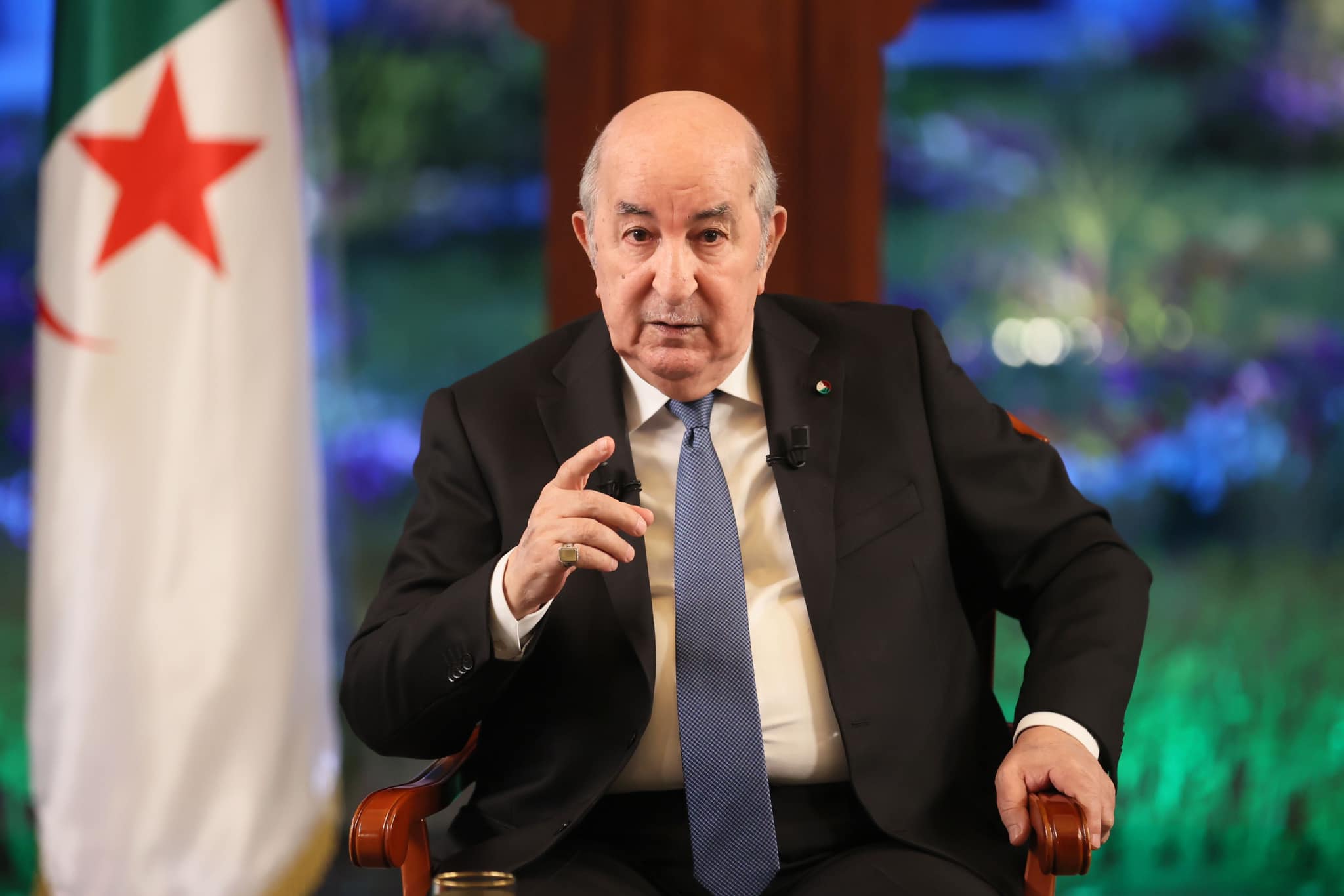
In a fiery televised address this week, Algerian President Abdelmadjid Tebboune has issued a stark pledge to protect neighboring Tunisia from what he frames as coordinated external threats, warning that any aggression against Tunis would be treated as an attack on Algeria itself. During the Monday interview, the Algerian leader emphasized that his nation has no hostile intentions toward any regional state, but will not stay idle when the security and stability of its close ally is put at risk. Using a vivid colloquial Algerian Arabic turn of phrase, Tebboune warned that any actor that brings terrorism to Tunisia or its border regions would face overwhelming, decisive retaliation. Tebboune went on to claim that unnamed parties are pursuing a deliberate strategy to first cut diplomatic and economic ties between Tunis and Algiers, before moving to undermine the Tunisian government itself. Though he stopped short of naming all the actors he accused of plotting against the bilateral alliance, he renewed existing allegations that the United Arab Emirates has actively worked to destabilize Algeria in recent months. Tebboune’s remarks arrive at a moment of profound crisis for Tunisia, both domestically and internationally. The North African nation is currently grappling with one of the most severe electricity shortages it has seen in a decade, with extended rolling blackouts cutting power to residential neighborhoods, commercial operations and public services across the country amid record summer high temperatures. The crippling outages have sparked widespread public anger, forcing renewed scrutiny of the government’s management of national infrastructure five years after President Kais Saied’s 25 July 2021 power consolidation, when he suspended the elected parliament, dismissed the sitting government and began ruling by executive decree. Since Saied seized full executive authority, dozens of politicians, legal professionals, judges, journalists and grassroots activists have been detained or prosecuted in a crackdown that international human rights organizations have labeled an unprecedented attack on political pluralism and civil liberties in the country. Saied has consistently rejected claims of political persecution, maintaining that Tunisia retains an independent judicial system and that all defendants facing charges are being tried for standard criminal violations, not their political beliefs. When Saied first moved to consolidate power in 2021, Algeria initially called for an immediate return to constitutional governance. However, Algiers has since evolved into Saied’s most critical regional backer, providing consistent political support as Tunisia has become increasingly isolated from Western governments over its documented democratic backsliding. Over the past several years, the relationship between the two North African leaders and their respective administrations has deepened dramatically, with both framing their partnership as a strategic alliance rooted in overlapping regional security priorities. Last year, the two governments signed a landmark new defense cooperation accord covering areas including joint military training, cross-border intelligence sharing, border security coordination and combined military exercises. Only limited details of the agreement have been released to the public, a lack of transparency that sparked sharp criticism from Tunisian opposition groups, who accuse the Saied administration of hiding the treaty’s terms from the public. Speculation around an unauthorized leaked draft of the agreement also fueled claims that Tunis is surrendering key elements of national sovereignty to its larger neighbor. The growing bilateral alliance has also reignited long-running domestic debate in Tunisia over the country’s increasing economic and political dependence on Algeria. The two neighbors already maintain close collaboration on counterterrorism operations, border management and energy trade, and Algeria has emerged as one of Tunisia’s most important economic partners in recent years. But critics argue that the power imbalance in the relationship has grown sharply since Saied consolidated authority, with the Tunisian president aligning Tunisian foreign policy almost entirely with Algeria’s regional positions. In a notable break from decades of Tunisian neutrality on the Western Sahara dispute, Saied hosted Brahim Ghali, leader of the Polisario Front, in Tunis in 2022, a move that triggered a major diplomatic dispute with Morocco. Human rights groups have also raised concerns about expanding judicial cooperation between the two governments, pointing to the extradition of Tunisian opposition figure Seif Eddine Makhlouf from Algeria earlier this year, which took place despite formal objections from multiple international rights organizations.