Forty years after the Chernobyl nuclear disaster spread radioactive contamination across Europe and pushed Italy to abandon atomic energy entirely, Prime Minister Giorgia Meloni’s right-wing administration is moving systematically to reintroduce nuclear power into the country’s energy portfolio, driven by urgent demands to boost energy independence amid ongoing global geopolitical shocks.
The government’s strategy centers on courting a new generation of Italian voters, who frame modern nuclear energy as a critical low-carbon solution for climate action and a reliable bulwark against energy market volatility triggered by the ongoing conflicts in Ukraine and the Middle East. Energy policy experts note the administration is counting on this youth-driven support to override the deep-seated skepticism of older Italians who came of age during the 1986 Chernobyl crisis, and who have twice rejected nuclear power in national referendums over the past four decades.
Next week, the Italian parliament is scheduled to vote on a government-backed bill that will establish the first formal legal framework for next-generation nuclear technologies in the country. If approved, the executive branch will have 12 months to draft detailed regulatory decrees covering every key stage of development, from reactor licensing and strict safety protocols to radioactive waste management and site selection for new facilities.
Speaking to the Associated Press ahead of the parliamentary vote, Environment and Energy Security Minister Gilberto Pichetto Fratin explained the government’s current mandate: “Our duty at this moment is to lay the legal and regulatory groundwork, so that future decision-makers will have the structure they need to move forward with new reactor installations when the time comes.”
## A Historic Policy Reversal For Europe
Italy’s ongoing nuclear debate comes as a growing number of European nations, including France and Poland, are expanding their existing nuclear programs to meet dual goals of cutting carbon emissions and strengthening energy security following Russia’s 2022 full-scale invasion of Ukraine. Unlike these countries, which maintained their nuclear infrastructure after Chernobyl, Italy is attempting to rebuild an entire industry that was fully dismantled by public mandate decades ago.
Italy was one of Europe’s earliest nuclear pioneers, with four operational reactors running across the country until the 1987 post-Chernobyl referendum effectively shut down the entire national nuclear program. A second attempt to revive nuclear development collapsed in the wake of Japan’s 2011 Fukushima disaster, when 94% of participating Italian voters rejected plans for new reactor construction.
If successful, Italy’s current push would mark one of the most dramatic energy policy reversals in modern European history. Meloni’s government argues that surging electricity demand, legally binding European climate targets, and persistent energy security threats after Russia’s invasion of Ukraine collectively justify returning nuclear power to Italy’s energy mix.
Pichetto Fratin projected that domestic electricity demand will grow by at least 30% over the next decade, a surge that cannot be met by renewable energy sources alone. Instead of reviving the large-scale conventional reactors of the past, the government is prioritizing small modular reactors (SMRs) and other cutting-edge nuclear technologies, which proponents argue come with improved safety features, greater operational flexibility, and far shorter construction timelines than traditional nuclear facilities.
“We are working with third-generation advanced nuclear technology, which is far better aligned to our current energy needs,” Pichetto Fratin said. “It is much safer thanks to its small modular design, and can be built in a fraction of the time of older large-scale plants. When people ask me for a realistic timeline for the first operational reactor, I tell them 2033, 2034, or 2035.”
Globally, nuclear power generates roughly 10% of the world’s total electricity supply, accounting for approximately one-quarter of all low-carbon energy produced worldwide. Italy’s planned nuclear comeback is part of a broader global resurgence of interest in atomic energy, driven by steady technological advances that have improved safety and reduced construction and operating costs for new facilities.
## Public Opinion Split Along Generational Lines
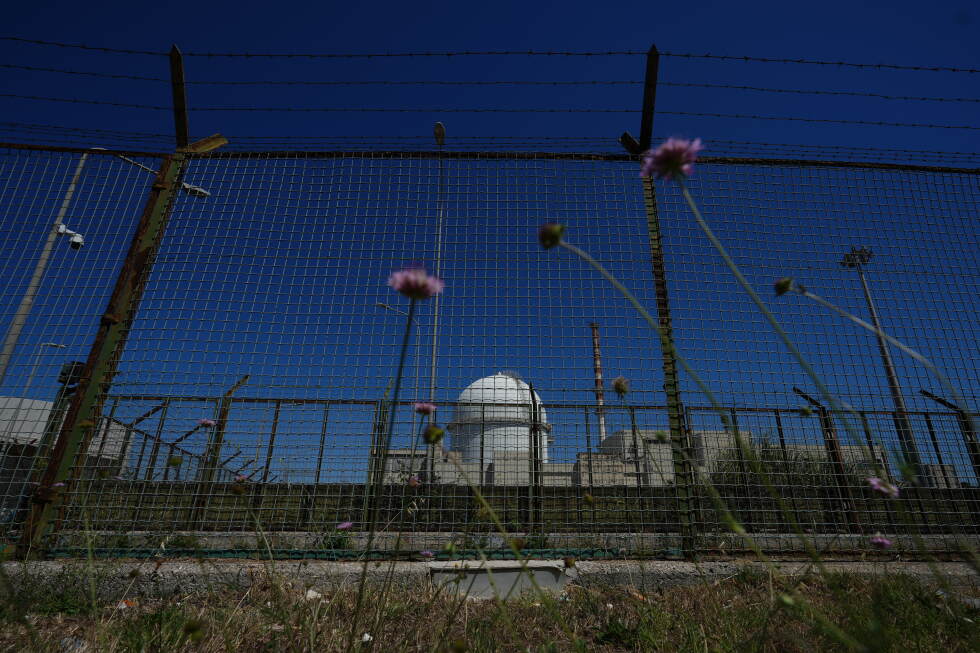
At the decommissioned Latina nuclear power plant, located south of Rome, crews in protective gear continue to dismantle the remains of Italy’s first nuclear era even as policymakers in the capital debate how to launch a second. This striking contrast is not lost on Viviana Cruciani, who oversees nuclear decommissioning operations at the site, which is run by state-owned energy company Sogin.
“There is one generation that came of age right after Chernobyl, and they still only see nuclear energy through the lens of that 1986 accident,” Cruciani told the AP. “But there is another, much younger generation that is enthusiastic about nuclear power, and they are frustrated that Italy has not moved forward to bring this technology back.”
A 2024 public opinion survey conducted by Italian research firm Only Numbers found that roughly 55% of Italian voters support the construction of next-generation nuclear plants. Michele Governatori, a senior energy adviser at climate and energy think tank ECCO, noted that widespread support is particularly concentrated among younger demographics.
“There is far greater openness to nuclear power especially among younger generations,” Governatori said, explaining that many young Italians associate nuclear energy with technological innovation rather than the historic accidents that shaped public opinion for older cohorts.
Cruciani added that younger Italians are far more likely to frame nuclear power as a solution to future energy needs and climate change, rather than associating it with the nuclear disasters of the late 20th century. “I think nuclear power can help the environment too; it’s far more sustainable than fossil fuels,” said Cristian Giannetti, a 20-year-old tourist visiting Rome from the Tuscan coastal town of Forte dei Marmi. When asked about the risk of another Chernobyl-scale accident, Giannetti noted that decades of technological advancement have drastically reduced safety risks: “With the expertise and resources we have today, I think the probability of a major accident is really minimal.”
Other supporters back a return to nuclear power for practical economic reasons. “We have a clear energy crisis in this country, so it is very important that nuclear power gets the green light in Italy too,” said Paola Giovannini Pasti, president of Confagricoltura Donna, the women’s division of Italy’s largest agricultural lobbying group.
## Critics Raise Key Questions Over Cost and Political Feasibility
Not all observers are convinced of the plan’s viability. “If we rely on nuclear as a backup for renewables, average energy costs become devastating. Unfortunately, it is not a good complement to renewables, and it is not cheap,” Governatori said. Pichetto Fratin has acknowledged that nuclear power is not a short-term fix for Italy’s current high consumer electricity prices: “Nuclear power will not lower consumers’ bills today. But the nuclear power we build tomorrow can help bring costs down over time.”
Industry estimates put the cost of a single 300-megawatt SMR at between 3 billion and 6 billion euros, before accounting for additional infrastructure and national grid connection expenses. Pichetto Fratin said the government expects the majority of this funding to come from private sector investors, but critics argue cost remains the biggest flaw in the government’s case.
“Nuclear power being built in Europe today comes with exorbitant costs,” Governatori said. “On one hand, costs are extremely high, and on the other, private investors are pulling back from the sector.” He also questioned whether SMR technology will deliver on promises of improved economics, noting that the design has yet to be proven commercially viable at scale. Even so, many critics agree that establishing a formal regulatory framework will allow future projects to be evaluated on a case-by-case basis.
The biggest political hurdle for the government may ultimately be finding acceptable locations for new reactors and permanent radioactive waste storage. Italy still has not established a permanent national repository for its existing nuclear waste, most of which is currently stored at temporary facilities scattered across the country. Any future reactor or waste storage site will almost certainly face fierce local opposition.
Even if parliament approves the upcoming framework bill, opponents including major environmental groups and left-wing opposition parties could force a new national referendum once specific reactor sites and waste storage plans are announced. Public opinion polls show that general support for nuclear power drops sharply when voters are asked whether they would accept a reactor in their home province, with roughly six in 10 Italians opposing local reactor development.
“When you get down to the concrete questions of where the plant will be built and how much it will cost, it is very likely that public opinion will shift back to opposition,” Governatori said.