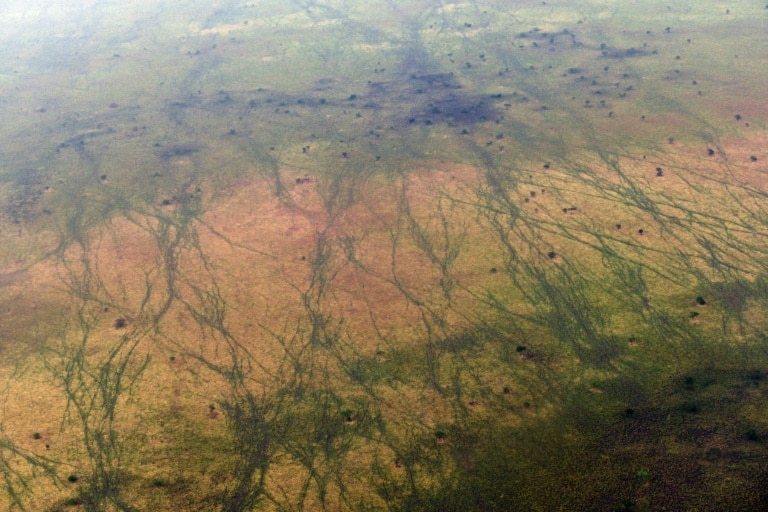
In a landmark moment for the world’s youngest nation, South Sudan’s Boma-Badingilo migratory landscape has become the country’s first ever entry on UNESCO’s World Heritage List, with the UN body immediately placing it on the parallel List of World Heritage in Danger due to urgent threats from ongoing conflict and accelerating climate change.
Spanning more than 37,500 square kilometers of grassland and open woodland savanna — an expanse larger than the entire territory of Belgium — the remote wilderness sits between the banks of the White Nile and South Sudan’s border with Ethiopia. Each year, the site hosts one of the planet’s most spectacular terrestrial wildlife migrations, with more than one million mammals, including massive herds of lechwe antelopes and gazelles, traversing the region in search of seasonal grazing and water. The collective movement of these huge herds leaves distinct, patterned tracks across the savanna that are clearly visible from aerial surveys.
South Sudan has been plagued by recurring cycles of violent civil conflict since it gained full independence in 2011, creating widespread instability that has put immense pressure on the country’s relatively intact natural ecosystems. At the same time, rising global temperatures and shifting rainfall patterns have exacerbated drought and habitat degradation across the region, adding further strain to the migratory ecosystem.
For South Sudan’s leaders and local communities, the designation marks a historic milestone. Tourism Minister Denay Jock Chagor told Agence France-Presse that the migratory landscape is not only host to one of the world’s greatest natural wildlife events, but also stands as a powerful symbol of South Sudan’s resilience, natural beauty, and untapped potential. “Its listing as South Sudan’s first UNESCO World Heritage Site is a proud and historic moment for our nation,” Chagor added.
Paulino Warnyang, a community representative from Indigenous groups that have lived alongside the landscape for generations, echoed the sentiment, noting that the designation honors more than just the unique wildlife and ecosystems. “It honours not only the animals and the land, but also the people whose lives, traditions and cultures have always been connected to them,” Warnyang said.
UNESCO’s designation is expected to bring tangible benefits to conservation efforts in the region. Inscription on the World Heritage List typically attracts increased international attention, drives growth in sustainable nature tourism, and unlocks access to global funding earmarked for the protection of threatened heritage sites facing risks from conflict, climate change, and human activity.