As the peak of the European summer travel season arrives, France and Spain are locked in an urgent battle against raging wildfires that have already caused catastrophic damage, displacing hundreds of thousands of people and leaving vast swathes of landscape in ashes. With a new searing heatwave looming on the horizon, emergency crews are racing to get blazes under control before rising temperatures and dry winds rekindle and expand existing infernos.
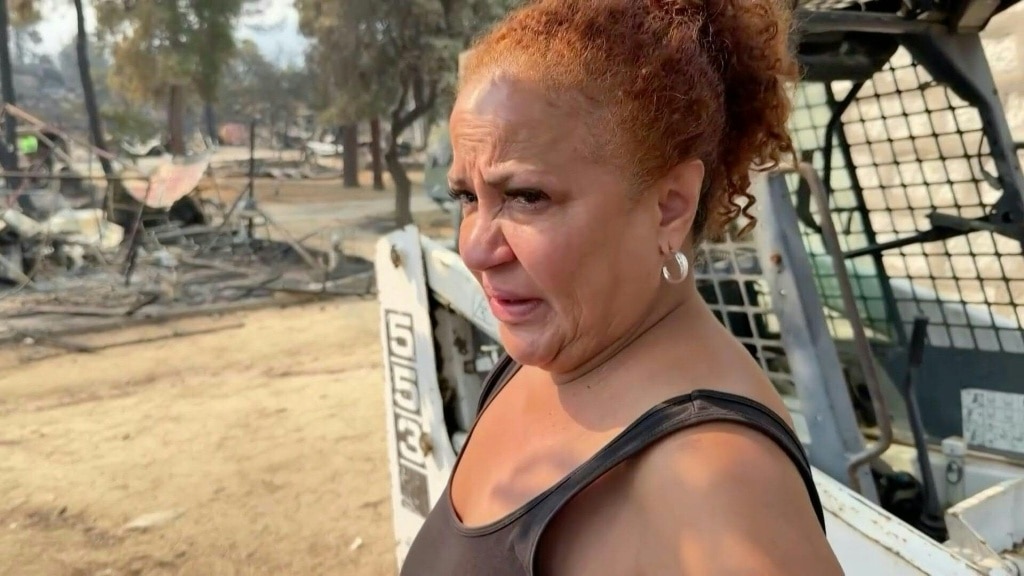
For days, uncontrollable flames have carved destruction through southwest France and the region west of Madrid, Spain’s capital. By Monday, the scale of displacement had reached staggering levels: around 60,000 people in Spain and 220,000 in France have been forced to flee their homes and campsites, many with only minutes to evacuate. Some survivors were forced to leave beloved pets and critical medication behind as they ran for safety. At a temporary evacuation shelter set up in a sports hall just outside Madrid, disoriented displaced residents rested on camp beds, waited anxiously for updates on their properties, and comforted animals that had escaped the flames with them. Maria Angeles Canete, a campsite owner near the hard-hit town of Navaluenga, described the total destruction of her two properties through tears, saying simply, “We lost everything.”
On-the-ground reporting from AFP reveals the full scope of the devastation across the worst-hit regions. Blackened pine tree trunks smolder across charred forest landscapes, while destroyed homes and vehicles are left as nothing more than burnt-out husks, with the acrid smell of smoke hanging thick in the air. Karim Benali, a 39-year-old volunteer firefighter working near Navaluenga, said roughly 48 local homes had been completely consumed by the fire. Since last Wednesday alone, wildfires near Bordeaux in southwest France have ravaged 42,000 hectares of forest – an area larger than the entire U.S. city of Detroit. In Spain, the current wildfires have already destroyed 77,000 hectares of land, an area nearly matching the size of New York City. Across both countries, the cumulative damage for 2024 is even greater: 150,000 hectares burned in Spain and 115,000 hectares in France. This wave of fires comes just weeks after a wildfire in southwestern Spain killed 13 people, and another blaze tore through the UNESCO-listed Fontainebleau forest south of Paris.
For many residents who returned to their properties after initial evacuation, the discovery of total loss has been devastating. David Sanchez, a 48-year-old painter and decorator in Cebreros, returned to find his small olive and pistachio grove completely turned to ash. Standing in choking, eye-stinging smoke, he acknowledged the bleak future ahead: “Now it’s time to clean up and plant again and that’s it. It’s crap, to be honest. And the fire has flared up again down there.”
Despite the overwhelming damage, communities have rallied to support emergency efforts. Near Bordeaux, local residents including farmers, loggers and hunters have joined the response, bringing tractors fitted with land-clearing blades, private trucks carrying water tanks, and other equipment to support professional fire crews. Christopher Bonnefond, a 25-year-old farmer and wood transporter in the Gironde region village of Marcheprime, explained his motivation to help: “I’m a hunter and I want nature to stay like it is.”
Spanish Interior Minister Fernando Grande-Marlaska warned that the immediate hours ahead would be “absolutely decisive” to bring the blazes west of Madrid under control before the new heatwave hits. Responding to the crisis, the European Union has mobilized additional water-bombing aircraft to France, supplementing the planes already deployed to Spain. However, EU commissioner Hadja Lahbib told AFP that the bloc’s firefighting fleet is already stretched perilously thin, with new extreme heat and fire risk expected to spread across central Europe in the coming days. “Extreme conditions are looming for Hungary, Slovakia and the Czech Republic, in addition to France, the Iberian Peninsula… where the situation is expected to worsen, including in Portugal starting today,” Lahbib said.
Spanish Prime Minister Pedro Sanchez has framed the ongoing wildfire crisis as “the most painful expression of a climate emergency” – a catastrophe driven by prolonged drought that has turned vegetation into tinder-dry fuel, paired with a repeated cycle of record-breaking heatwaves. In France, the large blaze near Bordeaux has already spawned rare pyrocumulonimbus clouds, massive fire-generated storm systems that create their own wind patterns, carry lightning, and can even spawn tornadoes that spark new fires across wider areas.
Meteorological agencies across both countries have confirmed that a new wave of extreme heat is already on track to hit this week. Spain’s state weather service AEMET confirmed the heatwave will run from Wednesday through the end of the week, with forecast temperatures hitting 42°C in northeastern regions and 39°C in central Spain. “The wildfire danger level will continue to increase, reaching extreme levels and making firefighting efforts more difficult due to high temperatures, locally gusty southerly winds and widespread low humidity,” AEMET said in an official statement. France’s national weather service MeteoFrance has also forecast temperatures rising as high as 40°C starting Tuesday, paired with persistently dry winds. Philippe de Gonneville, mayor of the Atlantic coastal village Lege-Cap-Ferret, summed up the widespread concern: “All the conditions are in place for the fire to start up again.”