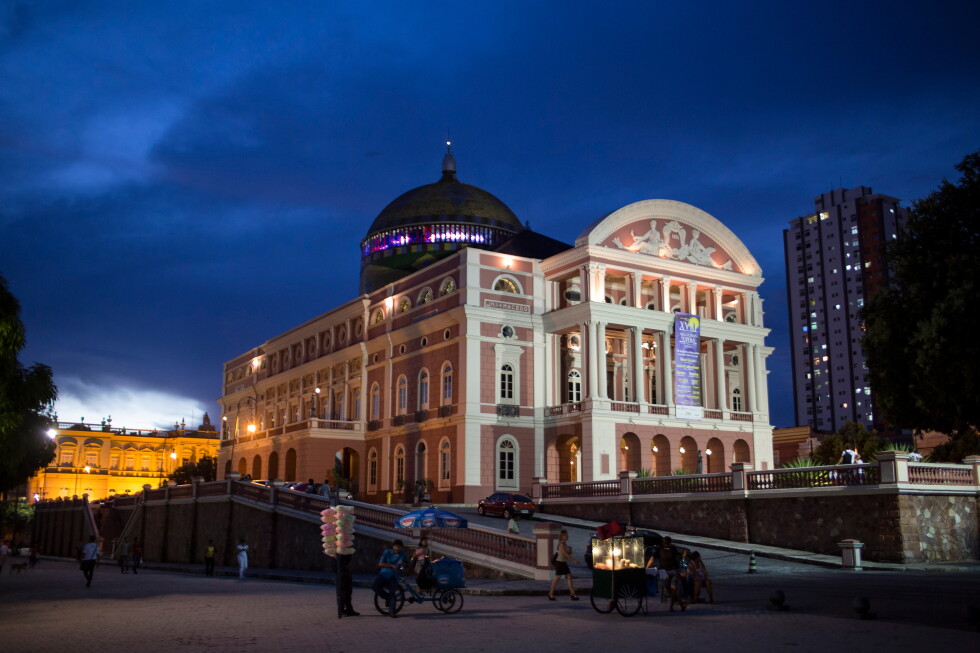
In a landmark decision announced on Monday during the ongoing World Heritage Committee session in Busan, South Korea, UNESCO has inscribed two iconic Brazilian Amazonian performance venues to its coveted roster of sites of outstanding global value. The dual addition brings Brazil’s total number of World Heritage sites to 26, marking a new milestone for the country’s cultural preservation efforts.
The two newly listed sites, collectively named the Amazonia Theaters, are the Theatro da Paz in the northern Brazilian city of Belem, Para state, and the famous Teatro Amazonas in Manaus, capital of Amazonas state. Both cultural landmarks were constructed in the late 1800s, at the peak of the global rubber boom that transformed the Amazon region into a major global commercial hub. Built at a time of unprecedented economic growth in the rainforest, the two structures embody the era’s political and urban development ambitions, blending cutting-edge European architectural design trends with locally sourced materials and region-specific symbolic motifs that root the buildings firmly in the Amazonian landscape.
Theatro da Paz, which opened to the public in 1878, was designed to cement Belem’s status as a critical strategic port for the global rubber trade, while Teatro Amazonas, inaugurated nearly two decades later in 1896, mirrors the explosive urban growth that turned Manaus into one of South America’s wealthiest late 19th-century cities. Brazil submitted a joint nomination for the two venues, arguing that they share a cohesive historical context and represent a unified 19th-century project to modernize the Amazon region and integrate it into global commercial and cultural networks.
“Architecturally and artistically, they blended imported influences and materials with local woods and forest-inspired motifs, creating a distinctive aesthetic that was at once cosmopolitan and deeply Amazonian,” the Brazilian government noted in its official nomination statement.
UNESCO’s annual World Heritage designation is one of the most prestigious cultural recognitions in the world. Sites granted the status join an elite list that includes some of humanity’s most celebrated cultural landmarks, from China’s Great Wall and Egypt’s ancient pyramids to India’s Taj Mahal and New York’s Statue of Liberty. Beyond the symbolic honor, World Heritage status typically delivers significant long-term benefits, including expanded global tourism opportunities and formal international protections to preserve the sites for future generations.
This year’s committee session, which runs through Wednesday in Busan, has already added several major global sites to the list. On Sunday alone, the body added France’s Normandy D-Day landing beaches and Greece’s iconic Mount Olympus, among other sites from around the world.
Beyond the two newly inscribed theaters, the Brazilian Amazon is already home to another UNESCO World Heritage site: the Central Amazon Conservation Complex, a vast protected area located at the confluence of the Negro and Solimoes rivers in Amazonas state. UNESCO recognizes the complex as one of the most biodiverse places on Earth, hosting a wide range of Amazonian ecosystems including intact upland rainforests and seasonally flooded varzea lowland forests that support thousands of endemic plant and animal species.
This coverage, reported by The Associated Press, receives funding from multiple private foundations for AP’s climate and environmental reporting, with AP retaining full editorial control over all content.