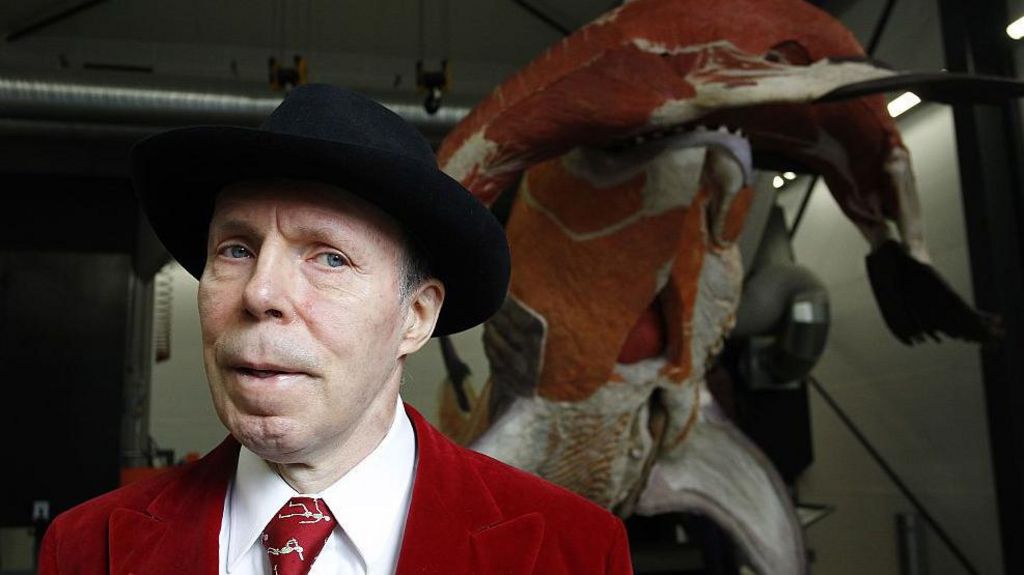
Gunther von Hagens, the polarizing anatomist behind the globally famous *Body Worlds* exhibitions that put preserved dissected human and animal remains on public display, has passed away at 81, his family confirmed in an official statement this week.
Born in Nazi-occupied Poland during the final months of World War II, von Hagens spent his childhood in communist East Germany before escaping to West Germany in 1970. It was in the years following his escape that he revolutionized anatomical preservation with the invention of plastination, a groundbreaking technique that replaces bodily fluids and fatty tissue in deceased specimens with durable rubber and polymer plastics. Initially, plastinated specimens were primarily used as educational tools for university medical programs and scientific research institutions, but von Hagens always harbored a goal of making anatomy accessible to people outside academic circles. That goal came to fruition in the late 1990s, when he launched the first touring *Body Worlds* exhibitions, opening the inner workings of the human body to millions of everyday people around the globe.
Von Hagens, who was often nicknamed “Doctor Death” by the media and public due to his work with human remains, had lived with Parkinson’s disease for nearly 20 years before his death. According to his family, he was admitted to a clinic in Heidelberg, Germany, last Thursday after suffering a brain hemorrhage, and died the following day.
True to his life’s work, von Hagens left a clear final wish: that his own body undergo the plastination process after his death, to be added to future exhibitions. His family confirmed in their statement that they will honor this request fully. To date, more than 58 million people across the world have attended *Body Worlds* exhibitions, a milestone that cemented von Hagens’ status as one of the most recognizable figures in public anatomy education.
Throughout his decades-long career, von Hagens drew both lavish praise and fierce condemnation from communities around the world. Supporters, including many of his academic colleagues, remember him as a pioneering innovator who demystified human anatomy for the general public, turning a topic once reserved for medical students into something accessible and engaging for all. But his work also sparked persistent controversy: religious organizations and ethicists repeatedly objected to the public display of human remains, while critics have accused him of voyeurism and turning human death into a commercial profit stream. One of his most controversial acts came in 2002, when he conducted the first public, televised autopsy in London in 170 years. Though UK authorities had warned the event could violate local laws, no criminal charges were ever filed against him.