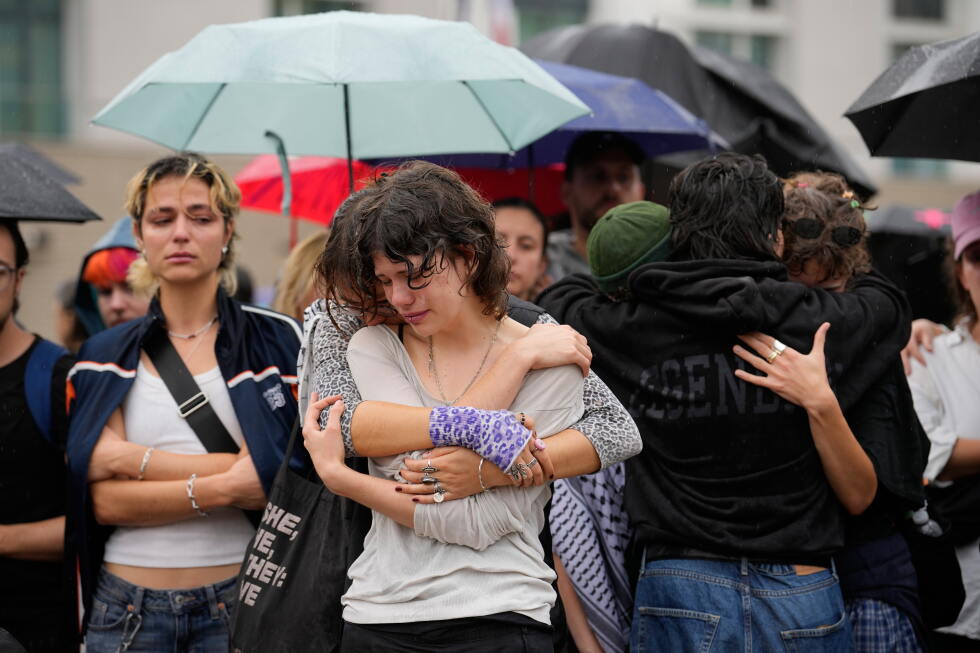
BERLIN – A wave of collective mourning swept across Berlin this week, after a 21-year-old German citizen with confirmed Islamic State ties carried out a deadly extremist attack near the city’s annual Pride festival, leaving one person dead and 29 others injured. The incident has ignited urgent national scrutiny over how the convicted extremist was permitted to remain at large in the community ahead of the assault, just months before key regional elections across Germany. The attacker, Abdul Ballout – a German-born man of Lebanese descent – was shot and killed by law enforcement following a nearly 24-hour manhunt that ended Sunday. Investigators and federal authorities have confirmed the incident was an Islamist terror attack: Ballout deliberately drove a rental van into a crowd of pedestrians near the Pride festival grounds on Saturday night, before exiting the vehicle and attacking additional bystanders with a machete.
Questions around Ballout’s release from custody have quickly become the central point of public and political controversy, with top German officials demanding a full review of how the attack could have been prevented. Prosecutors confirmed Ballout has a long documented history of extremism: in 2025, he traveled from Germany to Lebanon, with the explicit intention of crossing into Syria to join the Islamic State. He was arrested by Lebanese authorities before he could complete the journey, and convicted by a Lebanese military court on charges including incitement to religious and sectarian conflict, serving a three-month prison sentence before being deported back to Germany. He was taken into custody immediately upon his arrival at Berlin’s airport.
In May 2025, a Berlin juvenile court – which hears cases for offenders between 18 and 21 years old under German law – convicted Ballout on multiple charges, including preparing a serious act of state-endangering violence and distributing Islamic State propaganda via his public Instagram account. He was sentenced to one year and 10 months of youth custody, a ruling Berlin public prosecutors appealed in search of a harsher penalty. Conflicting initial statements initially muddled details of the sentence: some officials claimed it had been suspended, but Berlin courts clarified that no final suspension had been granted. Instead, Ballout was released from pre-trial detention – which had already been extended for a longer period than standard – because he did not meet statutory thresholds to be deemed a flight risk or an imminent threat of reoffending under current German law.
The court’s decision to release Ballout has drawn sharp criticism from senior government officials, who are now calling for a full investigation and potential reform to Germany’s juvenile sentencing rules, which critics argue are excessively lenient for extremist offenders. “It makes no sense that this man, with his confirmed conviction and history of supporting ISIS, was free on our streets,” Federal Interior Minister Alexander Dobrindt told public broadcaster ZDF in an interview Monday. “It stands to reason that placing this person in custody would have been the correct and responsible step.” Berlin Mayor Kai Wegner, while stopping short of questioning the constitutional independence of the German judiciary, described the outcome as “unfathomable.”
Deradicalization officials who evaluated Ballout prior to the attack have confirmed they repeatedly flagged him as a high-risk threat who refused to cooperate with intervention programs. The Berlin-based Violence Prevention Network, a non-profit that works with at-risk extremists from both Islamist and far-right backgrounds, was ordered by the court to conduct three evaluations of Ballout for a court-mandated high-risk deradicalization program. The organization’s communications director, Cornelia Lotthammer, told reporters Ballout was scheduled to attend his third and final evaluation on the very day the attack occurred. Staff planned to recommend Ballout be rejected from the program, Lotthammer said: unlike most high-risk extremists, who openly espouse their ideology during assessments, Ballout deliberately attempted to mislead evaluators by pretending he had abandoned extremist beliefs, and refused to engage honestly with the intervention process. “Everyone knew he was a high-risk person,” Lotthammer said. “But if he will not cooperate, there is nothing our program can do. No one associated with our work would have ever said he was not a threat and should be released.” She added that evaluators had no prior indication Ballout was planning an imminent attack, and would have alerted law enforcement immediately if they had seen any warning signs.
The tragedy comes at a politically charged moment for Germany, with three regional elections – including one in Berlin – scheduled for September 2025. Political analysts warn the attack will likely amplify already tense debate over migration and extremism, and could benefit the far-right Alternative for Germany (AfD), which has already centered its campaign on anti-migration rhetoric after finishing second in the 2025 federal election. The party is currently seeking to win its first state governorship in the eastern state of Saxony-Anhalt, and has already seized on the Berlin attack to attack the current federal and city government. “How is an Islamic State supporter able to walk free in Germany after being convicted of extremism?” AfD’s Berlin leader Kristin Brinker wrote on social media platform X. “Who in the city government bears responsibility for this failure?”
German Chancellor Friedrich Merz has echoed the demand for full accountability, saying the federal government’s top priority must be closing gaps in public safety that allowed the attack to occur. “We must do everything in our power to protect the German public as effectively as possible from criminals and dangerous people who cannot be taken into custody for any reason,” Merz said Monday. Officials have confirmed a full inter-agency investigation is now underway to review every step of Ballout’s case, and to identify what regulatory or legislative changes are needed to prevent similar attacks in the future.