Along California’s sunbaked Pacific coastline, a quiet ecological crisis is unfolding beneath the waves, driven by an extended marine heat wave that has already begun reshape marine life patterns and threaten vulnerable species. As climate change amplifies extreme ocean warming and overlaps with a projected record-breaking El Niño event, scientists and conservationists are sounding the alarm over cascading harm to coastal ecosystems.
Sara Lesser, a 39-year-old naturalist at Long Beach’s Aquarium of the Pacific, has witnessed the shift firsthand during daily whale-watching excursions. This summer, she told AFP, the playful pods of dolphins and pods of whales that once drew tourists to the waters are increasingly hard to find. Rising surface ocean temperatures have pushed the small schooling fish that cetaceans depend on — anchovies and sardines — to retreat to deeper, cooler waters or migrate much farther north than their typical ranges. With their food source gone, whales and dolphins have followed, leaving fewer sightings for onlookers and signaling a far larger disruption to the coastal food web. For Lesser, the drop in encounters is not just a disappointment for tourists; it is an early warning sign of more systemic damage underway.
Data from the U.S. National Oceanic and Atmospheric Administration (NOAA) confirms the severity of the current warming event: surface water temperatures along California’s coast are currently 3 to 4 degrees Celsius above the long-term average, and the heat wave has persisted for roughly six months, according to NOAA research oceanographer Andrew Leasing. What makes this event particularly worrying is its overlap with a developing El Niño, the climate pattern that warms equatorial Pacific surface waters and alters global weather systems. Scientists project this El Niño could rank among the strongest ever recorded, potentially outpacing the destructive 2015–2016 event that devastated California’s marine ecosystems.
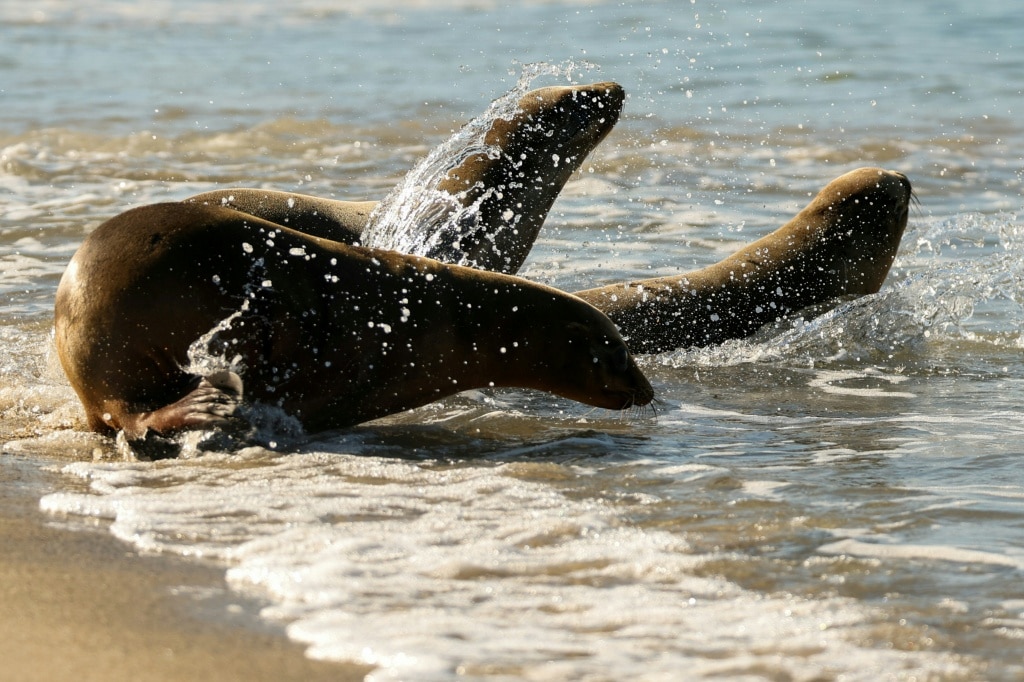
That 2015 event, which followed an earlier marine heat wave that started in 2014, offers a grim preview of what may come. Thousands of seabirds starved when fish moved out of accessible surface waters, and the bodies of emaciated sea lions and whales washed up on public beaches. Today, early signs of the same collapse are already appearing. In recent months, dozens of dead pelicans and cormorants have been recovered near San Diego. One of California’s most iconic native species, sea lions, face growing risk: Leasing explained that warming waters force female sea lions to abandon their pups to travel farther for food, leaving young pups to starve. Additionally, higher ocean temperatures fuel the growth of toxic algal blooms that produce domoic acid, a neurotoxin that accumulates in anchovies and sardines, which then poison marine mammals that eat them. In early June, two juvenile humpback whales washed up dead on the shores of Monterey Bay from domoic acid poisoning — a mass poisoning event so large it has not been seen in a decade, according to Elliott Hazen, an adjunct professor of ecology and evolutionary biology at the University of California, Santa Cruz. “These are such large predators, it just highlights how much domoic acid there has to be in the ecosystem for it to affect them,” Hazen told AFP.
The ecological shift is also bringing unexpected changes to human activity along the coast: warming near-shore waters have pushed juvenile great white sharks much closer to shore than is typical, as younger sharks prefer warmer temperatures. Recent months have brought multiple high-profile encounters: a Malibu resident filmed a great white swimming just meters from unsuspecting children playing in the surf, and Huntington Beach was forced to close swimming areas three times this spring after aggressive sharks were spotted close to shore, putting beachgoers on edge.
Marine heat waves along California have become an annual event since 2019, and experts warn that these anomalous conditions will become the new norm if current warming trends continue. “We know that climate change is adding more fuel to the fire,” Hazen said. The long-term risk extends far beyond iconic marine mammals: repeated heat waves erode the ability of coastal ecosystems to sustain the fish populations that both wildlife and human communities rely on for food. “If we have these marine heat waves over and over again, and we lose the ability to sustain the ecosystem the way we have in the past, we’re going to lose some of the fish species that we rely on for food. So that’s the big concern,” he added.