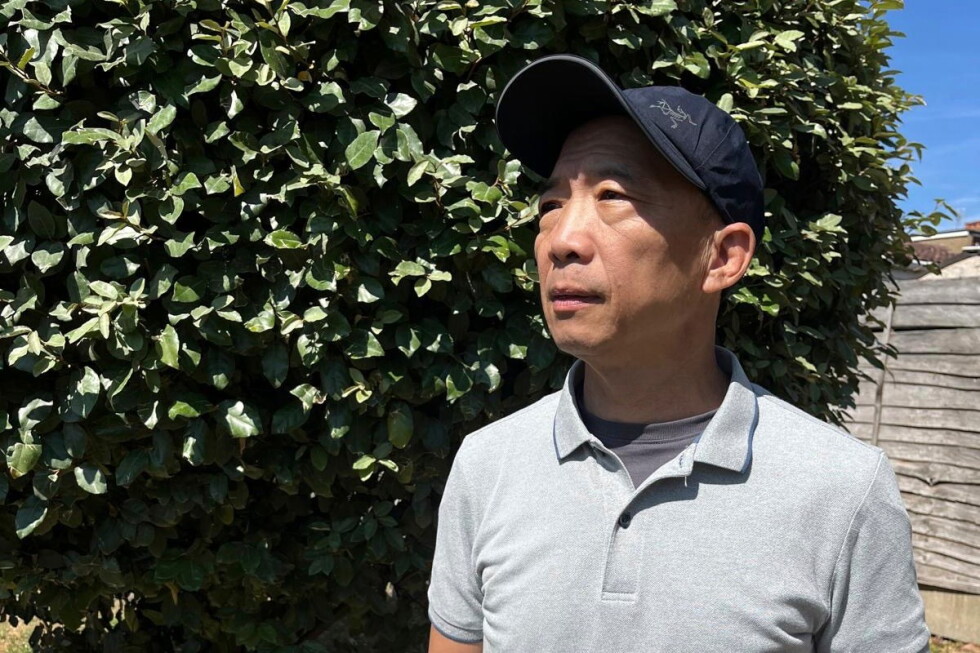
LONDON/HONG KONG – For former Hong Kong pro-democracy lawmaker Wu Chi-wai, the long-awaited embrace of his wife and son in London last week marked the end of more than five years behind bars and the first in-person reunion with his family in years. The emotional meeting, filled with tears of joy after years of separation, has now been cut drastically short, as the ex-opposition leader faces deportation back to Hong Kong as early as this week, far sooner than anyone involved planned.
Wu, who once led the Democratic Party – Hong Kong’s formerly largest pro-democracy opposition bloc – was among the 47 high-profile activists charged in 2021 in the city’s biggest national security case stemming from the sweeping national security law imposed by Beijing on Hong Kong in 2020, a legislation that effectively dismantled the city’s once-vibrant pro-democracy movement. In 2024, he was convicted of conspiracy to commit subversion over his participation in an unofficial pro-democracy primary election held in 2020, and sentenced to four years and five months in prison. He was granted release last month, and immediately arranged travel to the UK to reunite with his family, who relocated to the country in 2022.
Anticipating potential complications from his criminal record, Wu coordinated with the British consulate in Hong Kong ahead of his departure to smooth entry. But upon landing in London last Wednesday, UK border officials raised questions about his intentions, including speculation that he planned to pursue long-term residency in the country, Wu told the Associated Press in an interview. After processing, authorities granted Wu entry only on a seven-day immigration bail, meaning he is scheduled to be removed from the UK this coming Wednesday. The unexpected timeline has scrapped months of planned family time the 62-year-old had looked forward to after years of separation.
Wu, who has denied seeking asylum in the UK and says his only long-term goal is to reunite permanently with his family, says he now fears the immigration black mark will damage his ability to travel to see his loved ones in the future. He is calling on the UK Home Office to reverse the deportation order and grant him an extended stay. “I am very worried about whether I have the ability or a chance to secure re-entrance to the UK to meet with my family again,” Wu said in the interview.
In a response to reporters on Sunday, a Home Office spokesperson said the department does not typically comment on individual immigration cases, but reaffirmed that the UK government remains “steadfast in supporting Hong Kongers in the UK.” As of Sunday, neither the Home Office nor the airline that changed Wu’s return flight – originally booked for November – had responded to requests for comment on the case.
Wu’s situation unfolds against a backdrop of mass emigration from Hong Kong in the wake of the national security law’s implementation. Tens of thousands of residents, including many families and young professionals, have left the territory for countries including the UK, which launched a special visa scheme for Hong Kongers in 2021. Official UK government data shows more than 230,000 Hong Kong residents have secured visas through the scheme, which allows holders to live, work, and study in the UK, and apply for permanent settlement after five years. More than 9,800 visa holders have already been granted full permanent residency to date.
Beijing and Hong Kong government officials have long maintained the national security law was a necessary measure to restore stability to the territory after widespread 2019 pro-democracy protests. But the legislation has led to sweeping political changes that have gutted Hong Kong’s pro-democracy infrastructure: the Legislative Council Wu once served in is now entirely dominated by pro-Beijing loyalists following a 2021 electoral overhaul that restricted opposition participation; dozens of pro-democracy civil society groups, including Wu’s former Democratic Party, have disbanded; and independent pro-democracy media outlets such as the Apple Daily have been forced to shut down, with its founder Jimmy Lai currently serving a 20-year prison term under the same national security law.
These changes have eroded many of the autonomous freedoms guaranteed to Hong Kong under the Sino-British Joint Declaration, when the territory returned to Chinese rule in 1997. For Wu, who lost both of his parents while he was imprisoned – and was only allowed to attend their funerals for brief, supervised visits – the experience of incarceration has shifted his priorities entirely. He said that when he was locked up, he was only permitted a 10-minute phone call with his wife and son once a month, and mailed letters took roughly a month to travel between Hong Kong and the UK and receive a reply.
“Even if you can’t bear to let go, you still have to,” Wu said of the disbandment of his former party. “Prison taught me that life is short. If at such a moment you are unable to see your parents off for the last time, the psychological blow is actually significant.” Wu says he has no plans to engage in political activity moving forward, and only wants to rebuild his life with his family. “Start afresh and cherish the time I have to reunite with my family,” he said. “I feel this is my most important task in the near future.”